الاثنين، 12 مارس 2018

SamMobile Firmware Update Magazine: March 12, 2018

Welcome to the latest edition of our weekly Firmware Magazine. You can think of it as your go-to resource to find out which of your Samsung devices has received a new update or if it’s going to receive a new firmware update in the near future.

To keep things interesting, we present the Firmware Magazine in new designs every week. It will always include the important details about firmware updates such as the firmware versions, device model numbers, Android OS versions and the country where said update is out already.

SamMobile Firmware Update Magazine

Keep in mind, however, that these firmware details are based on the firmware that are available in our database, and in some cases, the latest updates might not show in the same week as the full firmware files take additional time to make it to our database.

The purpose of this magazine is to bring all of that important information about firmware updates to you, the reader, in a manner that’s easy to comprehend—so even if you’re new to the world of firmware, you’ll have no trouble making sense of it all.

Click on the image below to grab the latest firmware magazine!

The post SamMobile Firmware Update Magazine: March 12, 2018 appeared first on SamMobile.


from SamMobile http://ift.tt/2FzZZfQ
via IFTTT

Surprise (not really): The Galaxy S9+ is very tough to repair

When the Galaxy Note 8 came out and the experts over at iFixit decided to open it up, they gave the phone a poor rating of 4 points out of 10 for repairability. There’s no S Pen on the Galaxy S9+, but it does have much of the same tech inside as the Note 8 along with some new stuff, such as a camera that can switch between two apertures. So it doesn’t come as a surprise that the S9+ is as tough to repair, and iFixit has given it the same score as the Galaxy Note 8 following its usual teardown treatment.

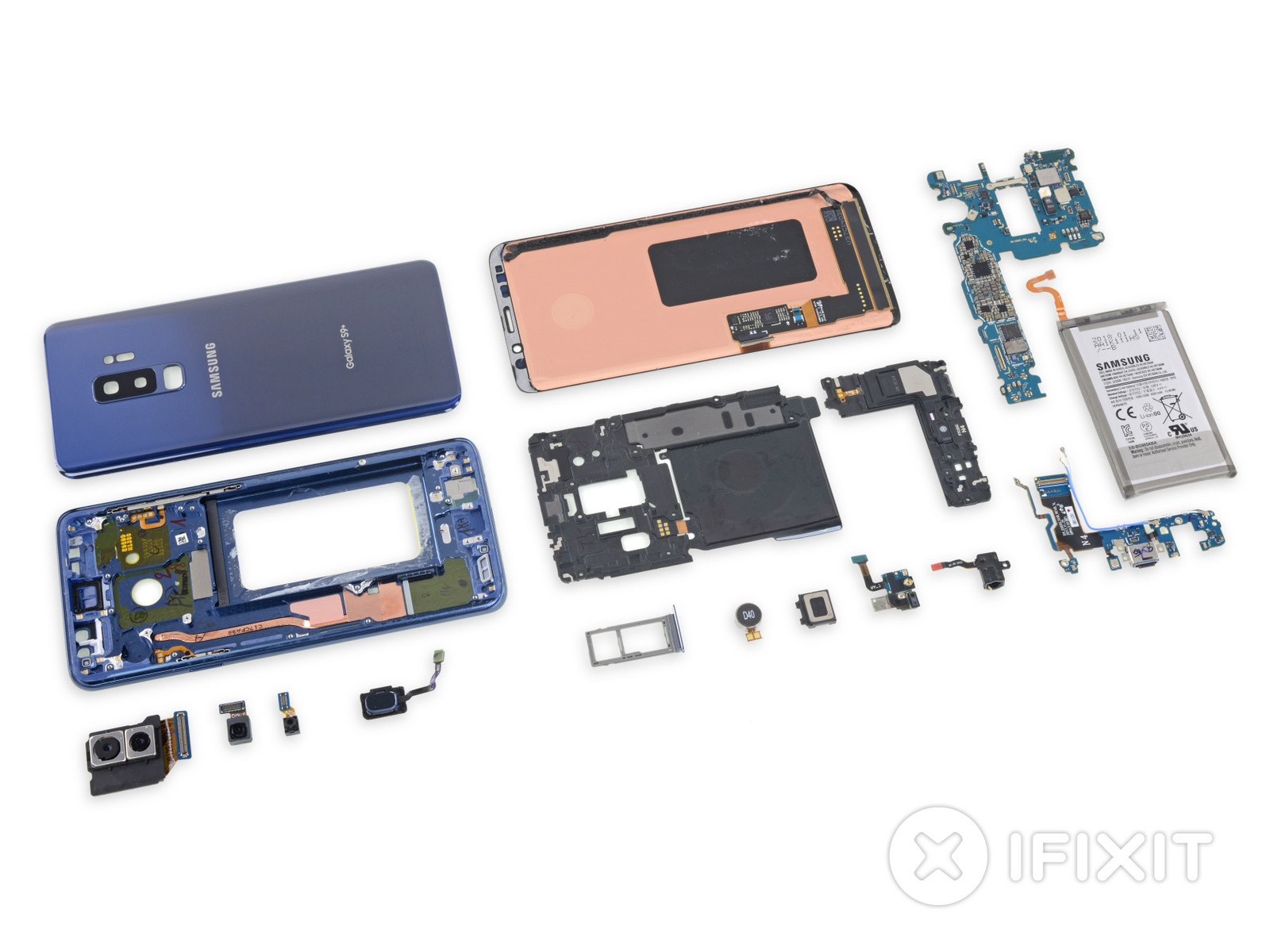
Samsung Galaxy S9+ gets the teardown treatment

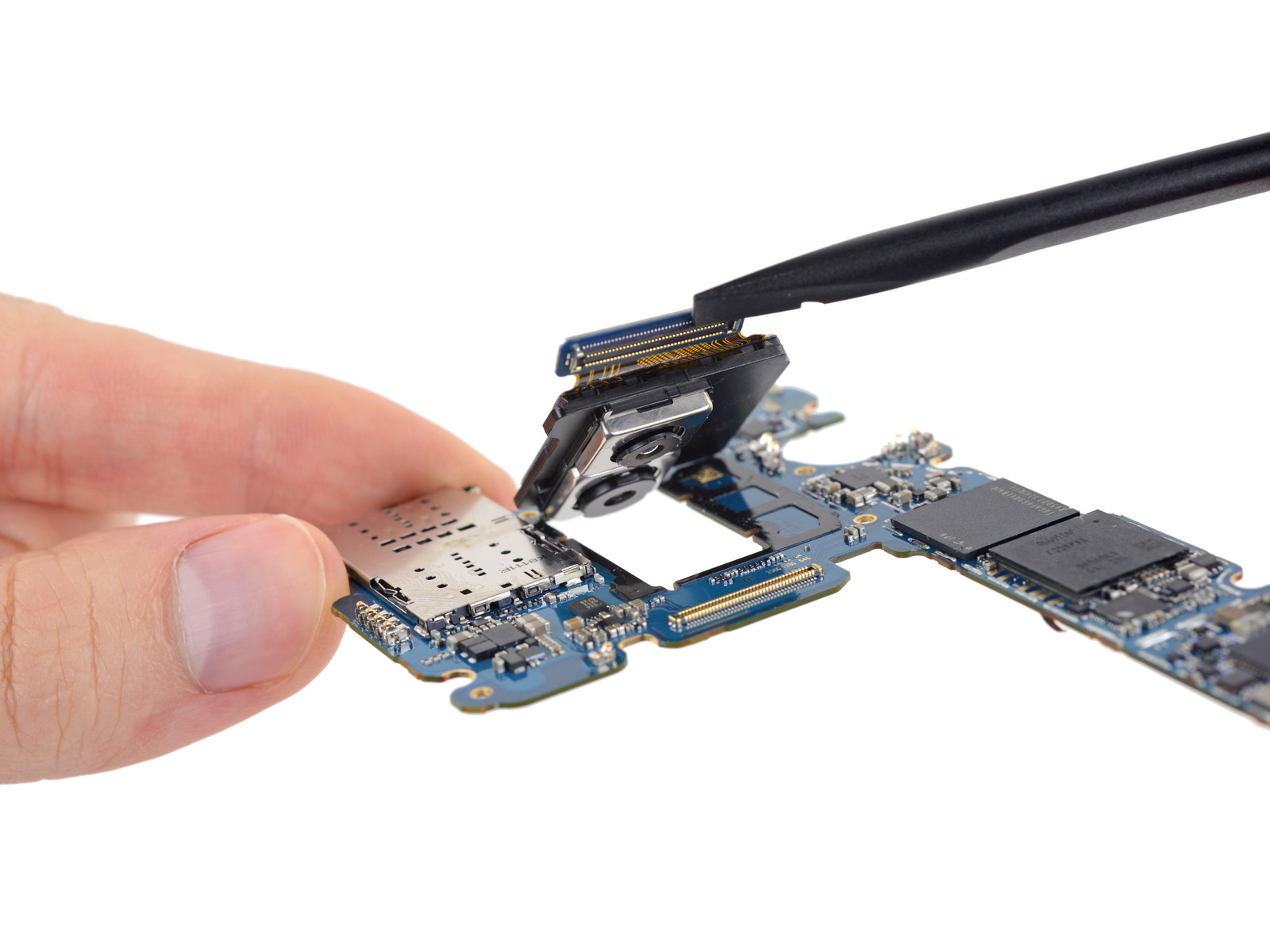
Taking apart the front and rear glass panels on the Galaxy S9+ is a dangerous affair, as they can easily break in the process. iFixit knows their way around these limitations, however, and we get to take a look at all the hardware laid inside. The Dual Aperture primary camera uses two rotating ring-like blades for switching between f/1.5 and f/2.4 aperture; the secondary rear camera sits just below, and both form a single unit sitting on a single PCB. Combined with the iris sensor and front-facing camera, the S9+ holds four image sensors in total. The camera assembly also confirms that the Galaxy S9 is codenamed Star, something that was revealed many months before the devices were unveiled.

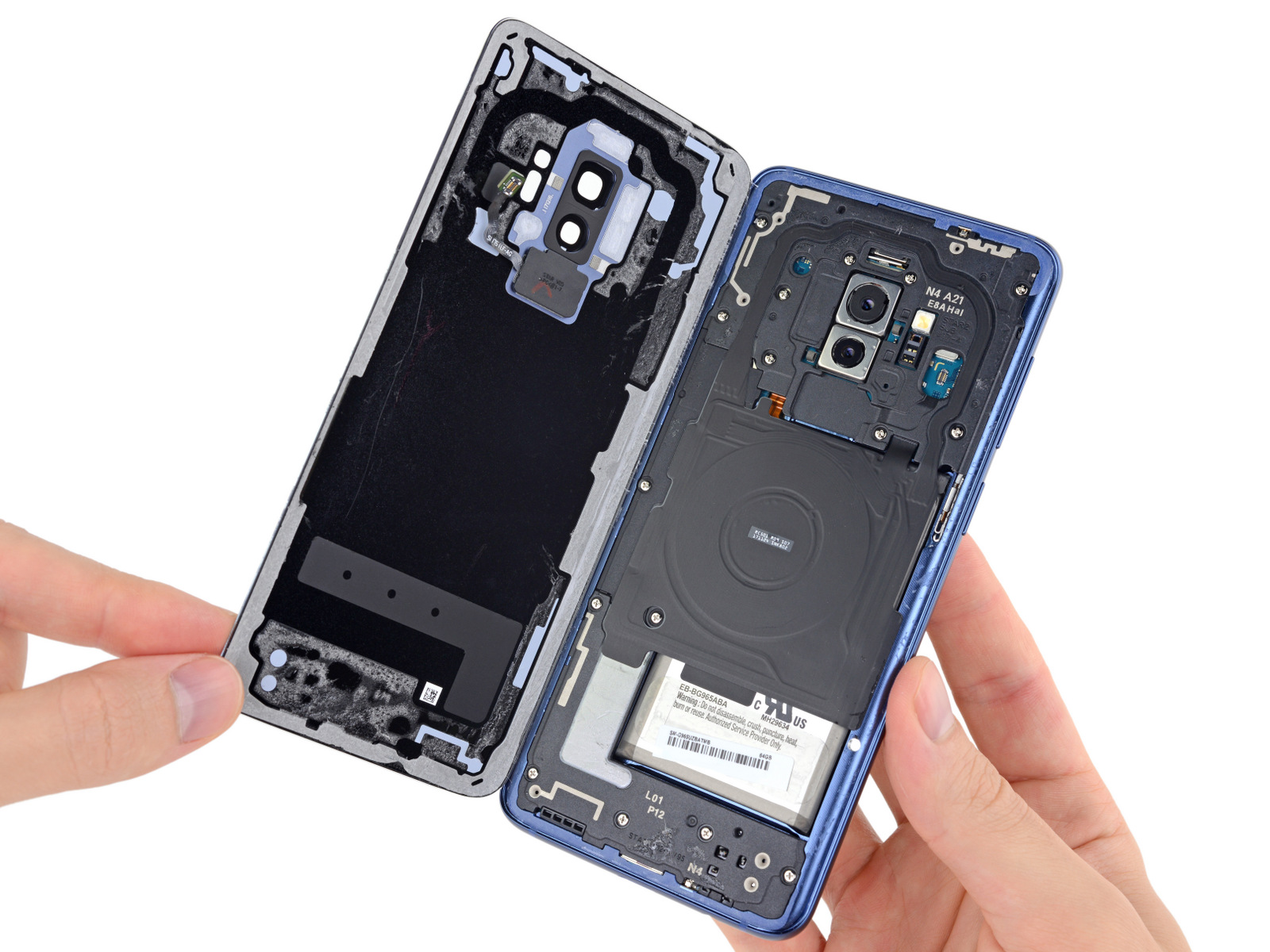
The teardown reveals that the 3,500 mAh battery is extremely hard to pry out, as it’s held down with tons of glue. Replacing a broken display is also a time-consuming affair, as the entire phone must be disassembled and “tough adhesive” has to be battled to get through. None of this comes as a surprise, though, as Samsung’s flagships phones pack advanced tech inside thin bodies and, since last year, slim bezels around the display, bezels that have become narrower this year and resulted in the Galaxy S9 and S9+ being shorter than their predecessors. Of course, the regular Galaxy S9’s repairability probably hasn’t changed compared to the Galaxy S8, as it misses out on the dual rear camera.

Hit the source link below to go through iFixit’s complete Galaxy S9+ teardown process. Don’t forget to check out our review of the Galaxy S9 and S9+.

The post Surprise (not really): The Galaxy S9+ is very tough to repair appeared first on SamMobile.


from SamMobile http://ift.tt/2p5ZByE
via IFTTT

Galaxy S9 sales target reportedly set at 43 million units

Samsung has reportedly set the Galaxy S9 sales target at 43 million units for the year. It’s said to be slightly higher than the 41 million unit target set for the Galaxy S8 and the Galaxy S8+ last year. This suggests that Samsung really does expect its new flagship smartphone to outperform its predecessor in the market.

Galaxy S9 sales

Samsung said a couple of weeks ago that it expects Galaxy S9 sales to outperform that of the Galaxy S8. It has now reportedly told its local suppliers in South Korea to set their production schedules for parts based on the 43 million sales target for the Galaxy S9 and the Galaxy S9+.

Market firms like Counterpoint Research already expect Samsung to sell more than 40 million units of its new flagship smartphone this year, outperforming the predecessor which saw more than 41 million units being shipped across the globe.

It has been over a week since Samsung started taking pre-orders for the Galaxy S9 and some initial reports have suggested that pre-orders for the new flagship haven’t really exceeded expectations. The Galaxy S9 is going to be released in a handful of markets across the globe on March 16. Some lucky pre-order customers have already started receiving their units, though.

It remains to be seen, though, if the Galaxy S9 will actually be able to move more units than its predecessor which was a revolutionary upgrade in its own right. The Galaxy S9 is more of an evolutionary upgrade and many Galaxy S8 owners are questioning the prudence in spending a lot of money again on a device that only comes with a few new features and little to no design changes.

Samsung is yet to officially announce pre-order figures for the Galaxy S9 and the Galaxy S9+ so it’s too soon to say right now just how well its new flagship has been performing in the market so far and if it will be able to outperform the Galaxy S8.

Do check out our detailed Galaxy S9/S9+ review if you’re still on the fence about buying Samsung’s new flagship.

The post Galaxy S9 sales target reportedly set at 43 million units appeared first on SamMobile.


from SamMobile http://ift.tt/2p5xqR2
via IFTTT

First Galaxy S9 and Galaxy S9+ firmware now available for download

Samsung will soon begin selling the Galaxy S9 and Galaxy S9+ in retail stores around the world. The first software update for the two devices went live over the weekend, around the same time that many who pre-ordered the S9 or S9+ saw it arrive at their doorstep. The first update is an important one as it brings the software up to the final retail version that we were unfortunate not to have on our review units, so Samsung has sent it out at the right time. And, like clockwork, the first firmware files for Samsung’s latest flagships are now available in our firmware database.

Galaxy S9 and Galaxy S9+ firmware now available for download

The firmware version is G960FXXU1ARC5 and G965FXXU1ARC5 for the S9 and S9+ respectively, and the firmware are available for Germany and the United Kingdom. The software version, of course, is Android 8.0.0 Oreo. Not Android 8.1, but as Samsung often points out, the necessary enhancements from such point upgrades are usually implemented even if the user-facing software version doesn’t change. Thanks to Project Treble support, there’s hope that Samsung won’t be delaying software updates as much as it has for last year’s flagships, although the company isn’t promising or even mentioning anything in this regard.

To grab the Galaxy S9 firmware, head to our database. We also have the official Galaxy S9 wallpapers available for download. Still on the fence about the Galaxy S9 or S9+? Read our review to find out if these devices are worth your hard-earned money.

The post First Galaxy S9 and Galaxy S9+ firmware now available for download appeared first on SamMobile.


from SamMobile http://ift.tt/2p2mW5g
via IFTTT

الجمعة، 9 مارس 2018

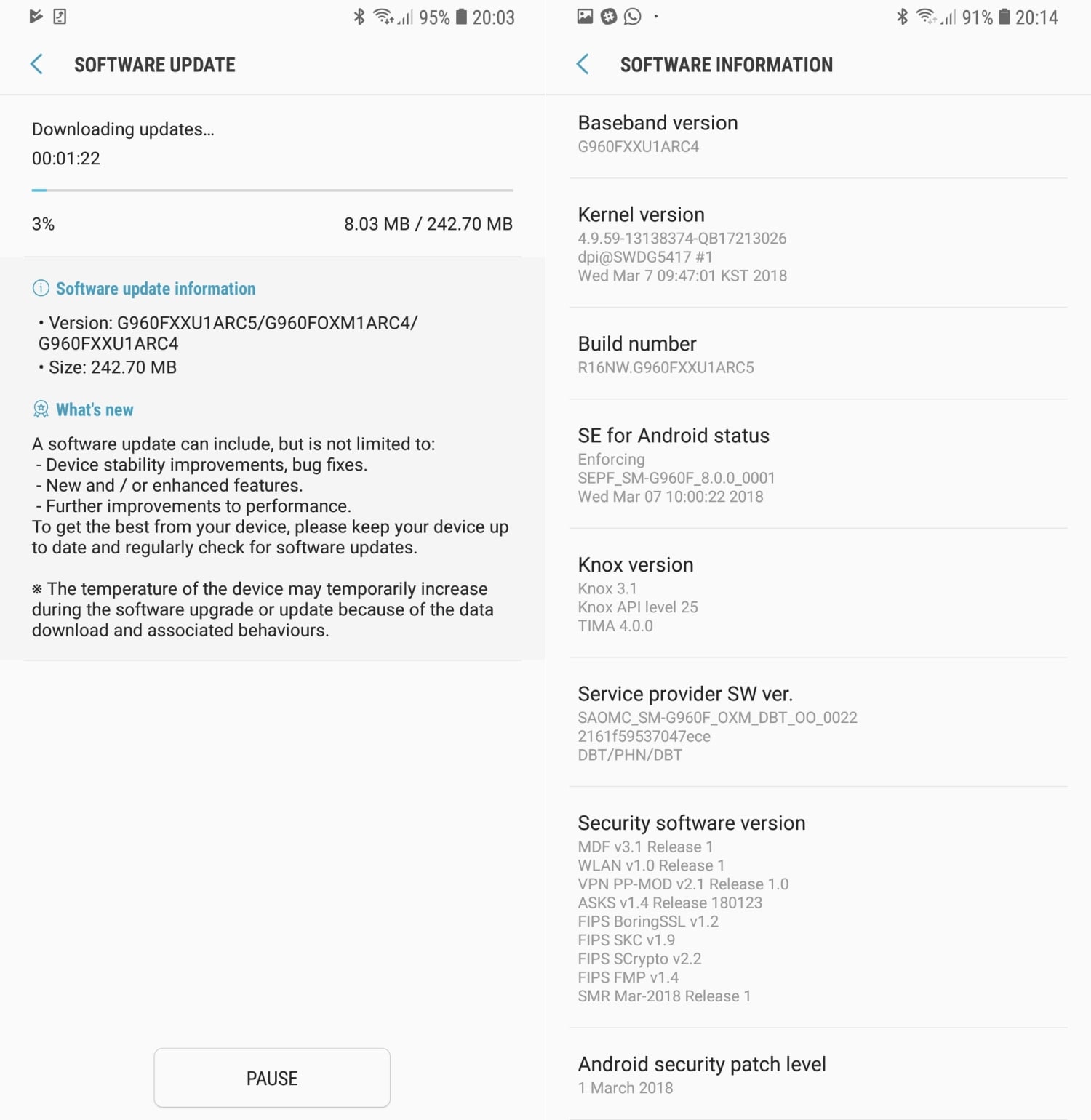
First Galaxy S9 update brings March 2018 security patch

In a little less than a week, the Galaxy S9 and Galaxy S9+ will go on sale in many countries around the globe, and some pre-order customers already have the device in their hands. Today, those who have an S9 or S9+ will be treated to the first software update for Samsung’s newest flagships. The update is available in Germany at the moment and should be making its way to other markets in the coming days. It’s a minor update at 242 MB and brings the March 2018 security patch. The build number is G960FXXU1ARC5 and G965FXXU1ARC5 for the S9 and S9+ respectively.

First Galaxy S9 update now rolling out

Hopefully, the first Galaxy S9 update will fix some of the bugs we had encountered on the pre-final software on our review units, although the changelog is a generic one that doesn’t let on any particular improvements or new features. We’re also hoping Samsung will improve features like AR Emoji and Bixby Translate in future updates. Right now, though, the latest security fixes seem to be the focus. The March 2018 patch fixes nine critical Android vulnerabilities and five that only affect Samsung’s software; it was first rolled out to the Galaxy A8 (2018) earlier this week.

The latest update can be downloaded from the Settings » Software update menu on an S9 or S9+. The complete firmware files will be up on our database as soon as get out hands on them, and the update should also be available via Samsung Smart Switch. If you don’t have the Galaxy S9 or Galaxy S9+ yet and are wondering if they’re a worthy purchase, don’t forget to read our Galaxy S9 review.

The post First Galaxy S9 update brings March 2018 security patch appeared first on SamMobile.


from SamMobile http://ift.tt/2FwH1qB
via IFTTT

Why Samsung has nothing to gain from embracing an iPhone X-style notch

Samsung has worked diligently over the past few years to shed its reputation of being an Apple copycat and started blazing its own trail in smartphone design. It was far ahead of Apple in adopting edge-to-edge displays for smartphones and one can easily credit the company with popularizing the trend for the entire industry.

Apple has had a profound impact on smartphone design as well and even though at least one Android manufacturer embraced the display notch well before the iPhone X, Apple’s flagship smartphone has really popularized the idea so much so that scores of Android manufacturers are moving in that direction now. It’s imperative that Samsung not jump on that bandwagon.

We first need to understand why the notch exists anyway. Samsung’s Galaxy Note lineup kickstarted the trend of smartphones with substantial displays and while initial models of such handsets were difficult to use one-handed, smartphone manufacturers have been able to fit larger displays in smaller bodies by slimming down the bezels and adopting “taller” displays.

While bezels around the displays were the first to go, symmetrical bezels were kept at the top and bottom to house the front-facing camera, sensors and fingerprint readers. Subsequent iterations took it one step further by relocating the fingerprint reader to the back and slimming down the bottom bezel even more.

It’s at this point that smartphone designers arrived at a dilemma. How do you maximize the screen-to-body ratio without having to make the device bigger? They would have to find a way to house the camera and sensors somewhere while claiming additional screen real estate and so the notch was born.

Essential, Android co-founder Andy Rubin’s company, introduced the notch to Android smartphones with its first flagship device called the Essential Phone (released well before the iPhone X last year). It had a cutout or notch for the front-facing camera which segmented the status bar at the top while allowing the display to be stretched up to the maximum.

Then came the iPhone X. Apple didn’t try to hide the notch, rather it embraced it in all marketing materials for the new flagship. It was significantly larger than the one on the Essential Phone because not only did it house the front camera it also housed the advanced sensors for Apple’s Face ID facial recognition feature.

The Essential Phone didn’t really inspire, for lack of a better word, other Android smartphone manufacturers to embrace the notch but the iPhone X did. Several Chinese OEMs introduced new handsets at the Mobile World Congress 2018 last month with notches that appear to have been lifted straight from the iPhone X.

It’s not just the obscure manufacturers like Noa and Ulefone who did this, even well regarded manufacturers like Asus have jumped on the bandwagon. The company’s new Zenfone 5 looks like a shameless iPhone X clone and Asus even talked up the notch during its event claiming that it was 26 percent smaller “than Fruit Phone X.” This is just the beginning as Huawei’s upcoming P20 lineup is reported to embrace the notch as well as the upcoming flagship smartphones from LG and OnePlus.

Google has acknowledged that its OEM partners are going in this direction and it has made a subtle yet substantial addition to Android which is going to open the floodgates to notch-touting Android smartphones. Most manufacturers weren’t able to have their software properly work around the notch as the core Android OS wasn’t designed for that segment screen but all that changes with Android P, the next major Android platform upgrade.

The first official Android P developer preview was released earlier this week and Google confirmed that it has “display cutout support.” This means that Android OS will be fully capable of supporting smartphones with notches and developers will now be able to test how their full-screen apps will work on those devices.

It’s no secret that many Android smartphone manufacturers look to Apple for design inspiration and tend to copy its moves. This is particularly true for those based in China. It’s not surprising to see that Google is embracing the notch as well, it must support its OEM partners and if they’re adopting this trend then Google can only nudge them along. Most of them aren’t really worried about being branded as Apple copycats and haven’t really worked to shed that reputation.

This is why I feel that it’s imperative for Samsung to not follow this trend. Samsung’s smartphone design has come a long way and there’s no denying that the company is in a league of its own. The Galaxy S8 was widely regarded as having one of the best smartphone designs last year and with good reason.

Samsung has evolved into a trendsetter for the entire industry and the company should not put that reputation on the line just to follow the pack. It really doesn’t stand to gain anything by this but would instead reinforce the notion that it exhibits knee-jerk reactions to whatever Apple does. That’s a charge that it has had to refute because of the Animoji-like AR Emoji feature on the Galaxy S9 as well.

Smartphone manufacturers who are embracing the notch present it as some sort of innovation but the truth is that it was born out of necessity. There have already been reports that Apple wanted to house all of the components in the iPhone X’s notch underneath the display glass but wasn’t able to because the technology wasn’t ready. Some reports even suggested that it tried for months to integrate a fingerprint sensor under the display but technical difficulties prevented it from doing so which is why it came up with Face ID instead.

It really doesn’t seem like the notch is here to stay for long. Word on the street is that Apple will eventually ditch the notch when the technology that enables it to house those components under the display glass is ready. Some rumors suggest that it might do that as soon as next year. When Apple does that, what do you think the OEMs that followed it on the notch bandwagon will do next?

Does Samsung really want to risk its reputation by shifting to a notch a year after Apple does and then doing away with the notch after Apple does it first? If Samsung does that, it runs the risk of alienating its diehard fans who have come to the company’s defense in online forums and blogs when it’s accused of copying Apple. The fans have stuck by Samsung and have relished its evolution into an industry trendsetter. They wouldn’t want to see the company take one step forward only to take two backward. It might be the straw that breaks the camel’s back, so to speak, and they might decide to give up on Samsung smartphones entirely.

It really isn’t worth it, in my opinion. Samsung should instead be focused on achieving that goal before Apple and get a leg up on its main rival by putting out a device that doesn’t need a notch in the first place.

DJ Koh, the CEO of Samsung’s mobile division, recently said that the company is no longer obsessed with being the first in the world to bring new smartphone technologies to the market. It will take its time to perfect in-display fingerprint sensors and foldable smartphones before it launches them. So, hopefully, it will take its time in perfecting technologies that eliminate the need for a notch and bring them to market instead of relegating itself to a band of copycats.


Do you agree that Samsung has nothing to gain but a lot to lose by embracing the notch? Share your thoughts with us in the comments below.

The post Why Samsung has nothing to gain from embracing an iPhone X-style notch appeared first on SamMobile.


from SamMobile http://ift.tt/2Ign5K4
via IFTTT

Galaxy Note 9 may not offer this highly anticipated feature

Samsung is believed to have been working on optical fingerprint recognition technology for a few years now but we’ve yet to see the company commercialize an in-display fingerprint sensor. We heard rumors that it was going to do it with the Galaxy S8 last year but that didn’t happen and the Galaxy S9 has maintained the status quo as well. Those pinning their hopes on the Galaxy Note 9 for the in-display fingerprint sensor might be left disappointed this year.

No in-display fingerprint sensor for the Galaxy Note 9

KGI Securities analyst Ming-Chi Kuo has claimed in a note to investors that Samsung is likely not going to introduce an in-display fingerprint sensor with the Galaxy Note 9. A similar prediction was made for the Galaxy S9 by KGI in August (which was accurate) but it claimed then that the Galaxy Note 9 would get it.

Kuo is only saying that it’s likely for Samsung to not introduce an in-display fingerprint sensor with the Galaxy Note 9 because of “technological difficulties.” The sensor apparently faces difficulties in functioning properly in different environments and with screen protectors. Since that affects the success rate, Samsung may decide to stick with a conventional fingerprint sensor for its next flagship device.

This prediction leaves some wiggle room with the assumption being that if Samsung is able to sort out the issues in the coming months, it might decide to ship the Galaxy Note 9 with an in-display fingerprint sensor after all. However, there’s no concrete evidence available right now to back up this assumption.

In our detailed opinion about Samsung’s in-display fingerprint sensor conundrum, we mentioned that Samsung has already missed the boat on this technology as manufacturers like Vivo are now shipping smartphones with a fingerprint sensor embedded underneath a display.

However, Samsung has now said that it’s no longer obsessed with being the first in the world to introduce new technologies. It would rather wait and ensure that the technology works perfectly being commercializing it and that’s probably what it’s going to do with the in-display fingerprint sensor as well.

The post Galaxy Note 9 may not offer this highly anticipated feature appeared first on SamMobile.


from SamMobile http://ift.tt/2DauiHP
via IFTTT

جميع الحقوق محفوظة لمدونة الغريب 2013