الخميس، 29 مارس 2018

Benchmark performance comparison: Galaxy S8+ vs Galaxy S9+

Benchmark comparisons aren’t something we usually do. In fact, we never bother with benchmarks, because most benchmarks simulate extreme use cases that don’t reflect how the everyday experience of using a device would be. And, well, if a phone’s software isn’t properly optimized, lag and stutter in regular operation make even the highest benchmark scores seem useless. Samsung’s phones are certainly guilty of dipping in performance even a month down the line, and the company’s flagship Galaxy S devices are affected as well. It’s not like the company can’t optimize things well enough, though. The post-Galaxy S6 Note series phones usually perform admirably months after you start using them, but the same level of optimization is yet to permeate the rest of Samsung’s smartphone lineup.

Where benchmarks matter is showing us just what kind of performance a new device is technically capable of compared to the one that came before, and it holds especially true for flagship phones, which come with a newer, more powerful/efficient processor every year. The Galaxy S9, for example, is powered by the Exynos 9810, while the Galaxy S8 (and Note 8) was powered by the Exynos 8895. The Exynos 9810 might be built on a 10 nm process like the Exynos 8895, but it does get new microprocessor cores and a more powerful GPU. Even the 10 nm process used for the 9810 is more refined and makes for better theoretical power efficiency and performance over chips built on the first-generation 10 nm process.

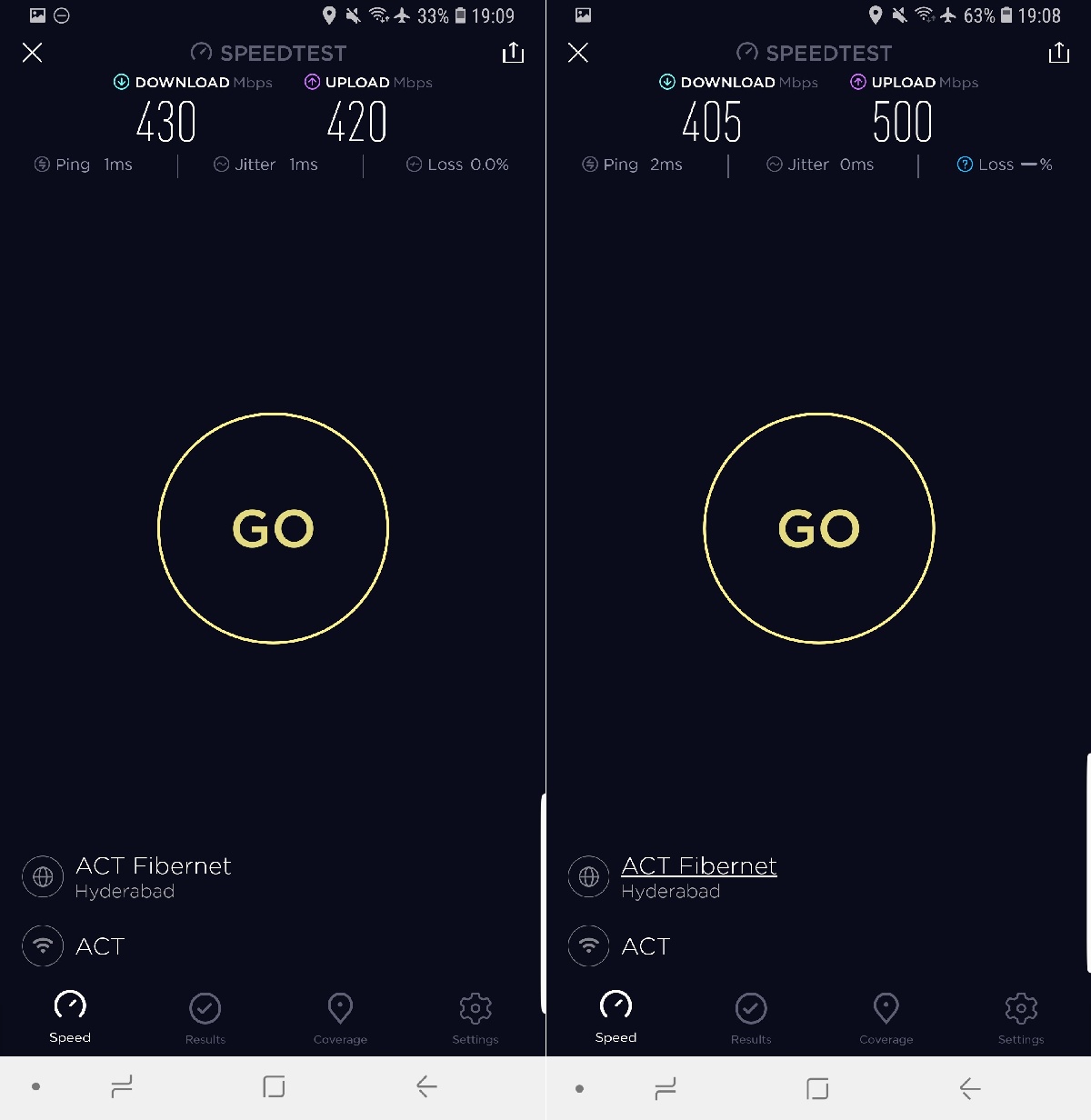
On the Galaxy S9+, you also get 6GB of RAM, while the Galaxy S8 and S8+ had to make do with 4GB of RAM, so the real-world user experience on the S9+ is noticeably better than the S8+. But where do these devices stand when it comes to benchmark performance? We decided to run a few popular benchmarks on the Galaxy S8+ and Galaxy S9+ to find out, and, unsurprisingly, the Galaxy S9+ came out on top in nearly all tests. We have even thrown in an internet speed test comparison over Wi-Fi for good measure (although these can vary wildly depending on the router the devices connect to and shouldn’t be taken too seriously).

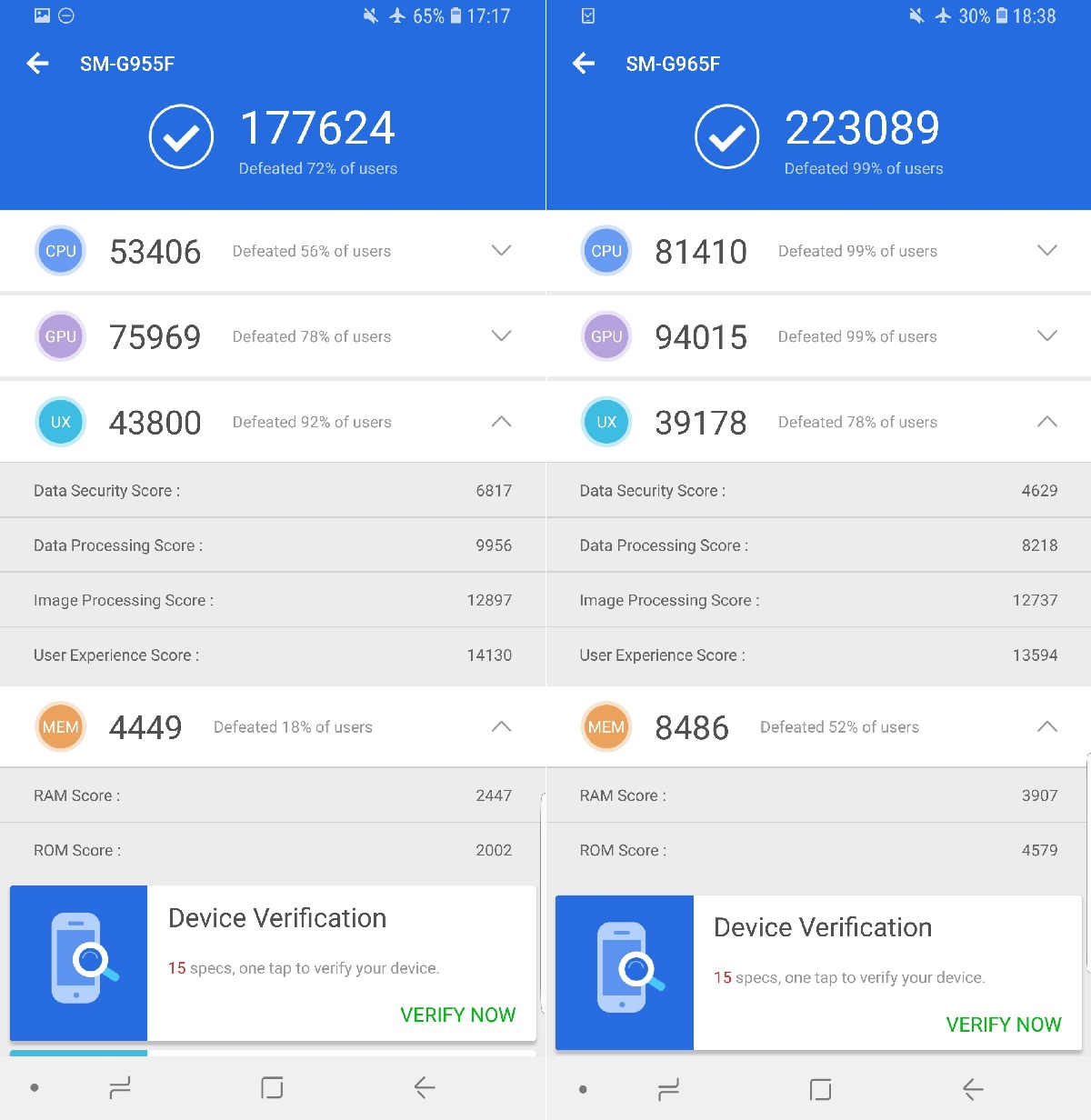
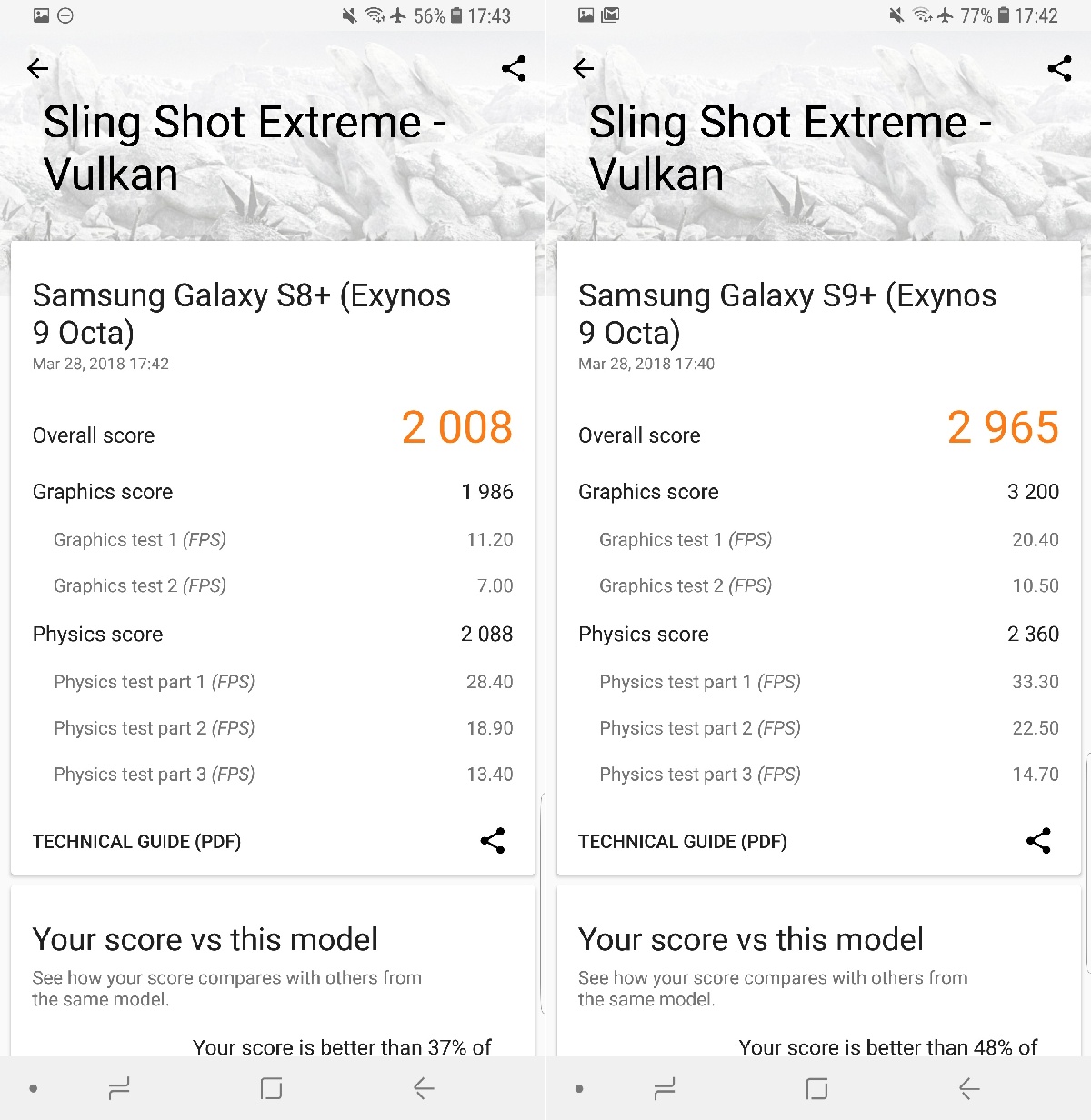
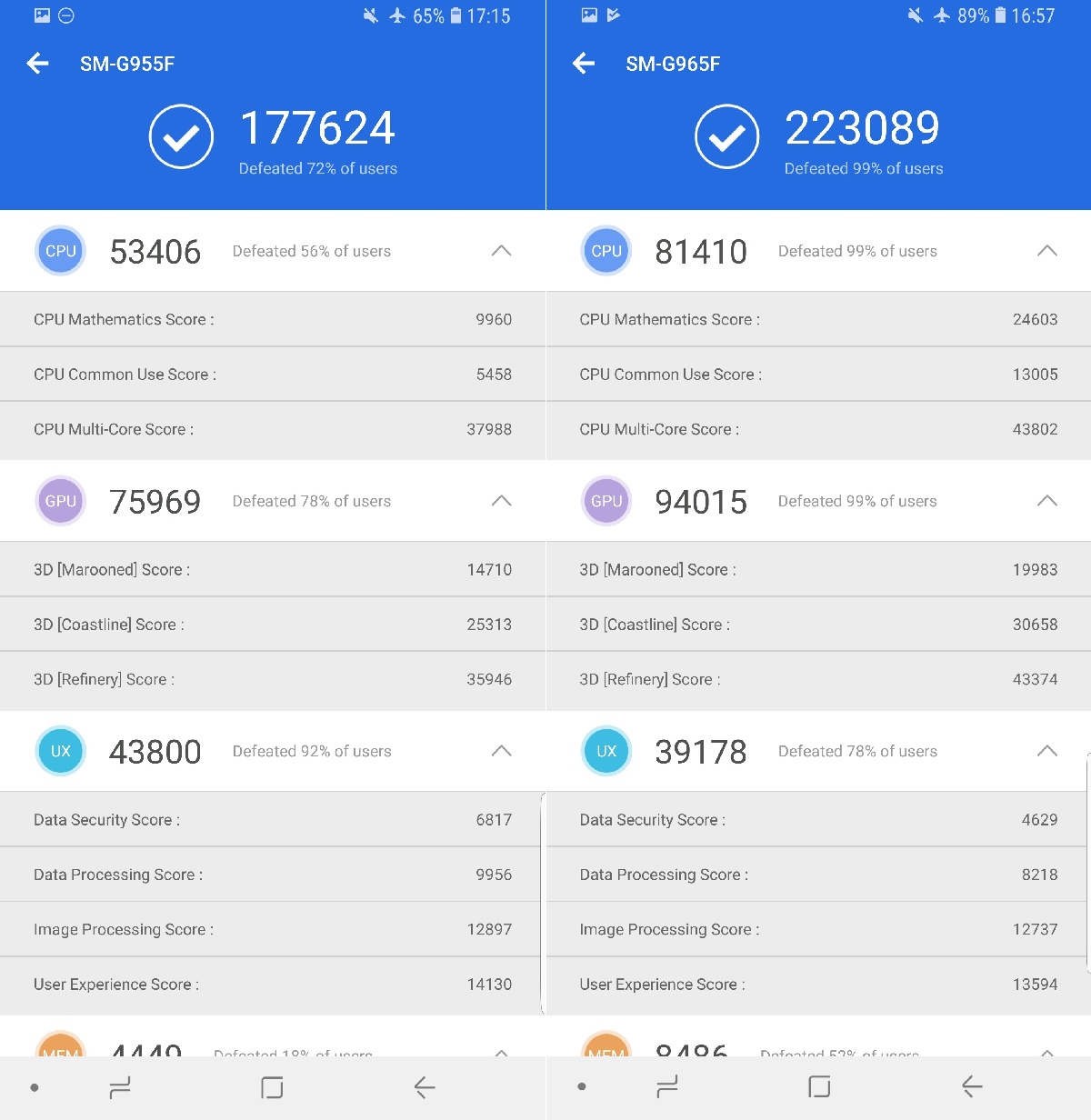
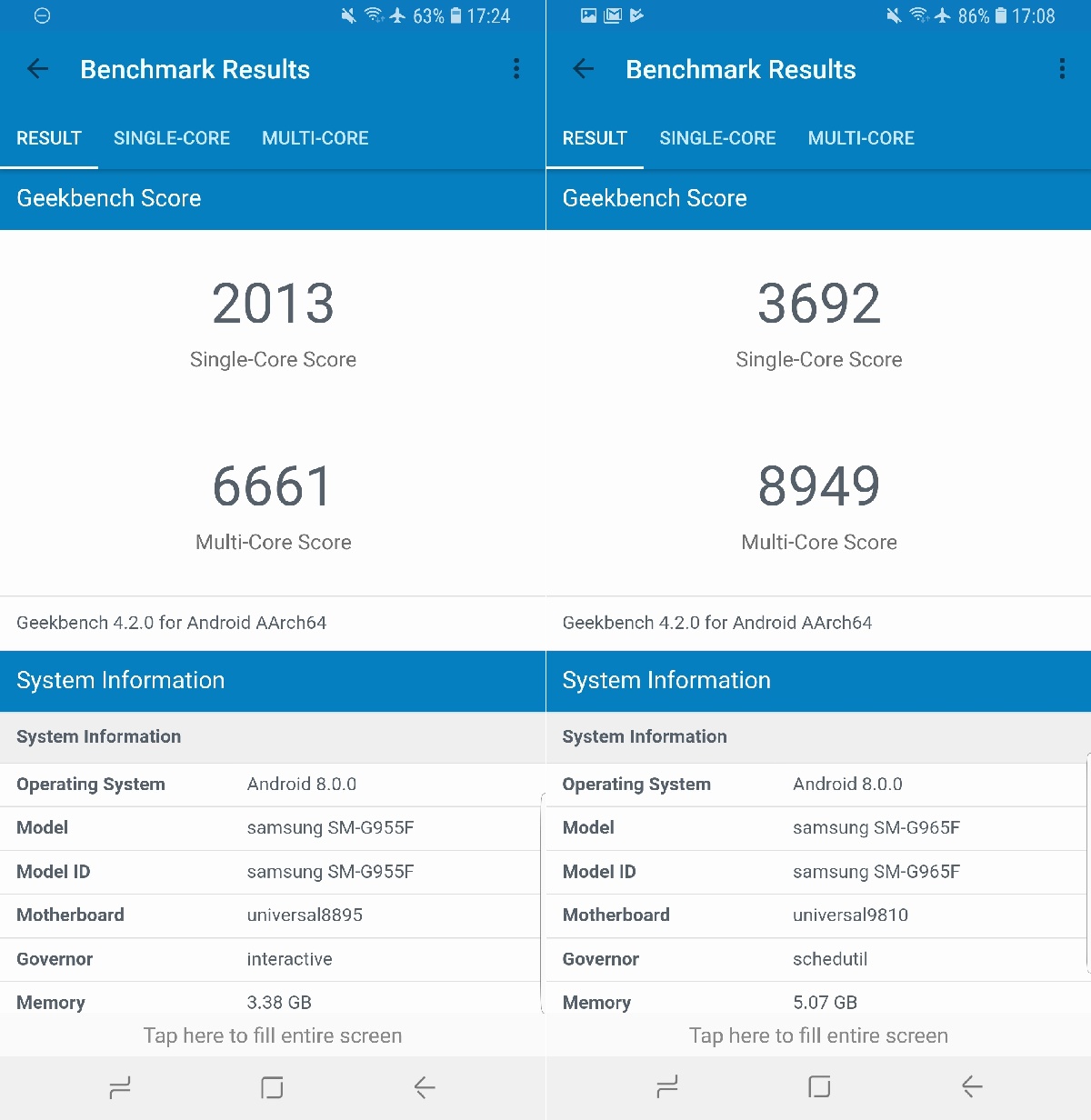
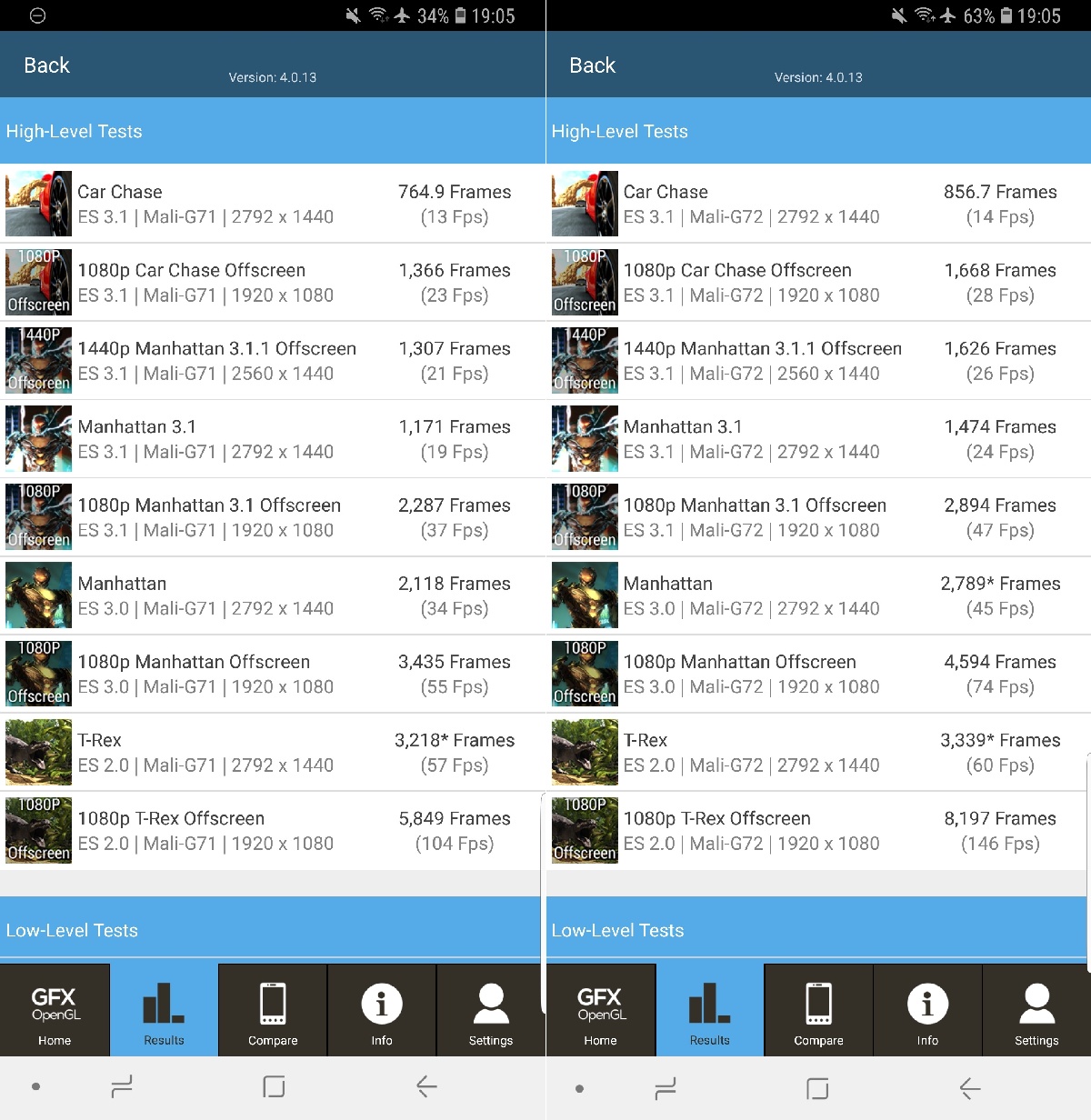
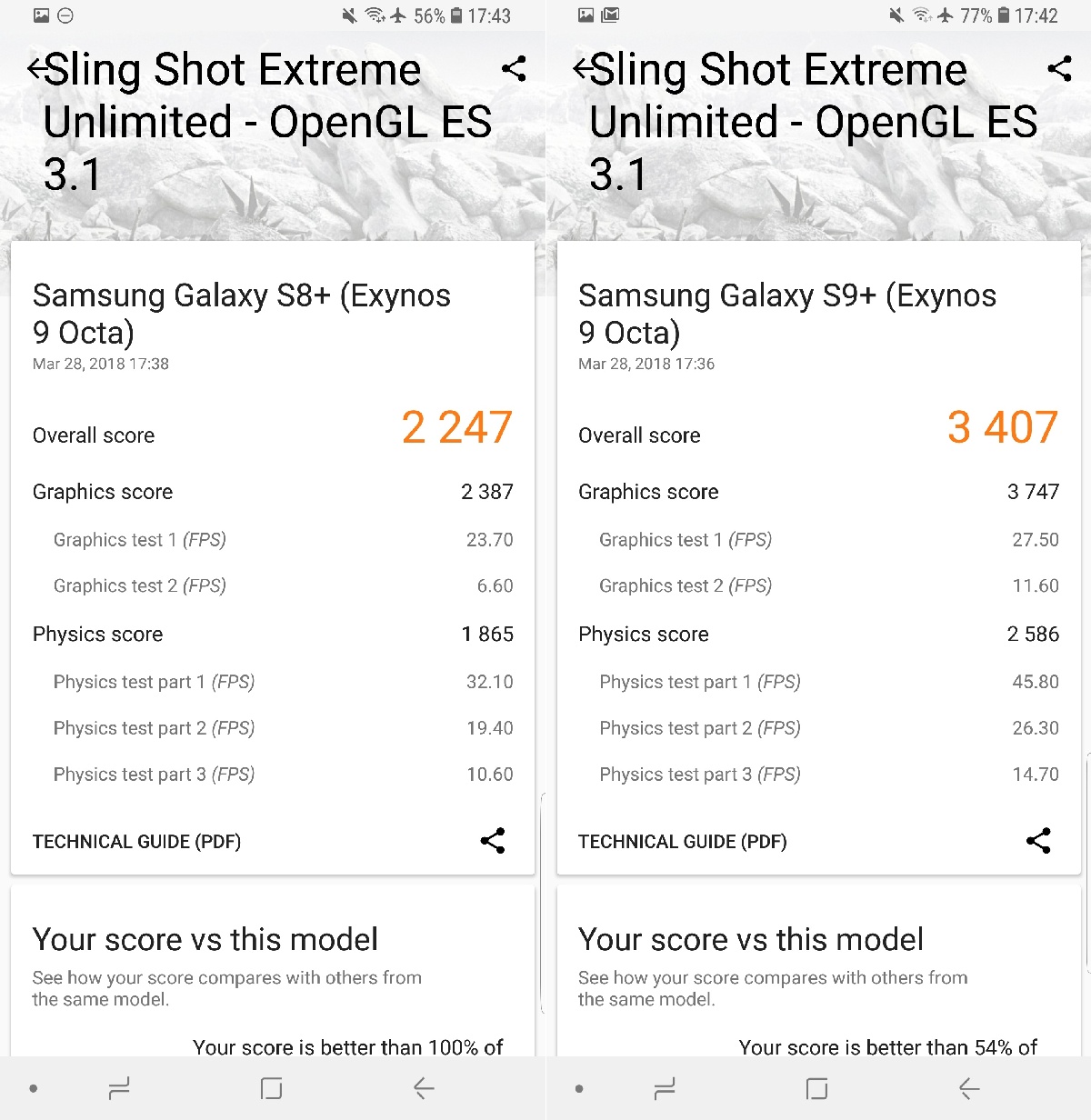
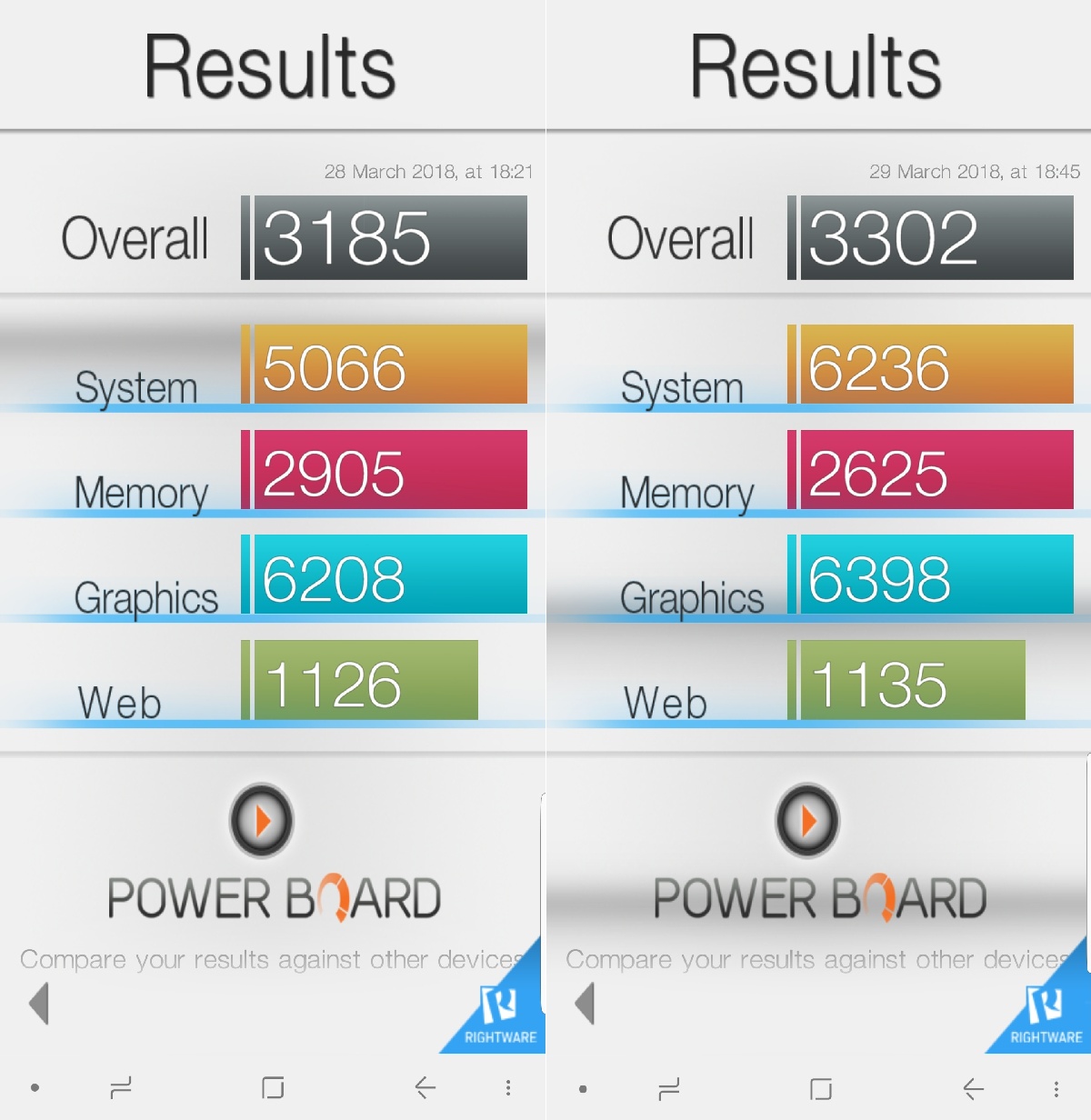
We’ll just let the scores do the talking, however, so check those out by looking at the images below and let us know your thoughts in the comments. The Galaxy S8+ scores are on the left, and the S9+ scores are on the right in each picture. Unfortunately, we were unable to test the regular Galaxy S9 against a Galaxy S8, but since the S9 only gets less RAM, its benchmark scores should be similar to the S9+ on most accounts.

AnTuTu
Geekbench
GFXBench (GPU benchmark)
3D Mark (GPU benchmark)
Basemark OS II
Speed Test (Internet test over Wi-Fi)
The post Benchmark performance comparison: Galaxy S8+ vs Galaxy S9+ appeared first on SamMobile.


from SamMobile https://ift.tt/2J2XWTD
via IFTTT
Unlocked Galaxy S9 and S9+ in the US will get FM radio support in the next update

All these years, many smartphones sold in the US had their FM chip disabled intentionally by the carriers and OEMs for commercial reasons. It was seen as a move by the carriers to push users to consume more data and thereby pay more every month.

Thankfully, things started changing in the last year or so when LG, Motorola, Alcatel, and other companies decided to activate the FM chips on their smartphones going forward. Earlier this year, Samsung also joined the party by deciding to activate the FM chips on its upcoming smartphones in the US and Canada.

Samsung forgot to add the NAB FM API

While Samsung kept its promise for the carrier variants of the recently launched Galaxy S9 and Galaxy S9+ sold in the US, it appears the unlocked Galaxy S9 and S9+ models don’t have their FM chips activated yet. NextRadio, the company that Samsung partnered with to enable the FM chips on its smartphones, lists only the carrier variants of the Galaxy S9 and S9+ as supported models.

When Android Police reached out to NextRadio to figure out what’s happening, they received the following response from the company:

“Samsung mistakenly did not add the NAB FM API to the unlocked devices. Our team confirmed this with them a couple of days after release upon receiving reports the app did not work. Samsung has said it will be in the first update they do, but have not yet settled on a date.

The model numbers are SM-G960UI and SM-G965UI that do not currently work for FM. SM-G960U and SM-G965U are sold through carriers and do work for FM.”

Many people buy unlocked Galaxy smartphones in the US to avoid all the anti-customer decisions associated with the carrier variants. So, it must be disappointing for the unlocked Galaxy S9 and S9+ users in the US to miss out on a nifty little feature. Hopefully, Samsung pushes the promised update soon and fix this.

The post Unlocked Galaxy S9 and S9+ in the US will get FM radio support in the next update appeared first on SamMobile.


from SamMobile https://ift.tt/2E4j7RH
via IFTTT

New Galaxy S9 update rolling out in more markets

Being the latest flagship in Samsung’s galaxy of smartphones, the Galaxy S9 is unsurprisingly getting all the attention when it comes to software updates. The first update to the Galaxy S9 and S9+ came just a few days before these handsets went up for sale in numerous markets around the world, and earlier this week, Samsung released another update for the S9 and S9+. This update was only available in Germany initially, but the Korean giant isn’t wasting any time and has now made the update available in other markets as well.

New Galaxy S9 update rolling out in more markets

The latest Galaxy S9 update, with build number XXU1ARCC, brings improvements to call stability and wallpaper quality. The changelog isn’t just for show, as we did run into call stability issues on one of our Galaxy S9+ units recently. Considering everything was fine when we used the Galaxy S9 on pre-final software for our review, it seems the problem may have been introduced by the first update. Or, well, it was just our network operator to blame, but it’s good to see Samsung actively fixing issues on the Galaxy S9 and S9+. As for wallpaper quality, we tried comparing two Galaxy S9s, one running the newest firmware and another that we haven’t still updated, and there seems to be no difference in quality with either stock of third-party wallpapers.

To grab the new update on your Galaxy S9 or S9+, go into the phone’s settings, tap Software update, followed by the Download updates manually option. The size of the update seems to vary from country to country, but you can expect it to be somewhere between 250 MB and 350 MB if you download it over the air, so make sure you’re on a Wi-Fi connection or have enough bandwidth if you decide to update using mobile data. We also have the full firmware files in our firmware database, although it may take some time for your country’s firmware to show up.

The post New Galaxy S9 update rolling out in more markets appeared first on SamMobile.


from SamMobile https://ift.tt/2GztQsD
via IFTTT

Early Galaxy Note 9 release report blames the Galaxy S9

It’s here, the first early Galaxy Note 9 release report. Whenever a new Samsung flagship in the pipeline we tend to hear reports that Samsung is going to release the handset earlier than its predecessor. There were similar reports for the Galaxy S9 which turned out to be true as the Galaxy S9 was announced on February 25, 2018 and released on March 16. The Galaxy S8 was announced on March 29, 2017 and released on April 21.

So it’s not surprising to see a report out of South Korea claim that the Galaxy Note 9 release is likely going to take place earlier than expected. It blames less-than-steller performance of the Galaxy S9 for that.

Early Galaxy Note 9 release

According to the report, the Galaxy Note 9 is going to be released earlier than the Galaxy Note 8 to make up for the less-than-stellar sales of the Galaxy S9. Samsung apparently wants to outshine Apple’s new iPhones as well which is why it may consider an early release. Apple’s new iPhones aren’t expected until September this year.

Samsung hasn’t revealed the sales figures for its new flagship just yet but it expects Galaxy S9 sales to outperform the Galaxy S8. However, a recent report claimed that the Galaxy S9 is proving to be a tough sell in South Korea as customers aren’t too enthusiastic about the handset. We also reported recently that 36 percent of Galaxy S8 owners don’t feel the need to upgrade to the Galaxy S9. There could be some truth to reports that the Galaxy S9 sales are not up to the company’s expectations.

Just in case you forgot, the Galaxy Note 8 was announced on August 23, 2017 and Samsung started taking pre-orders in key markets the very next day. It released the Galaxy Note 8 on September 15.

This report about an early Galaxy Note 9 release is based on predictions that Samsung Display is going to start producing the 6.38-inch OLED panel for the Galaxy Note 9 next month, two months before it normally does that for an upcoming flagship phablet. It is thus claimed that the next Note flagship could be released “as early as July or August.” Samsung Display declined to comment on the production schedule.

We did report last week that Samsung has started firmware development for the Galaxy Note 9 two weeks earlier than it did for the Galaxy Note 8 last year. It also started firmware development for the Galaxy S9 a fortnight before it did for the Galaxy S8.

While that’s enough to form an assumption that the Galaxy Note 9 release could take place earlier than expected, it’s far from confirmed at this point in time. Take this information with a grain of salt for now as we’ll likely see conflicting reports about the Galaxy Note 9 release in the months to come.

The post Early Galaxy Note 9 release report blames the Galaxy S9 appeared first on SamMobile.


from SamMobile https://ift.tt/2Gmr9XW
via IFTTT

Intel may be able to take back its crown from Samsung

With higher revenue and operating profits compared to Intel during Q2 2017, Samsung ended Intel’s 25-year reign as the largest semiconductor-based chipmaker in the world. By the time the year wrapped up, Samsung had properly dethroned Intel by becoming the largest chipmaker in the world by revenue.

This has been a significant achievement for Samsung despite the fact that Intel processors are used in a vast majority of computers worldwide. While Samsung makes processors as well, they’re primarily used in mobile devices and not desktops/notebooks. Samsung’s lead is based on its dominant position in the memory chip market. Some analysts expect that lead to drop this year which could result in Intel winning back its crown from Samsung.

A price reversal could put Intel on top again

Research firm IHS Markit has released its annual global semiconductor industry data for 2017 which also confirms that Samsung has overtaken Intel as the top semiconductor supplier in the world based on revenue. Samsung saw a year-over-year sales growth of 53.6 percent.

Samsung dominates the global memory chip market. You’ll find it difficult to come across a smartphone or tablet these days that doesn’t have a RAM from Samsung inside. The company has also significantly improved its position in the solid state drive market.

Samsung’s revenue gains have thus been driven by its memory chips whereas Intel relies on its microprocessors for PCs and servers for a big chunk of its revenue. IHS and Gartner analysts both note that Samsung’s lead isn’t as secure as Intel’s was when it emerged as the leader 25 years ago because the latter’s lead relied on microprocessors.

Samsung’s gains last year were due to strong price hikes for memory chips as two-thirds of the company’s revenue growth came from its memory products. Analysts expect prices to drop this year for NAND flash memory initially followed by DRAM in 2019 as Chinese manufacturers enhance their production capacity.

“We then expect Samsung to lose a lot of the revenue gains it has made,” says Gartner analyst Andrew Norwood. IHS Markit analyst Shaun Teevens makes a similar prediction, saying that if there’s a strong reversal in memory pricing it’s quite likely that Intel could regain the top position.

Samsung has been keeping an eye on what the Chinese are trying to do in the memory market and it’s not threatened by them so far. The company continues to expand its production capacities to meet future demand.

The post Intel may be able to take back its crown from Samsung appeared first on SamMobile.


from SamMobile https://ift.tt/2IdQUKA
via IFTTT

Samsung setting up a new AI research facility in France

Samsung has announced that it’s going to make France its third biggest hub for artificial intelligence research and development. The company has decided to set up a new artificial intelligence research facility in the country which will be its third biggest after the existing facilities in South Korea and the United States. Samsung will hire around 100 experts in Paris to staff this facility.

The announcement was made after a meeting between Samsung’s strategy chief Young Sohn and French President Emmanuel Macron in Paris. It’s part of the president’s bid to enhance France’s capabilities in artificial intelligence.

Expanding AI research to France

Samsung currently has a small team of around 15 in the Paris area which it will build up to 50 by the end of this year. The goal is to eventually have 100 people working on AI research and development at this new facility. Luc Julia will be leading the efforts in France, he’s the French researcher who once oversaw the development of Siri for Apple and moved to Samsung back in 2013 as a vice president in the company’s innovation lab in Menlo Park, California.

Samsung has gradually been increasing its focus on AI research. The company has also been acquiring smaller artificial intelligence companies to bring in more talent, recent acquisitions include Expect Labs and Vicarious.

Its acquisition of Egypt-based Kngine was confirmed just three weeks ago. This company created an artificial intelligence engine that crawls the web, books, FAQs, enterprise documents and even customer service logs to automatically create biologically plausible knowledge representations thus allowing the AI to effectively function like a human brain.

Samsung is also reportedly developing its own artificial intelligence chips known as Neural Processing Units. The chips would enable Samsung devices to process more AI-related data locally thus eliminating the need to use cloud servers to process and analyze data. A recent report claimed that Samsung’s AI chips will be more advanced than Apple’s and that the company is going to introduce its neural processing units in the second half of this year.

The post Samsung setting up a new AI research facility in France appeared first on SamMobile.


from SamMobile https://ift.tt/2IfjLy5
via IFTTT

الأربعاء، 28 مارس 2018

Galaxy S9 Tip: Create individual shortcuts to front and rear camera on the home screen

One of the minor yet useful new features introduced by Google on Android 7.0 Nougat was App Shortcuts, a way for apps to offer quick access to some functions through a long press on a particular app’s shortcut on the home screen. You can long press the Google Maps shortcut to start navigation to home or work without having to first open the app, or directly open the email composing screen by long pressing the Gmail shortcut. Samsung, sadly, waited until Android 8.0 Oreo to offer support for App Shortcuts on the default home screen launcher on Galaxy devices, and it seems the company has also added a few exclusive shortcuts for some apps on the Galaxy S9.

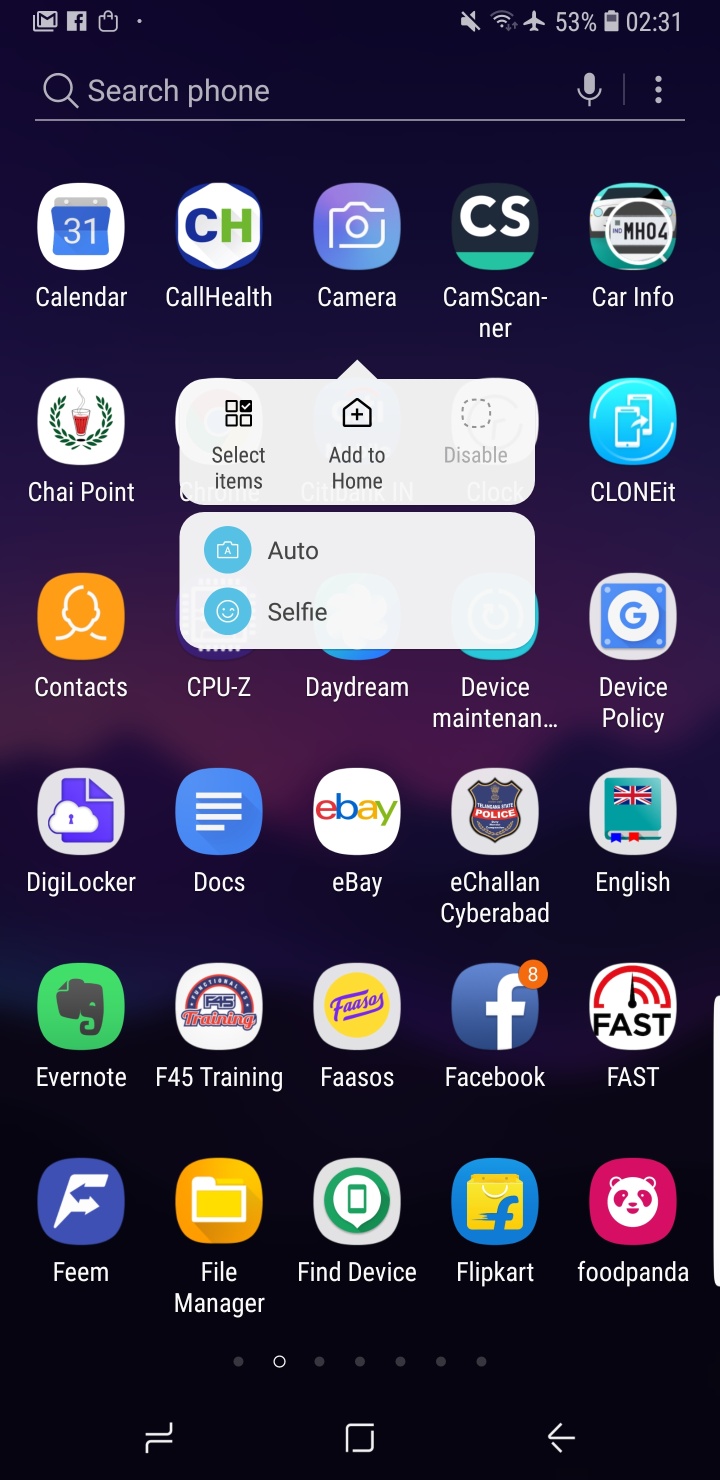
One of these is the camera app, and on the Galaxy S9, you can long press on the camera’s home screen shortcut to quickly access the rear or front camera. Anyone who takes a lot of photos knows it can be a nuisance to have to change to the right camera after opening the camera app and risk missing an important moment, which is why the App Shortcuts implementation for the camera on the Galaxy S9 is a godsend. The best part? These shortcuts to specific actions within an app can be added to the home screen, removing the need to long press the app’s home screen shortcut.

On the Galaxy S9, that means you can have a shortcut to directly opening the rear or front camera. Sure, double pressing the power button launches the camera app even when the screen is off, but having rear camera and front camera shortcuts on the home screen can be useful when you’re using the phone, as you can simply tap the home button and get to those shortcuts without having to rearrange your grip to reach the power button.

How to create rear camera and front camera home screen shortcuts on the Galaxy S9?

So how do you create those camera shortcuts on the Galaxy S9? Let’s take a look at the process step-by-step.

Step 1: Unlock the phone and go to the home screen. By default, the camera shortcut is present in the bottom dock, next to apps like Phone and Play Store. If it isn’t, just open the app drawer (by swiping up on the home screen), find the Camera app (but don’t tap/click on it yet), and then proceed with the steps below.

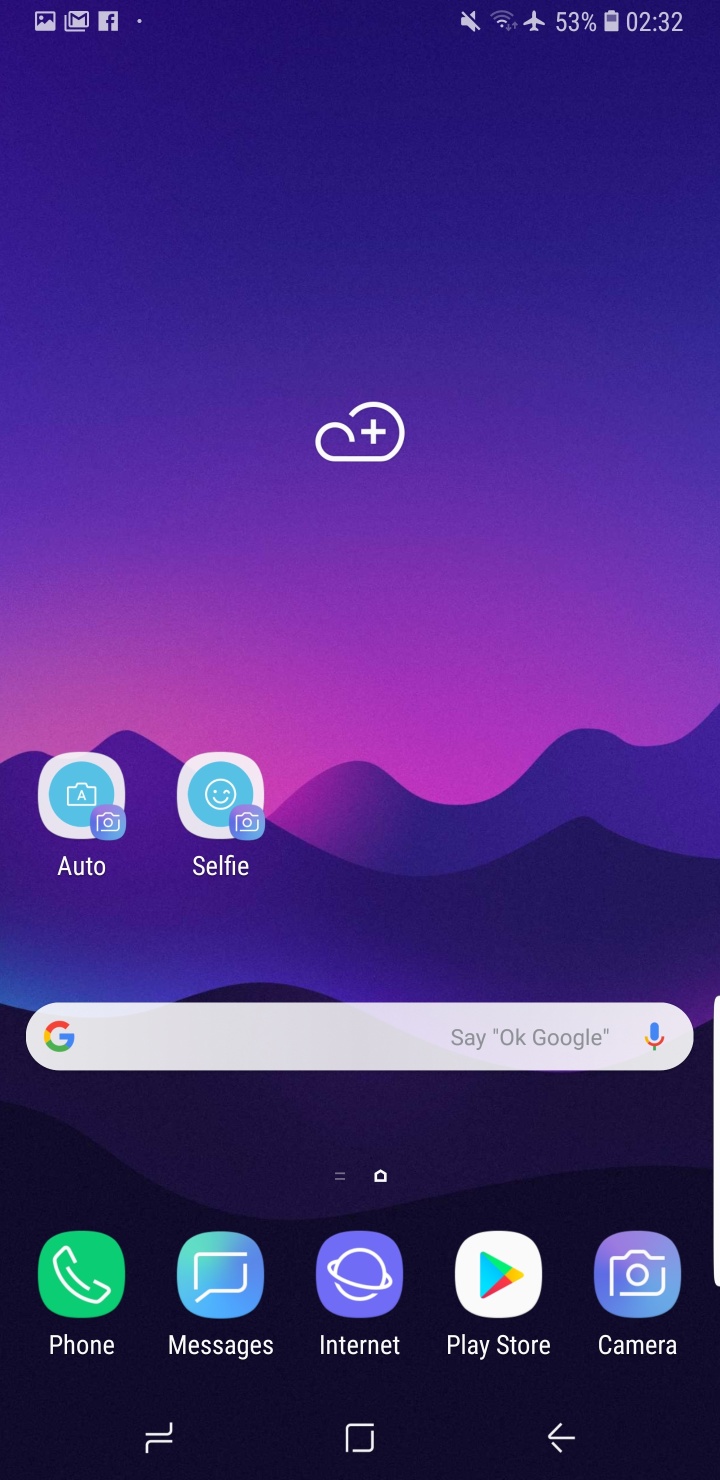
Step 2: Long press the camera shortcut until the menu of shortcuts shows up. You will see Auto and Selfie as the two shortcut options available.

Step 3: Now, for the sake of this article, we’ll create a shortcut to both the rear and front camera. So, first, press and hold the Auto option and drop it wherever you please on the home screen. This will be your shortcut for the rear camera.

Step 4: Once you’ve placed the Auto shortcut on the home screen, repeat steps 2 and 3, only this time press and hold the Selfie option and place that somewhere on the home screen.


That’s it. You will now be able to quickly access the rear and front cameras using these shortcuts. Remember, if these shortcuts are making your home screen too crowded, you can move them to a folder, although that may defeat their purpose. Also, here’s hoping Samsung brings these shortcuts to other devices running Android 8.0 Oreo, like the Galaxy S8 and Galaxy Note 8 through a future software update.

Having trouble following the steps described above? Let us know by leaving a comment, and we’ll do our best to help you out. For more tips and tricks on the Galaxy S9 and S9+, go here.

The post Galaxy S9 Tip: Create individual shortcuts to front and rear camera on the home screen appeared first on SamMobile.


from SamMobile https://ift.tt/2uyAcn0
via IFTTT

جميع الحقوق محفوظة لمدونة الغريب 2013