الخميس، 3 مايو 2018

Samsung was the top global smartphone vendor in Q1 2018

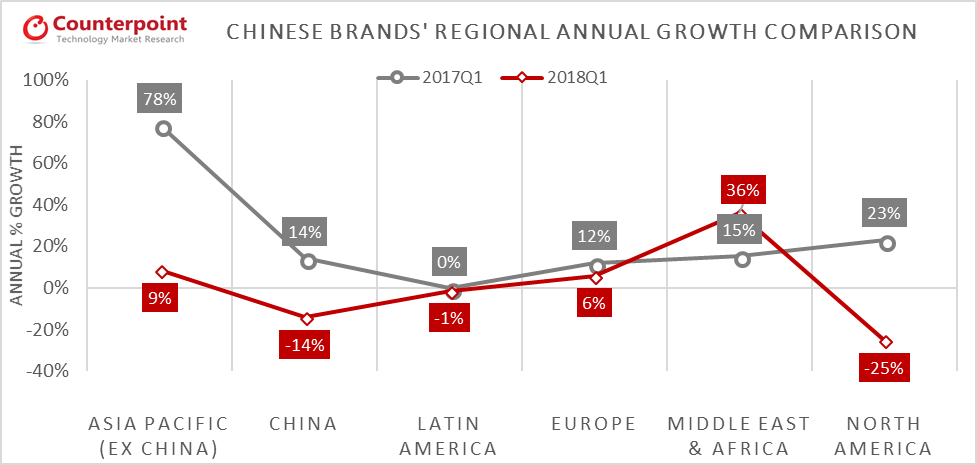
Samsung has been relegated to irrelevance with less than 1% market share in the largest smartphone market, China. Even in India, the second largest smartphone market, the company has lost the top position in market share according to many market research firms. Despite these challenges, Samsung still emerged as the top global smartphone vendor in Q1 2018 according to the shipment numbers from Counterpoint Research.

3% decline in YoY shipments

Samsung shipped 78 million smartphones globally in Q1 2018, down from 80 million units it shipped in Q1 2017. In spite of the 3% decline in YoY shipments, Samsung was still the largest vendor in the quarter. Since the global smartphone market itself declined 3% annually in Q1, Samsung posted a minuscule improvement in market share from 21.6% in Q1 2017 to 21.7% in Q1 2018. Also, the launch of the Galaxy S9 and S9+ in Q1 helped Samsung to increase its shipments by 5% sequentially.

Apple came in second by shipping 52.2 million units in the quarter, resulting in a 3% YoY growth. Huawei, Xiaomi, and Oppo occupied the next three positions respectively. Among the top five vendors, only Samsung and Oppo sold fewer phones than what they did during the same time last year. Driven by its stellar performance in India and other emerging markets, Xiaomi made the most gains in the top five by registering an impressive 101% increase in shipments.

The post Samsung was the top global smartphone vendor in Q1 2018 appeared first on SamMobile.


from SamMobile https://ift.tt/2KyvQjW
via IFTTT
Galaxy S10 codename and new features revealed in latest report

Samsung fans are looking forward to the company’s next flagship Galaxy S series handset which for the sake of continuity is currently referred to as the Galaxy S10. It won’t be out before next year and yet we’re already seeing reports about what the Galaxy S10 might bring to the table. The latest report out of South Korea brings us the purported Galaxy S10 codename as well as information about some of the new features that it will tout.

Galaxy S10 codename and new features

The Galaxy S8 was a breath of fresh air for Samsung’s Galaxy S series and as we had reported earlier, the device was codenamed Dream. Samsung has a habit of assigning internal codenames to its flagship handsets so the Galaxy S9 had one as well and it was Star. So what about the Galaxy S10? South Korean news outlet The Bell reports that the Galaxy S10 has been assigned the codename Beyond.

It’s fitting for Samsung’s 10th anniversary flagship handset as the company will certainly be aiming to go beyond what it has already achieved in the flagship smartphone market and reach new heights. It might also signify the company’s intention to go beyond what’s possible and deliver a truly revolutionary device.

A previous report by the same publication suggested that the Galaxy S10 and Galaxy S10+ won’t be that different compared to their predecessors in terms of design. They’re said to feature a 5.8-inch and 6.3-inch Infinity Display respectively with an in-display fingerprint sensor.

Multiple reports have also suggested that Samsung might finally introduce its in-display fingerprint sensor with the Galaxy Note 9 this year. Whether or not that happens remains to be seen but one can certainly bet on the company introducing this new technology with its 10th anniversary flagship first.

The latest report mentions that Samsung has informed its partner companies that it’s going to introduce an in-display fingerprint sensor with the Galaxy S10. The companies that it’s working on this technology with include Synaptics, Qualcomm and Ezestek but the final vendor for the sensors has not yet been confirmed. Samsung may opt for multiple vendors to ensure that it doesn’t suffer from supply issues during a production ramp up.

There’s also a possibility that Samsung might add a 3D camera to the Galaxy S10 which will allow for improved facial recognition and tracking to enhance the functionality of AR Emoji, such as allowing users to make video calls with their digital avatars. Today’s report mentions that Samsung is still uncertain about adding this component to the Galaxy S10 so it remains unclear whether or not the next flagship will have a 3D camera.

It merits mentioning here that The Bell does have a solid track record when it comes to predictions about unannounced Samsung flagships. Nevertheless, this is just one of many reports that we’ll hear about the Galaxy S10 before it’s launched early next year. Nothing has been officially confirmed as yet so until then, take all of this information with a pinch of salt, no matter how plausible it might seem.

The post Galaxy S10 codename and new features revealed in latest report appeared first on SamMobile.


from SamMobile https://ift.tt/2jrMvth
via IFTTT

Patent suggests how the Galaxy Note 9 in-display fingerprint sensor might work

It has been rumored for the past couple of years that Samsung is developing an in-display fingerprint sensor that it’s going to use for its flagship smartphones. The Galaxy S9 doesn’t have one which leaves the Galaxy Note 9 as the only remaining Samsung flagship 2018 which may or may not get this component.

It was reported last month that Samsung is seriously considering one of three solutions developed by Samsung Display to integrate an in-display fingerprint sensor. The company is expected to make a final decision on whether or not this component will be included in its next flagship smartphone soon.

Yet another in-display fingerprint sensor patent

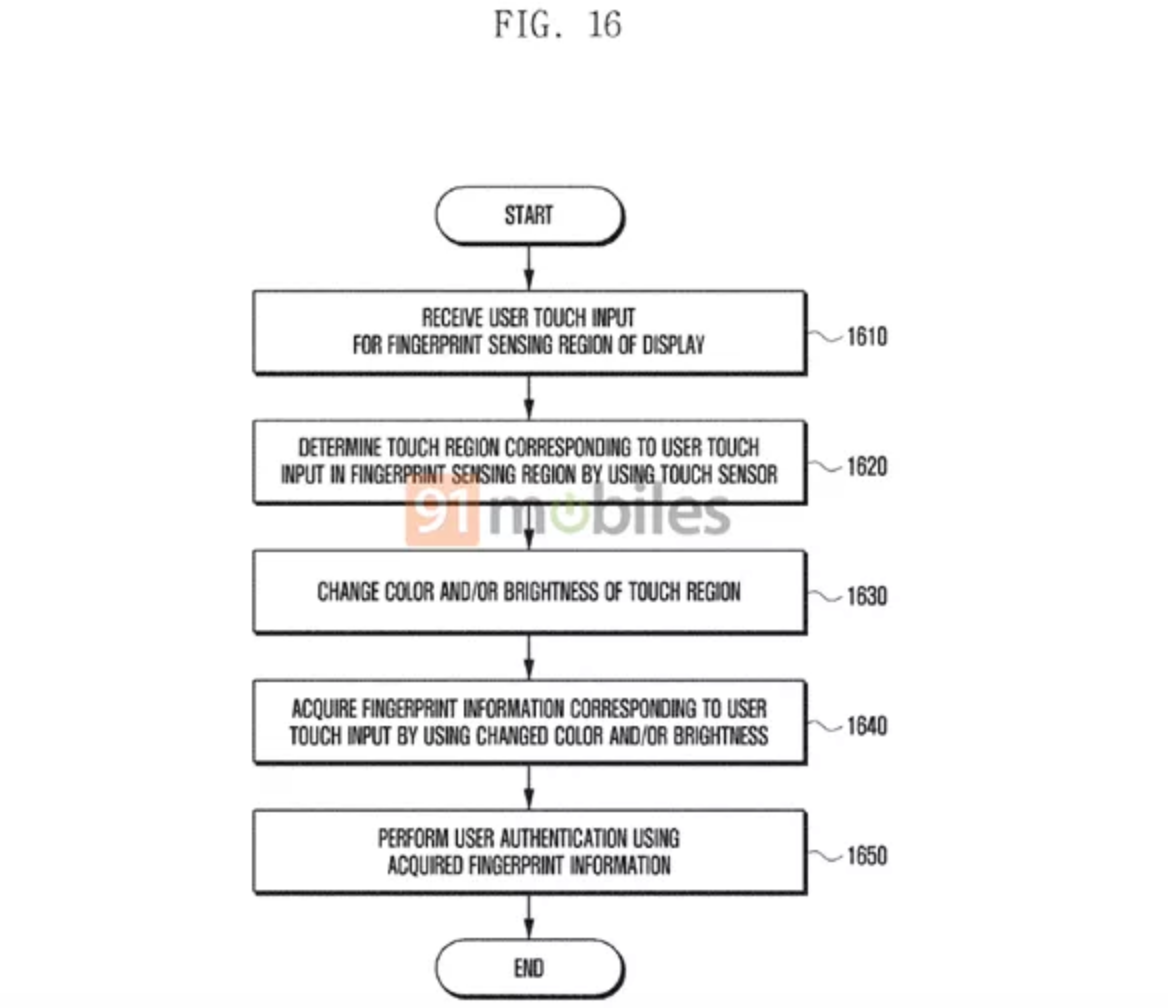
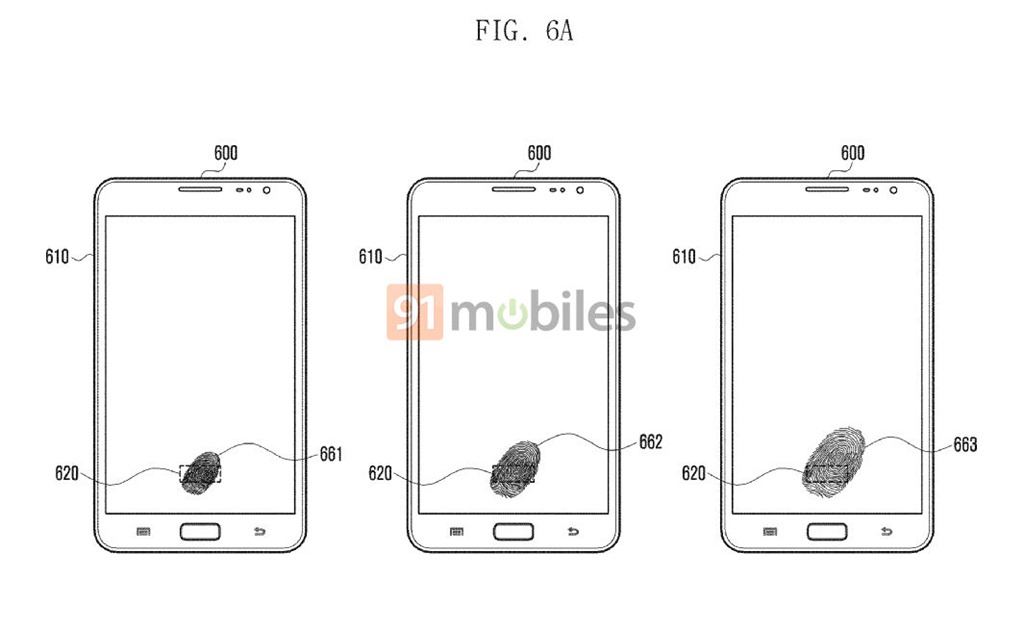
Samsung has no shortage of patents detailing an in-display fingerprint sensor and another has now surfaced online which suggests how this component might work. The module may be placed towards the bottom of the display which is where one would expect to find it anyway. That’s also where the display-based fingerprint sensor of the Vivo X21 UD is located.

Once the sensor receives the touch input, it will determine the touch region corresponding to the input and then use the AMOLED display’s light-emitting property to read the biometric information by changing the brightness around the sensor upon touch.

The method is quite similar to the one used by the Synaptics Clear ID sensor on the Vivo X21 UD. Previous reports have suggested that Samsung might source the in-display fingerprint sensor from Synaptics but there’s no confirmation about that just yet.

Do keep in mind that this is just one of the many patents that Samsung has detailing in-display fingerprint sensing technology so it can’t be taken as a confirmation that the Galaxy Note 9 is indeed going to feature this component.

Many believe that it’s high time that Samsung introduces an in-display fingerprint sensor in its flagship smartphones as Chinese OEMs have already taken the lead on this. Whether or not it does that for the Galaxy Note 9 remains to be seen.


The post Patent suggests how the Galaxy Note 9 in-display fingerprint sensor might work appeared first on SamMobile.


from SamMobile https://ift.tt/2rj4B3W
via IFTTT

Samsung closes profitability gap with Apple no thanks to smartphones

Samsung and Apple have both posted their earnings results for this past quarter and the numbers show that Samsung has done a great job at closing the profitability gap with its biggest rival. However, while the iPhone drives much of Apple’s profits, it’s a different story over at Samsung. So even though Samsung has been able to narrow the profitability gap with Apple, it has done that without any substantial contributions from its smartphone division.

Semiconductors steal the show again

Apple posted sales of $61.1 billion this past quarter and an operating profit of $15.8 billion. This brings the company’s operating profit-to-sales ratio to 26 percent, slightly down from 26.7 percent a year earlier.

Samsung beat market expectations with its Q1 2018 earnings as it posted a 57.6 percent surge in profit for the January-March 2018 period. The company posted sales of over $56 billion and an operating profit of $14.4 billion. This brings Samsung’s operating profit-to-sales ratio to 25.8 percent.

It’s a big achievement on Samsung’s part as Apple was ahead by more than 10 percentage points in the profit-to-sale ratio for 2016. Market observers say that Samsung has been successful in increasing its profit margins and now appears to be gaining on Apple in this metric. Some even expect Samsung to post a higher operating profit-to-sales ratio than Apple in the second quarter of this year, though that could partly be because of Apple’s historically weaker earnings in the April-June period. That’s when iPhone sales slow down a bit in anticipation of the newer models.

We recently explained in detail why Samsung may never earn the kind of profits that Apple does from smartphones. Apple ships fewer handsets than Samsung but makes more money while Samsung enjoys leading the market in terms of volume shipments but it makes less money from smartphones. That’s because it caters to all three market segments and profit margins are wildly different in each.

So while it’s impressive that Samsung has closed this gap, it has been able to do this because its semiconductor division continues to mint money. The bulk of Samsung’s profits actually come from its semiconductor division which is riding a wave of high prices and subsequently higher profits in the memory market.

Things can go sour pretty quickly from Samsung if it comes under intense pressure in the memory market. The company is already facing a lawsuit along with other memory suppliers alleging that they colluded to artificially raise prices of memory products.

The post Samsung closes profitability gap with Apple no thanks to smartphones appeared first on SamMobile.


from SamMobile https://ift.tt/2rguX6I
via IFTTT

Galaxy S9/S9+ Messages app will soon get chatbot support

A couple of weeks back, Google revealed its plan for the future of messaging on Android. After a spate of failed attempts to capture the Instant Messaging market with its proprietary apps, Google decided to place its bets on RCS (Rich Communication Services) – a successor to the ubiquitous SMS but with all the bells and whistles of the modern IM apps. Unlike other Instant Messaging apps from Google, RCS is a standard that can be baked into any messaging app for interoperability.

For RCS to be successful, many players in the industry have to come together and back it. So far, many carriers, OEMs, and OS developers (Google, Microsoft), etc. have expressed their support for RCS. Samsung is one of the OEMs who pledged to support RCS by updating its default Messages app to work with the new messaging standard. A few leaked screenshots today give us a sneak peek into one of the RCS features in Samsung’s Messages app.

One of the features of RCS

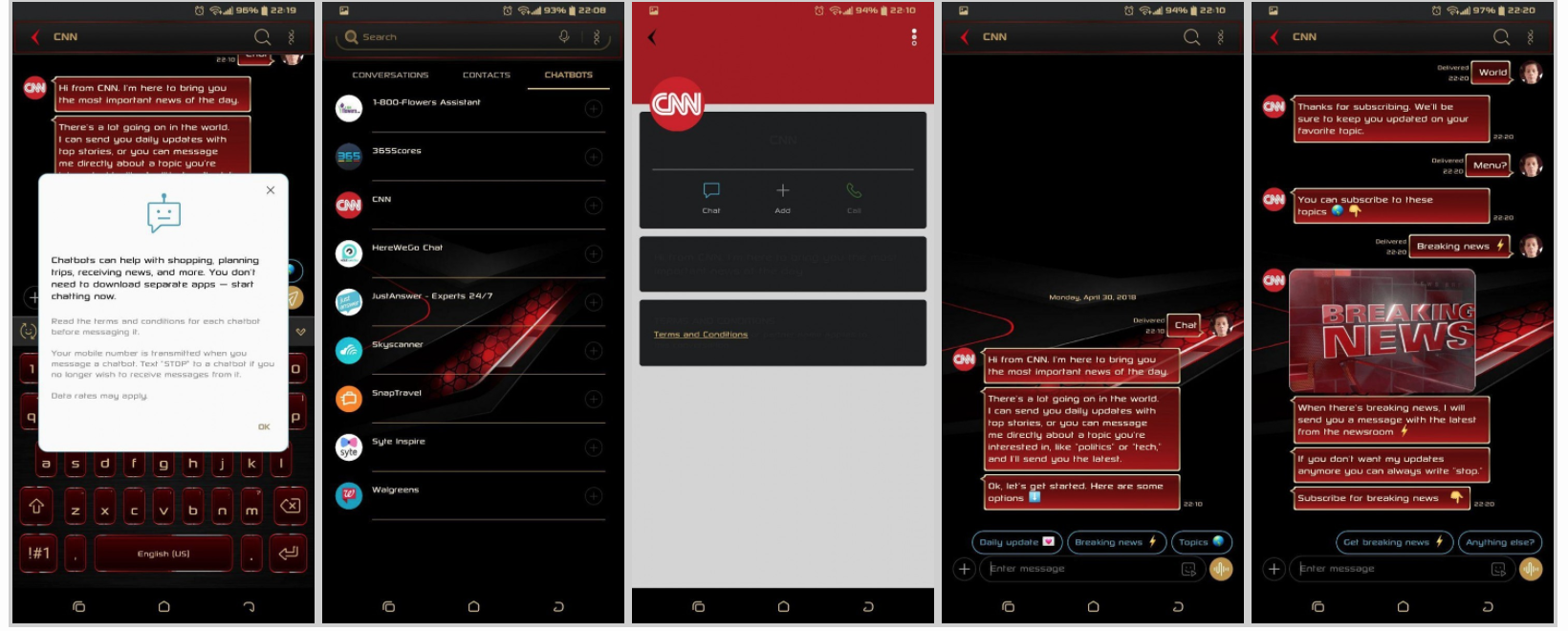
XDA-Developers have obtained few screenshots of the Messages app in the leaked AT&T Galaxy S9 firmware with the May security patch, and they point to the impending launch of the chatbot support in Samsung’s default messaging app. The premise behind these chatbots is to help users in shopping, travel, news, and more by allowing them to communicate by automated bots with businesses within the messaging app. The functionality and purpose are similar to the chatbots on Skype, Facebook Messenger, etc.

Installing the leaked firmware seems to be enough to gain access to the chatbots. Currently, 1-800-Flowers Assistant, 385Scores, CNN, HereWeGo Chat, JustAnswers 24-7 Experts, SkyScanner, SnapTravel, Style Inspire, Walgreens, etc. have employed chatbots to assist their customers. As RCS begins to roll out widely, you can expect the number of chatbots to grow substantially.

Though the leaked screenshots are from the AT&T Galaxy S9 firmware, other carrier variants shouldn’t be far behind considering Google’s plan for RCS rollout this year. We cannot independently confirm, but AT&T seems to have released few chatbots for Samsung devices in March itself. All of this looks like beta-testing by various industry partners before officially launching RCS widely.

Let us know in the comments section if you have come across any chatbots in your SMS messaging app.

The post Galaxy S9/S9+ Messages app will soon get chatbot support appeared first on SamMobile.


from SamMobile https://ift.tt/2HJpal7
via IFTTT

Samsung’s new camera sensor will save development time for smartphone makers

Given that Samsung has already achieved a dominant position in the DRAM and NAND flash memory market, the company now wants to dominate the image sensor market as well. It was recently reported that Samsung is going to increase the production capacity of its image sensors as it wants to dethrone Sony as the global leader in the image sensor market.

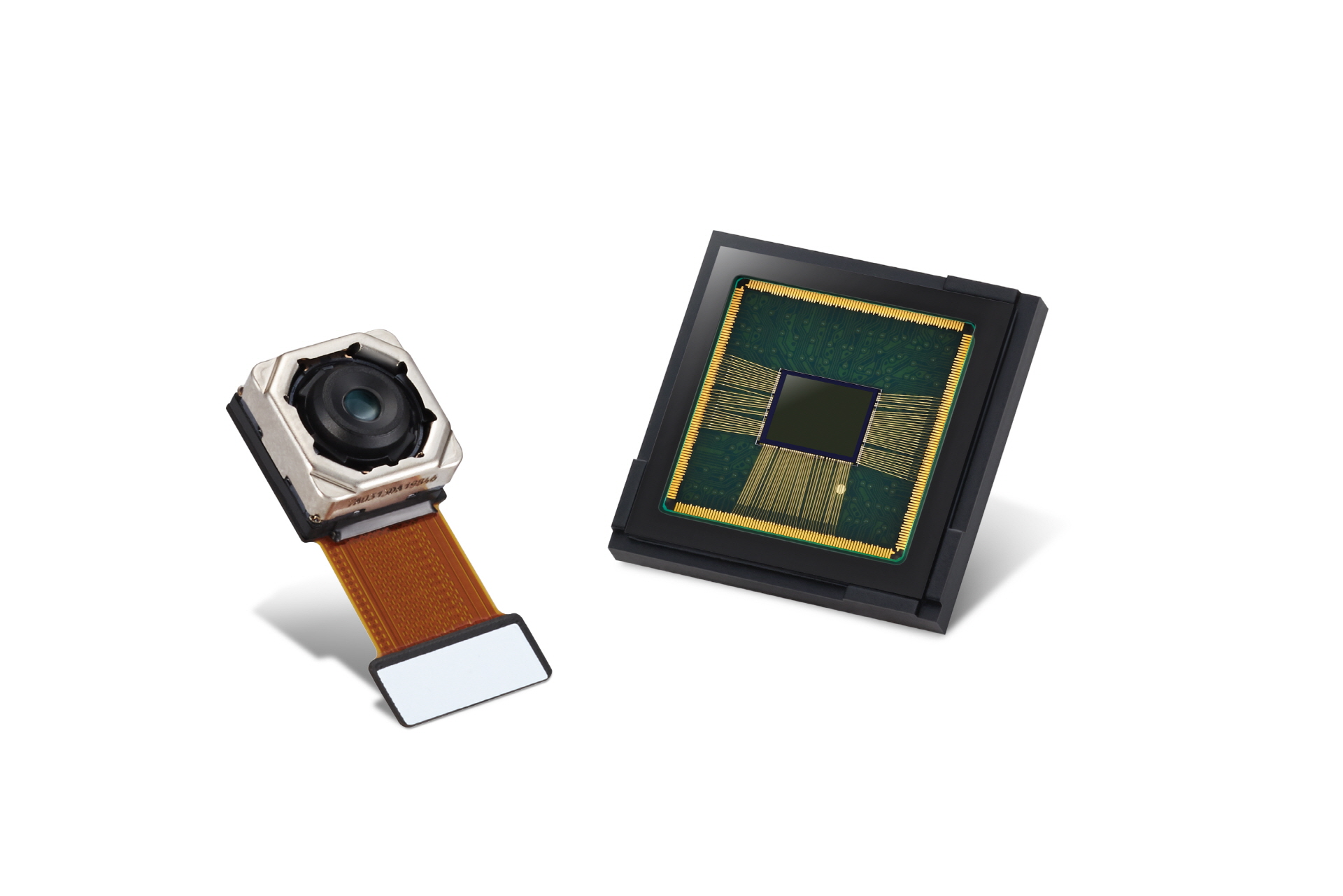
Samsung today announced the launch of a new image sensor which it says is going to save valuable development time for smartphone makers. The company’s new 16-megapixel ISOCELL Slim 3P9 sensor offers a “Plug & Play” solution which Samsung says can save up to four months of development time for manufacturers. This gives smartphone manufacturers an incentive to opt for Samsung’s sensors and thus aids the company in achieving its aim of dominating the image sensor market.

New sensor is readily available for smartphone manufacturers

Samsung’s new 16-megapixel ISOCELL Slim 3P9 image sensor with Plug and Play solution is a pre-optimized turnkey camera module that will expedite time-to-market for clients. It’s a 1.0μm with Tetracell technology which will enable sleekly designed smartphones to take bright and vivid pictures.

Tetracell technology merges four neighboring pixels thus enabling the module to effectively function as a 2.0μm image sensor for front-facing cameras that can take brighter pictures in dark environments.

The sensor has an advanced phase detection auto-focus with doubled auto-focus agent density for faster auto-focusing. It also has a gyro-synchronizer which stabilizes images and video by syncing the frame exposure time from the sensor with movement data from the device’s gyroscope.

To reduce development time for manufacturers, Samsung offers them an ISOCELL Plug and Play solution for the sensor in a rear camera module along with other components such as actuators and lenses from preferred partners. It does all of the optimization and reliability tests at the module-level so that manufacturers can simply plug the camera into their devices and be ready to ship.

Smartphone manufacturers can source the new camera sensor from Samsung right away.

The post Samsung’s new camera sensor will save development time for smartphone makers appeared first on SamMobile.


from SamMobile https://ift.tt/2KxzBWD
via IFTTT

You can now download the first Galaxy S7 Oreo firmware

It has been a couple of days since Samsung rolled out Android 8.0 Oreo for the Galaxy S7 and the Galaxy S7 edge. The update has only been released in the United Kingdom so far but it’s only a matter of time before it’s released in other markets as well.

We informed you yesterday that the first Galaxy S7 edge Oreo firmware file is now available for download. Many of you have been waiting for the Galaxy S7 firmware file and will be happy to know that it’s now available for download.

Galaxy S7 Oreo firmware

Samsung has rolled out firmware version G930FXXU2ERD5 for the Galaxy S7 in the United Kingdom. It has been released for both the unlocked and Vodafone-branded variants so far. The firmware includes all of the features that are part and parcel of Android 8.0 as well as the April 2018 security patch. The Galaxy S7 Oreo firmware is now available for download from our firmware section.

Samsung will soon release Oreo for the Galaxy S7 and the Galaxy S7 edge in more markets across the globe. The company is shooting for a wider release by mid-May so we still have a couple of weeks to go before most Galaxy S7 and Galaxy S7 edge owners across the globe get a taste of Oreo.

We’ll certainly let you know as soon as the Oreo for the Galaxy S7 and Galaxy S7 edge goes live in more markets.

The post You can now download the first Galaxy S7 Oreo firmware appeared first on SamMobile.


from SamMobile https://ift.tt/2Id76PR
via IFTTT

جميع الحقوق محفوظة لمدونة الغريب 2013