الثلاثاء، 24 سبتمبر 2019

Galaxy Note 10 and Galaxy S10 Dynamic Lock screen feature explained

One of the ways you can customize your Galaxy Note 10 experience is by setting a Dynamic Lock screen. This is a Note 10 feature that made its way onto the Galaxy S10 with the latest software update. Keep in mind that the OTA release began this week, therefore it’s currently limited but will gradually extend to new users across all the markets. Regardless of which Galaxy flagship phone you may be using, this is all you need to know about Dynamic Lock screen.

A Dynamic Lock screen consists of a series of still wallpapers organized in different categories. So far there are five of them, including Landscape, Life, Food, Pets, and Art. You can set only one category at a time and a new image will be shown on your lock screen every time you wake up the phone.

How to set a Dynamic Lock screen

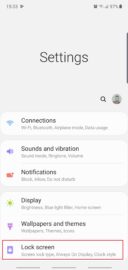
There are two ways to set a Dynamic Lock screen. One method is to pinch the home screen, tap Wallpaper, then tap Dynamic Lock screen, and select a category. Alternatively, you can open the Settings app, tap Lock screen then access Dynamic Lock screen and select a category. (For the purpose of this guide, the images below exemplify the second method).
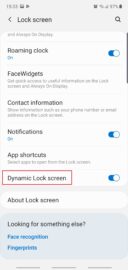
As previously stated, the Dynamic Lock screen will present a different wallpaper every time you wake up the phone. As a bonus feature, you can swipe left or write on the lock screen to switch between wallpapers or browse your current image set. Each image set will be refreshed by Samsung with new wallpapers every 2 weeks.


We’re hoping Samsung will add more categories in the future. Dynamic Lock screen offers an effortless way of keeping your experience fresh on the Galaxy Note 10 and Galaxy S10 flagships. You might find yourself pressing the power button more than once, just to see what image might be waiting for you next.
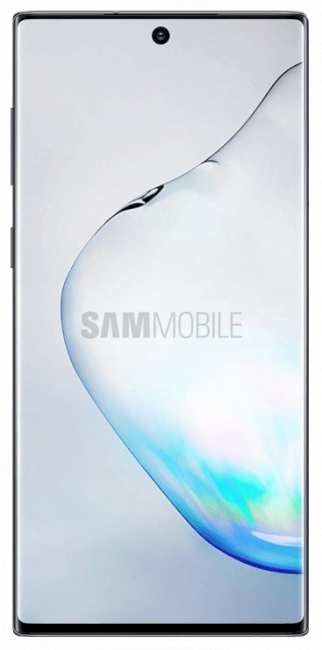
  • Model: SM-N970F
  • Dimensions: 151.0 x71.8x7.9mm
  • Display: 6.3"(160.02mm) Super AMOLED
  • CPU: Exynos 9825
  • Camera: 12 MP, CMOS F2.2 Telephoto & 12MP F1.5/F2.4 77° & 16MP F2.2 123° Ultra-wide

  • Model: SM-N975F
  • Dimensions: 162.3 x 77,2 x 7.9mm
  • Display: 6.8"(172.7mm) Super AMOLED
  • CPU: Exynos 9825
  • Camera: 12 Ultra Wide: 16MP F2.2 (123°) & Wide-angle: 12MP 2PD AF F1.5/F2.4 OIS (77°) & Telephoto: 12MP F2.1 OIS (45°) & DepthVision Camera: VGA

  • Model: SM-G970F
  • Dimensions: 69.9 x 142.2 x 7.9mm
  • Display: 5.8” (146.5mm) Super AMOLED
  • CPU: Exynos 9820 Octa
  • Camera: 12 MP, CMOS F1.5/F2.4 (77°) & 16MP, CMOS F2.2 (123°)Ultra Wide

  • Model: SM-G973F
  • Dimensions: 70.4 x 149.9 x 7.8mm
  • Display: 6.1"(157.5mm) Super AMOLED
  • CPU: Exynos 9820 Octa
  • Camera: 12 MP.CMOS F2.4 45° Telephoto & 12MP F1.5 77° & 16MP F2.2 123° Ultra-wide

  • Model: SM-G975F
  • Dimensions: 74.1 x 157.6 x 7.8mm
  • Display: 6.4"(162.5mm) Super AMOLED
  • CPU: Exynos 9820 Octa
  • Camera: 12 MP.CMOS F2.4 45° Telephoto & 12MP F1.5/F2.4 77° & 16MP F2.2 123° Ultra-wide

The post Galaxy Note 10 and Galaxy S10 Dynamic Lock screen feature explained appeared first on SamMobile.


from SamMobile https://ift.tt/2kQR3O4
via IFTTT
Samsung has an $11 billion answer to its LCD problem

Samsung Display is one of the many affiliates that account for a significant chunk of the conglomerate’s revenue. It hasn’t been smooth sailing for the company recently as the business environment has become very challenging. The influx of Chinese suppliers, who receive significant state subsidies, has led to a supply glut of LCD panels. Demand has also slowed over the past couple of years, making it more difficult for Samsung to retain its margins.

Samsung operates two LCD production lines in South Korea and it has been mulling the possibility of shutting one of them down. Another plan under consideration involves upgrading the line to build more advanced displays. It appears Samsung has decided on the latter.

Samsung will spend $11 billion to upgrade LCD production line

According to local reports, Samsung is going to invest 13 trillion won (~$11 billion) to upgrade one of its LCD production lines in South Korea. Samsung Display will reportedly announce this investment next month. A spokesperson for the company told Nikkei that while “nothing has been decided” with regards to the investment, Samsung is working on producing a more advanced type of OLED.

That’s a reference to QD-OLED or quantum dot OLED, an advanced display that Samsung has been studying for quite some time. Samsung already makes quantum dot panels for its high-end TVs while its OLED panels are second to none. It would effectively combine both technologies to create a hybrid display that offers the best qualities of both.

A QD-OLED display would include a self-luminous OLED panel with a layer of QDs. They’re small semiconductor crystals. These displays will not require backlight units like LCDs and won’t suffer from burn-in issues like OLED displays can. Some even expect Samsung to start shipping QD-OLED TVs by next year.

We should hear more about how Samsung plans to reverse its fortunes in this segment of the market in the coming month when this investment is formally announced.

The post Samsung has an $11 billion answer to its LCD problem appeared first on SamMobile.


from SamMobile https://ift.tt/2lkVVey
via IFTTT

Samsung’s 5G Exynos 980 chip to debut in a Vivo smartphone this year

Samsung unveiled the Exynos 980 5G chipset a few weeks ago. It’s the first mobile processor from the company to feature an integrated 5G modem. It was later confirmed by Samsung that Vivo will be one of the companies to use this chip in a new smartphone.

Vivo has reiterated that it’s working on a smartphone which will feature Samsung’s integrated 5G mobile processor. No further details have been made available at this point but the company says the device will be out before the end of this year.

Exynos 980 5G’s first outing will be in a Vivo smartphone

Existing solutions require a separate 5G modem. The biggest advantage of an integrated solution would be allowing the technology to trickle down to more affordable devices. The Galaxy A90 5G, Samsung’s only non-flagship 5G smartphone, also uses the high-end Snapdragon 855 processor with the X50 5G modem. No wonder it costs $700.

Samsung’s Exynos 980 is based on the company’s 8nm FinFET process technology. It has two 2.2GHz Cortex-A77 cores and six 1.80GHz Cortex-A55 cores in addition to the Mali-G76 MP5 GPU. There’s an onboard neural processing unit as well for artificial intelligence tasks.

The Exynos 980 doesn’t require a separate 5G modem. This will help reduce power consumption and free up more space inside the device as well. The integrated modem supports 5G to 2G networks with up to gigabit downlink speeds in 4G LTE. It even supports the new Wi-Fi 6 standard.

Vivo’s upcoming smartphone will likely be the first outing for Samsung’s integrated 5G chip. We can expect to see it in the company’s own devices down the line. Perhaps some of the 2020 Galaxy A models might feature it as well.

The post Samsung’s 5G Exynos 980 chip to debut in a Vivo smartphone this year appeared first on SamMobile.


from SamMobile https://ift.tt/2ljj80w
via IFTTT

Daily Deal: 36% off the Galaxy Watch Active

If you’re looking for an excellent smartwatch at an affordable price, the Galaxy Watch Active should be on your list. It offers a beautiful display, intuitive UI, comfortable design and supports tracking for a lot of workout routines. It’s one of the best smartwatches that Samsung has ever made and an excellent option at 36% off! It ships internationally as well meaning you can safely purchase this smartwatch even if you don’t live in the US.

Get it now using the Buy Now button below before the price changes again!


The post Daily Deal: 36% off the Galaxy Watch Active appeared first on SamMobile.


from SamMobile https://ift.tt/2mNCBH7
via IFTTT

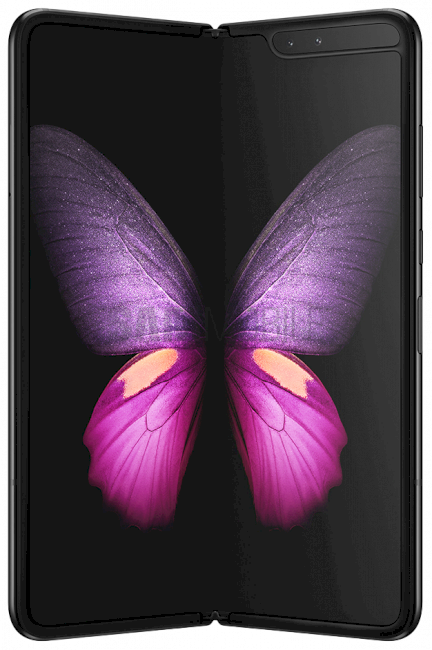
The Galaxy Fold is finally here but there are reasons not to buy it

The long-awaited Galaxy Fold is finally available for purchase in a handful of markets. Samsung took a stance and delayed its foldable phone months ago when it realized the first sample units didn’t last in the hands of most early reviewers for more than a week. Fortunately, the device was not actually on sale yet, and the company was able to push back the phone’s original release, avoiding what could’ve been a real PR nightmare.

Samsung took the time following the phone’s delay to perfect it. They say good things come to those who wait, but is this true for Galaxy Fold enthusiasts who have been waiting since April? Time will tell, but even if we assume that Samsung’s fixes are foolproof, the Galaxy Fold is not the all-encompassing phone-tabled hybrid that excels on all fronts. Its cool factor will be unmatched for a while, and it’s very exciting to finally have it here, but there are reasons to consider not buying Samsung’s halo device.

Why you should not buy the Galaxy Fold

The Galaxy Fold aims to combine the smartphone and tablet form factors into a single product, and achieves this thanks to Samsung’s foldable display technology. However, compromises had to be made and, simply put, the Galaxy Fold excels in neither the ‘phone’ or ‘tablet’ category. Instead, it resides in its own.

Although this brave attitude is commendable, it comes at a cost. When folded shut, the Galaxy Fold’s 4.6-inch cover display, whose sole purpose is fulfilling your smartphone needs, is a bit too small by today’s standards. The unusually-thick bezels further accentuate the cover display’s small dimensions and can make for an odd user experience.

On the other hand, the Galaxy Fold’s 7.3-inch foldable display doesn’t offer the perfect tablet experience either. It’s close, but its biggest strength, i.e. the compact size, is also its weakness. The Fold’s panel is smaller than any of Samsung’s tablets presently available for purchase, including the latest Galaxy Tab S6, which we consider to be the top Android tablet of 2019.

Your typing experience will most likely be impacted by the Galaxy Fold’s displays. The cover display is, once again, too small for any serious finger work, while typing on a tablet is not going to be ideal for everyone. The negative experience is compounded by the fact that you have to keep unfolding the device for every message that you may want to write in tablet mode.

This brings us to the risk of questionable durability associated with the Fold. The foldable phone concept, along with the technologies underlying it, have not yet been thoroughly tested. Samsung’s commercial foldable display implementation is young and it is prone to damage more so than conventional smartphone displays because it’s not covered in hard glass. The company openly admits this and published a video to remind buyers that this exquisite device should be treated with more care because of the foldable panel’s lower resistance, and the phone’s lack of dust and waterproofing.

The hinge feels very solid but we don’t know how it will stand the test of time, particularly against dust particles and dirt. Perhaps the Galaxy Fold will prove to be durable enough to be used for a few years without any technical issues cropping up. But even so, knowing in the back of your mind that there’s always a higher risk associated with using the inside display can be detrimental to your experience.

Technicalities aside, there’s no secret that the Galaxy Fold costs a pretty penny relative to other smartphones or tablets. Around $2,000, to be more precise, and Samsung fans who might feel like spending this much money on a mobile device isn’t a wise investment should probably not make sacrifices for the sake of obtaining the Galaxy Fold early on. The true and tested candy bar form factor is far from obsolete, and you could probably get more mileage out of a standard Galaxy flagship phone, a Galaxy tablet, and a pair of Galaxy Buds bought separately for roughly the same cost.

Finally, even if we assume that the first generation proves to be a commercial success, there’s no telling where Samsung will push the foldable concept next. The current design could evolve or be replaced in its entirety. There are speculations that Samsung might release another foldable phone in the first half of 2020, which would transition to a clamshell form factor and abandon some features in favor of a lower price tag. The company may also plan a direct Galaxy Fold successor in H2 2020, so all in all, Samsung fans could have two or more options in the foldable phone department next year, and some prospective buyers might be better off waiting until next year before they switch to the foldable form factor.


Our poll results suggest most of our readers will skip the Galaxy Fold, but the votes weren’t one-sided and there are a lot of people who claim to be interested in acquiring it.

Where do you stand on the Galaxy Fold? Have you been waiting for the device to hit the shelves, or have you already moved on? Will you be a first-gen early adopter or will you wait and see how the foldable phone scene evolves next year? Join us in the comment section below.

  • Model: SM-F900F
  • Dimensions: Unfolded: 160.9 x 117.9 x 6.9 mm Folded: 160.9 x 62.9 x 15.5 mm
  • Display: 7,3" (185.4mm) Super AMOLED
  • CPU: Qualcomm Snapdragon 855
  • Camera: 16 MP, CMOS F2.2 & 12MP, CMOS F1.5/F2.4Wide & 12MP, CMOS F2.4 Telephoto

The post The Galaxy Fold is finally here but there are reasons not to buy it appeared first on SamMobile.


from SamMobile https://ift.tt/2mPnT2r
via IFTTT

The first Galaxy Fold screen replacement will cost $149

Wondering how much the Galaxy Fold screen replacement might cost you if you decide to buy this device? Samsung officially confirmed the US release for its foldable smartphone yesterday. Interested customers will be able to pick one up from AT&T, Best Buy, and Samsung Experience Store locations starting September 27.

As you can probably imagine, the handset comes with plenty of warnings in the box so that customers know that they have to take extra care of the foldable display. It’s an expensive component that can get damaged fairly easily. To that end, Samsung is offering all customers a one-time out of warranty screen replacement for $149.

Galaxy Fold screen replacement costs $149 but there’s a caveat

We had reported two weeks ago that Galaxy Fold owners will get one discounted screen replacement for the device as part of the Galaxy Fold Premier Service. Customers will be eligible for this replacement within one year of their date of purchase. Samsung’s has detailed additional terms now. Customers can indeed get this one-time out of warranty screen replacement for $149. However, they must have purchased the device before December 31, 2019 to be eligible for this.

It appears that the discounted Galaxy Fold screen replacement will not be offered to customers who pick up the device after the fact. This could either be because Samsung expects to sell out of the entire Galaxy Fold supply by then or because it feels that this is a buffer enough for customers to fully grasp what is expected of them in caring for their Galaxy Fold.

The care instructions for the Galaxy Fold warn customers to not press the screen with a hard or sharp object, not place any objects in between when folding the device, avoid spilling liquids on it and not attach any objects like screen protectors on the foldable display.

Samsung is selling the Galaxy Fold for $1,980 in the United States. It actually won’t ship the device to customers. They will actually have to make an appointment and pick it up from the aforementioned retail locations where Galaxy Fold product experts will again guide them through the care instructions.

The post The first Galaxy Fold screen replacement will cost $149 appeared first on SamMobile.


from SamMobile https://ift.tt/2llpmNB
via IFTTT

Samsung introduces smartphone camera sensor with smallest ever pixel size

Samsung has announced a new camera sensor for smartphones, called the ISOCELL Slim GH1. The new sensor has the smallest pixel size of any smartphone camera sensor at 0.7 micrometers, making it an “optimum solution for slim full-display devices.” It’s unclear if Samsung means full-display devices like the Galaxy A80 and OnePlus 7 Pro, which have pop-up cameras that hide inside the body of the phone, or just regular modern phones with slim bezels and notched designs, but it does suggest the sensor is meant to be used inside front-facing cameras.

The Slim GH1 is a 43.7-megapixel sensor, a far cry from the 108MP sensor Samsung announced a month ago. A small pixel size means low-light photography can be a challenge, but Samsung says its pixel-merging Tetracell tech will enable light sensitivity equivalent to sensors with a pixel size of 1.4 micrometers. In simpler words, the sensor will combine multiple frames of the same scene at different exposures and merge them together to form a bright image, a process that is generally called pixel binning and is used in almost every smartphone today.

Samsung is also touting the new sensor’s ability to capture 4K videos with a minimal loss in field of view. If you regularly capture videos on your phone, you would have noticed how the field of view in video recording is narrower than the field of view in still photos, and the ISOCELL Slim GH1 gets around this by capturing videos at a resolution of 3984×2740 pixels and then cropping it down to 4K resolution, or 3,840×2,160 pixels. The sensor can shoot 4K videos at 60 frames per second.

Other features of the ISOCELL Slim GH1 include Dual Pixel autofocus, gyro-based electronic image stabilization, and real-time HDR. It will go into mass production by the end of this year; it remains to be seen which devices will use the sensor, but we can expect it to debut on a Galaxy A series phone in Samsung’s lineup alongside devices from some Chinese OEMs.

The post Samsung introduces smartphone camera sensor with smallest ever pixel size appeared first on SamMobile.


from SamMobile https://ift.tt/2mG7EVd
via IFTTT

جميع الحقوق محفوظة لمدونة الغريب 2013