الاثنين، 18 مايو 2020

Galaxy Note 20+ to just barely improve on Note 10+ battery capacity

The Galaxy Note 20+ will just barely manage to offer a higher-capacity battery than its predecessor, newly surfaced information suggests. Whereas the Galaxy Note10+ utilized a 4,300mAh cell, the battery fueling its direct follow-up will be a 4,500mAh affair, our friends over at Galaxy Club report. While that’s a far cry from the 5,000mAh unit integrated into both the LTE and 5G variants of the Galaxy S20 Ultra, it’s also an entirely expected turn of events. More specifically, that’s simply the compromise Samsung had to make in order to make room for the S Pen.

On the bright side, the variable refresh rate and more efficient display tech expected to debut with the Galaxy Note 20+ may still allow Samsung to deliver notable battery life improvements compared to the Galaxy Note 10 lineup. That’s without even accounting for the effects of a new chipset generation promising more efficient processing. Of course, real-world battery performance may greatly vary across Galaxy Note 20 models, especially given Samsung’s traditionally mixed SoC strategy. Hopefully, the Exynos 992 devices won’t be in for another “humiliation” from Qualcomm‘s Snapdragon 865.

Galaxy Note 20 line to deliver diminishing returns in the battery compartment

According to a previous report from April, Samsung will be equipping the Galaxy Note 20 with a 4,000mAh battery, which is a more notable jump from the 3,500mAh module found inside the Galaxy Note 10. In other words, the higher end of the new phablet range will unsurprisingly offer diminishing returns in this respect, at least looking at raw figures. That doesn’t necessarily mean the actual difference in battery life between the two will be proportional, largely due to the aforementioned reasons.

In any case, the Galaxy Note 20 and Galaxy Note 20+ are widely expected to launch this summer, most likely in August. It remains to be seen whether Samsung will manage to hold a physical Unpacked event given the current global happenings, which are also the reason why many industry watchers believe the Galaxy Note 20 series will debut simultaneously with the Galaxy Fold 2.

The post Galaxy Note 20+ to just barely improve on Note 10+ battery capacity appeared first on SamMobile.


from SamMobile https://ift.tt/2AFj1nx
via IFTTT
Samsung could soon release 50MP camera sensor to rival Sony’s IMX700

Samsung has been making great strides in the camera sensor segment. After launching 48MP, 64MP, and 108MP camera sensors over the past two years, the South Korean company could take a step back and release a new image sensor with a relatively lower resolution.

According to noted tipster Ice Universe (@UniverseIce), Samsung will soon come up with a 50MP image sensor with a 1/1.3-inch size. In comparison, the 108MP ISOCELL Bright HMX (S5KHMX) is a 1/1.33-inch sensor with 0.8μm pixels. So, the upcoming 50MP sensor with relatively larger pixels could be similar to Sony’s IMX700 50MP sensor (1/1.28-inch) that was released in February 2020 and is used in the Huawei P40 series.

Image sensors that have relatively larger pixels offer improved light sensitivity and better images in low-light conditions. Such sensors also offer brighter videos in low-light conditions when compared to ultra-high resolution sensors. We currently don’t know which smartphones or devices would end up using the upcoming camera sensor, but we should see more information soon.

Samsung also is said to be developing a 150MP sensor with 9-in-1 pixel binning for a Q4 2020 release. The South Korean firm has reportedly started the development of a 250MP sensor and has laid plans to develop a 600MP sensor that exceeds the capabilities of a human eye.

The post Samsung could soon release 50MP camera sensor to rival Sony’s IMX700 appeared first on SamMobile.


from SamMobile https://ift.tt/3fZ4raI
via IFTTT

الأحد، 17 مايو 2020

Samsung announces support for five startups from its C-Lab program

Samsung introduced its in-house idea incubation program C-Lab in December 2012. Since 2015, the company also started supporting successful C-Lab projects and helped them in launching as startups under the C-Lab spin-off policy. Today, the company has announced support for five new startups as a part of its C-Lab Inside program.

The South Korean firm said that it will support Blockbuster, Haxby, Hyler, RootSensor, and SunnyFive. The C-Lab spin-off program provides startups with investment and business consulting that is needed for their growth. Samsung also provides a five-year window within which its employees who launch startups can return to their jobs if their startups are unsuccessful. This gives them added confidence to pursue their entrepreneurial projects without risking their careers.

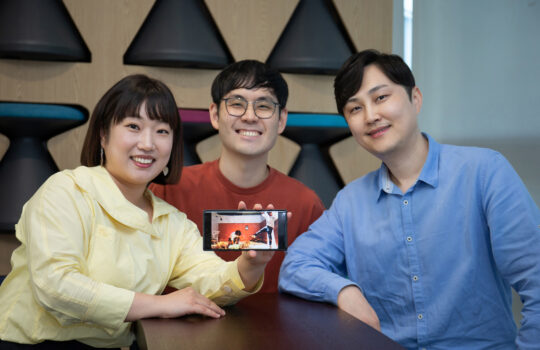
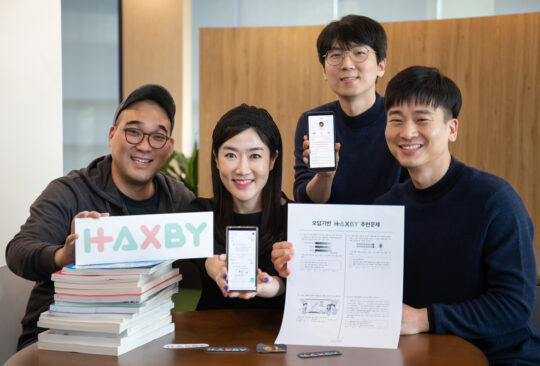
Blockbuster is a video editing app that allows adding computer graphics and 3D effects to videos on smartphones. It uses a patented Blockbuster algorithm to generate realistic 3D effects by converting 2D scenes to 3D layers. Haxby is an education startup that records incorrect answers from workbooks and uses AI to recommend customized worksheets to improve a user’s learning performance.

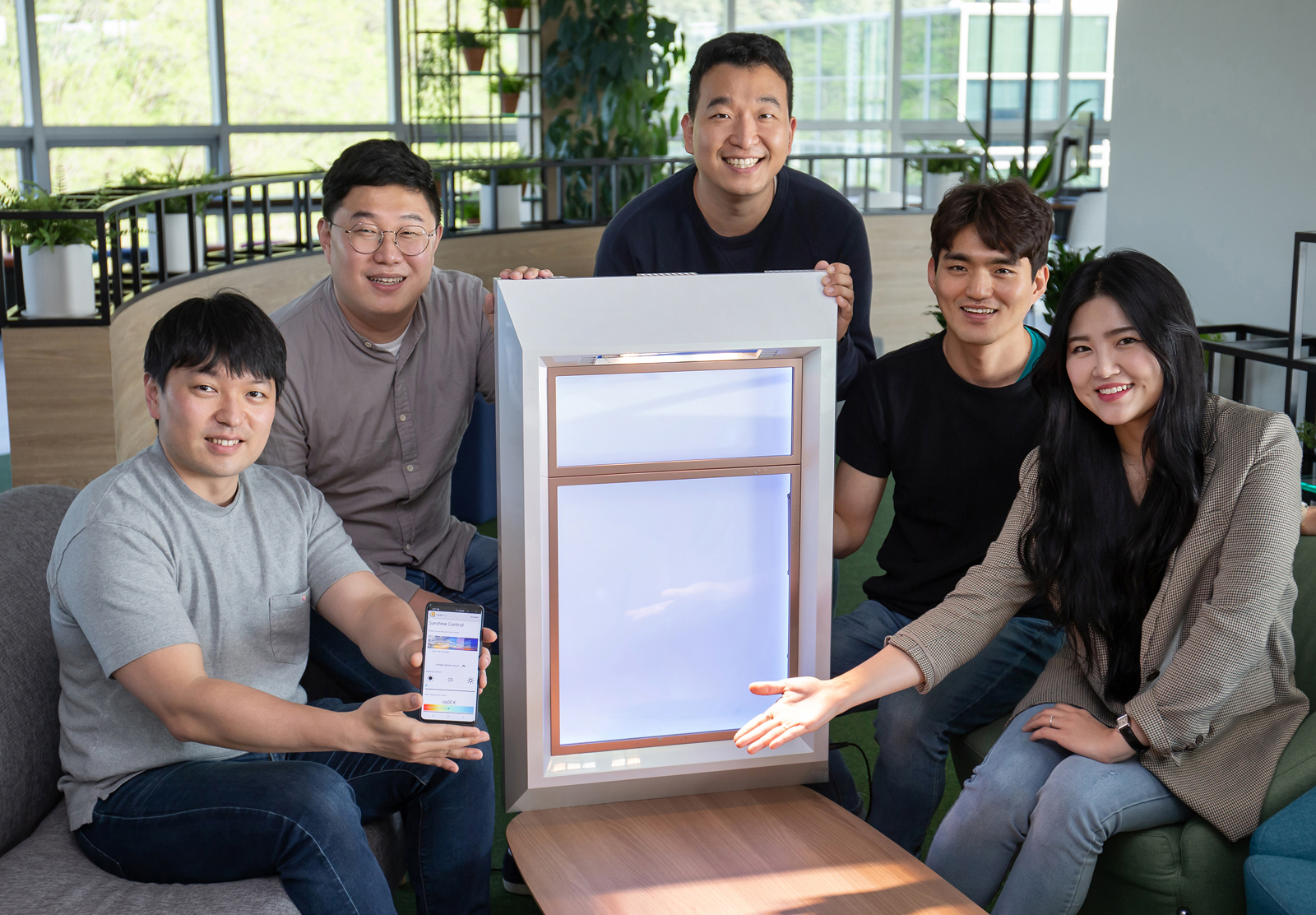
SunnyFive Artificial Sunlight Device Team Samsung C-Lab Spin-Off Startup

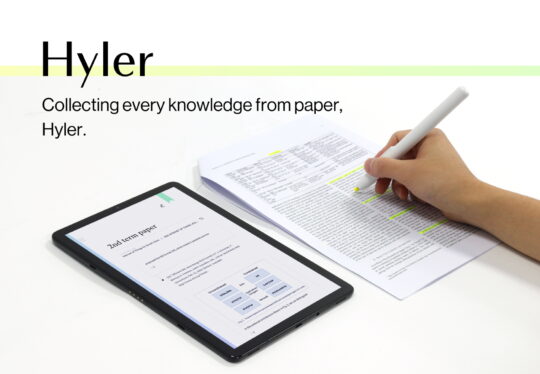
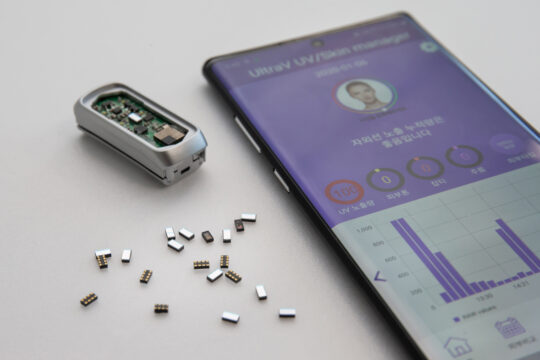
Hyler is a smart highlighter that converts analog text into digital and transfers them to smartphones. Users can easily collect information, digitize text, and interact with it using the Hyler app. RootSensor is a new type of sensor that can detect UV exposure and provide information on skin condition and vitamin D production. It can be used in wearables, smart cars, and smart buildings.

SunnyFive is probably the most interesting startup among the group. It makes window-shaped lighting devices that produce artificial sunlight. It is quite useful in places where there isn’t enough access to sunlight, helping people to synthesize Vitamin D while they’re indoors or low-lit places. These devices provide a full spectrum of light produced by the sun’s natural passage through the sky during the day. Brightness and color adjustments can also be done using an app.

163 Samsung employees have created 45 startups so far since the inception of the C-Lab program. These companies have raised over $45 million over the years and their value has more than tripled ever since they were spun-off as startups. You can read all about them here.

Blockbuster Video Editing Team Samsung C-Lab Spin-Off Startup Haxby Team Samsung C-Lab Spin-Off Startup Hyler Text Highlighter Digitizer Samsung C-Lab Spin-Off Startup RootSensor UV Sensor Samsung C-Lab Spin-Off Startup

The post Samsung announces support for five startups from its C-Lab program appeared first on SamMobile.


from SamMobile https://ift.tt/2ZbHAm2
via IFTTT

Samsung heir visits chip factory in China to assess expansion plan

Samsung Electronics Vice Chairman Lee Jae-yong, who gave a historic apology and promised to end Samsung’s royal line a few weeks ago, visited the company’s chip factory in China. The company said that the purpose of the visit was to assess the plant’s expansion plan following the country’s economic reopening amid COVID-19 slowdown.

This is Lee’s first international business trip since he visited Brazil in January. He inspected Samsung’s chip factory in Xi’an, China, and encouraged workers there to overcome the fallout from the pandemic. He said, “To secure new growth engines, we need to be preemptive and be prepared for forthcoming changes. We have no time, and we cannot lose this moment.

According to sources, Lee went through a virus test after his landing in China. China and South Korea started to operate on a fast-track entry system for business professionals, which allows exempts them from the 14-day mandatory isolation rule that is applicable for other travelers. This step has been taken to help minimize the economic fallout due to the deadly virus and entry curbs.

Samsung’s Xi’an plant is its only memory chip factory outside of South Korea. The South Korean firm had announced last year that it would invest an additional $8 billion to expand the plant. It also sent around 200 engineers last month for the expansion of the second plant in Xi’an. Chip production at the expanded plant should begin anytime soon.

The company’s Xi’an chip plant first started production in 2014, and then Samsung decided in 2017 that it will expand the plant after it signed the agreement with the Shaanxi provincial government.

Although the South Korean firm dethroned Intel in 2017 to take the top spot in the semiconductor business, it lost to Intel again in Q4 2020. However, Samsung has come up with a decade-long plan, consisting of $115 billion investment for logic chip development and production.

The post Samsung heir visits chip factory in China to assess expansion plan appeared first on SamMobile.


from SamMobile https://ift.tt/2ADTkUm
via IFTTT

Samsung produced 57 percent more semiconductor chips during Q1 2020

Compared to Q1 2019, Samsung’s chip production was 57.4 percent higher in Q1 2020. The company’s quarterly report showed that the South Korean tech giant ramped up DRAM and NAND flash chips during the quarter despite the COVID-19 outbreak. As a result, the company improved its market share in the DRAM market during the first quarter of this year.

Samsung is the world’s largest memory chip maker, and its chip factory operation rate was 100 percent in the January-March 2020 quarter. The company produced 277.4 billion units of semiconductors in the first quarter of 2020, up from 176.2 billion units in the same quarter last year. It improved the efficiency of its chip manufacturing process.

This ramp-up in chip production was to cater to the growing demand for DRAM and storage chips for data centers and servers. Since the COVID-19 crisis, people have been working, learning, and getting entertained from home, and cloud servers and data centers support all of these activities. Robust chip sales during the quarter helped the company in achieving higher profits.

Samsung’s mobile phone and display production plunged, though, during the quarter as people are spending less on high-ticket items like smartphones and TVs as the economic crisis looms large. The South Korean firm manufactured 58.7 million smartphones and 1.45 million displays, down 34.4 percent and 35.5 percent from Q1 2019, respectively.

The chip giant also announced the industry’s first 10nm EUV DRAM chips, 160-layer NAND flash memory chips, and third-generation HBM2E Flashbolt memory chips. Samsung also announced its new-generation SSD with support for PCIe Gen 4 and E1.S form factor last week.

The post Samsung produced 57 percent more semiconductor chips during Q1 2020 appeared first on SamMobile.


from SamMobile https://ift.tt/36bbZSV
via IFTTT

السبت، 16 مايو 2020

Weekly SamMobile Quiz 26 – Come test your Samsung knowledge!

Consider yourself a superfan of Samsung? Take our quiz and see how many answers you can get right! This is a fun activity that we do with our readers every week to test their knowledge of our favorite company. The quiz has a mix of easy and difficult questions that most fans should be able to answer without turning to Google.

We intend to make a new quiz for you every weekend so we hope that you’ll participate and learn a thing or two about Samsung in the process! Don’t forget to share the results of the quiz with your friends and see if you can outscore them. A little competition never hurt anybody!

Remember, if the quiz isn’t loading properly, please access the non-AMP version of this webpage.

The post Weekly SamMobile Quiz 26 – Come test your Samsung knowledge! appeared first on SamMobile.


from SamMobile https://ift.tt/3fQQ5sV
via IFTTT

Set your Galaxy S20 to 120Hz refresh rate in power saving mode with this trick!

Although the Galaxy S20 series features a 120Hz display, we all know there are some limitations to the way Samsung implemented this feature. For example, the 120Hz refresh rate doesn’t work in the Medium power saving mode. Well, it turns out that it’s technically possible to have both 120Hz and Medium power saving mode enabled with the help of Bixby Routines.

Indeed, Bixby Routines comes to the rescue, as you can use this rich IFTTT tool to create a Medium power saving mode shortcut, place it on the home screen, and tap it while 120Hz mode is enabled on your Galaxy S20. They won’t cancel each other out, and both medium power saving mode and the high refresh rate will work simultaneously. Reddit users claim that using this method led to “incredible” battery life savings and fewer overheating issues.

How to enable 120Hz and Medium power saving using Bixby Routines

  1. Launch Bixby Routines on your Galaxy S20.
  2. Tap the + button in the upper-right corner to create a new routine.
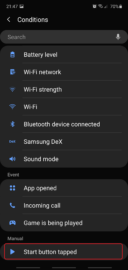
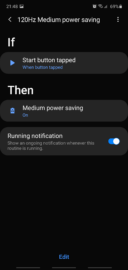
  3. Select Start button tapped as your If condition.
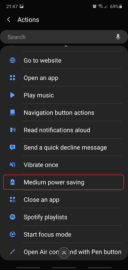
  4. Select Medium power saving as your Then task.
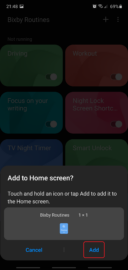
  5. Tap Done, name your routine, and add it to your home screen when prompted to do so.

Next you’ll want to make sure 120Hz is enabled on your phone (from the Settings » Display » Motion smoothness menu). Once done, go to the home screen and tap the Start button you’ve just created using Bixby Routines. Then turn the screen off for 5 seconds, wake the phone, and you should have both 120Hz mode and Medium power saving mode working at the same time (you can confirm that power saving mode is active by dragging down the notification shade and checking the Power mode toggle).

Is this method working for you? Let us know in the comment section and don’t forget to check our other tips & tricks for your Galaxy device.

The post Set your Galaxy S20 to 120Hz refresh rate in power saving mode with this trick! appeared first on SamMobile.


from SamMobile https://ift.tt/3cEmJvN
via IFTTT

جميع الحقوق محفوظة لمدونة الغريب 2013