الثلاثاء، 12 يناير 2021

Exynos 2100 vs Snapdragon 888: The tables could finally be turning

The new Exynos 2100 SoC that was officially introduced earlier today is a lot more than just a yearly refresh from Samsung. It represents a turning point for the company’s mobile chipset division, and numerous fans of the brand are eager to see how it will compete with Qualcomm’s solution this year.

Gone are the custom in-house Mongoose / M cores. The new 5nm-based chipset uses ARM CPU cores and graphics, and it’s the company’s first 5nm high-performance solution to boast integrated 5G connectivity. It will power the Galaxy S21 flagship series in most markets where the Snapdragon 888 solution won’t be used.

Now, as many of you know, Samsung’s Exynos chipsets have lagged behind Qualcomm’s mobile SoCs for years, and many customers from the Exynos camp have grown increasingly disconcerted with the fact that their flagships were equipped with inferior hardware every year. However, Samsung’s committed to improving the formula this year and the Exynos 2100 chipset is, or should be proof of that.

But how exactly does it compare with the Snapdragon 888? Can Samsung turn the tables on Qualcomm this year, and is it possible that Exynos customers will get the better flagship variant in 2021? We won’t know with certainty until the Galaxy S21 series hits the shelves, but until then, we can take a closer look at how these two flagship-grade mobile chipsets compare on paper.

Exynos 2100 vs Snapdragon 888: Full specs comparison

Both the Exynos 2100 and the Snapdragon 888 chipsets were manufactured by Samsung using a 5LPE (5nm Low Power Early) process but similarities don’t end here. Both solutions have a total of eight CPU cores and their arrangement is similar.

The Snapdragon 888 SoC has 1 Kryo 680 Prime (ARM Cortex-X1) core clocked at 2.84GHz, 3 Kryo 680 Gold (ARM Cortex-A78) high-performance cores @2.42GHz, and 4 Kryo 680 Silver (ARM Cortex-A55) cores operating at up to 1.8GHz.

Similarly, the Exynos 2100 SoC comprises a single ARM Cortex-X1 core (clocked at up to 2.9GHz), three Cortex-A78 cores, and four Cortex-A55 cores. But where the Snapdragon 888 features an Adreno 660 graphics chip, Samsung’s solution uses the Mali-G78 GPU.

Both chipsets support LPDDR5 RAM, and their image signal processors support camera resolutions of up to 200-megapixels. Likewise, both solutions have AI engines capable of precisely 26 TOPS (26 trillion operations per second).

It will be very interesting to see how the two chipsets perform and handle thermals in the real world given how similar they are on paper, but surprisingly enough, preliminary benchmark results are in favor of the Exynos 2100 solution.

Granted, synthetic benchmarks don’t usually reflect real-world usage but the figures are promising nonetheless. According to Geekbench, the Exynos 2100 chipset performs equally-well in single-core tests but outperforms the Snapdragon 888 SoC in multi-core tests.

Exynos 2100 Snapdragon 888
Process 5nm LPP EUV 5nm LPE EUV
CPU 1x 2.9GHz Cortex-X1 + 3x Cortex-A78 + 4x Cortex-A55 1x 2.84GHz Cortex-X1 based + 3x Cortex-A78 based + 4x Cortex-A55 based
GPU ARM Mali-G77 Adreno 660
Memory LPDDR5 (51.2GB/s) LPDDR4X & LPDDR5 (50GB/s)
Storage UFS 3.1, UFS 2.1 UFS 3.0, UFS 2.1
NPU Tri-core (26 TOPS) Hexagon 780 (26 TOPS)
ISP Up to 200MP, up to 6 sensors, 4 sensors simultaneously Up to 200MP, up to 6 sensors, 3 sensors simultaneously
Video Encode/Decode Up to 4K 120fps or 8K 30fps encode, up to 4K 120fps or 8K 60fps decode Up to 4K 120fps or 8K 30fps encode, up to 4K 120fps or 8K 30fps decode
Modem Fully-integrated 5G modem, mmWave (7.35Gbps), sub-6GHz (5.1Gbps), 4G LTE (3Gbps), 3G, 2G Integrated Snapdragon X60 5G modem, mmWave (7.5Gbps), sub-6GHz, 4G LTE (3Gbps), 3G, 2G

The post Exynos 2100 vs Snapdragon 888: The tables could finally be turning appeared first on SamMobile.


from SamMobile https://ift.tt/3nCvVoX
via IFTTT
Exynos 2100 vs Exynos 990: How much improvement to expect?

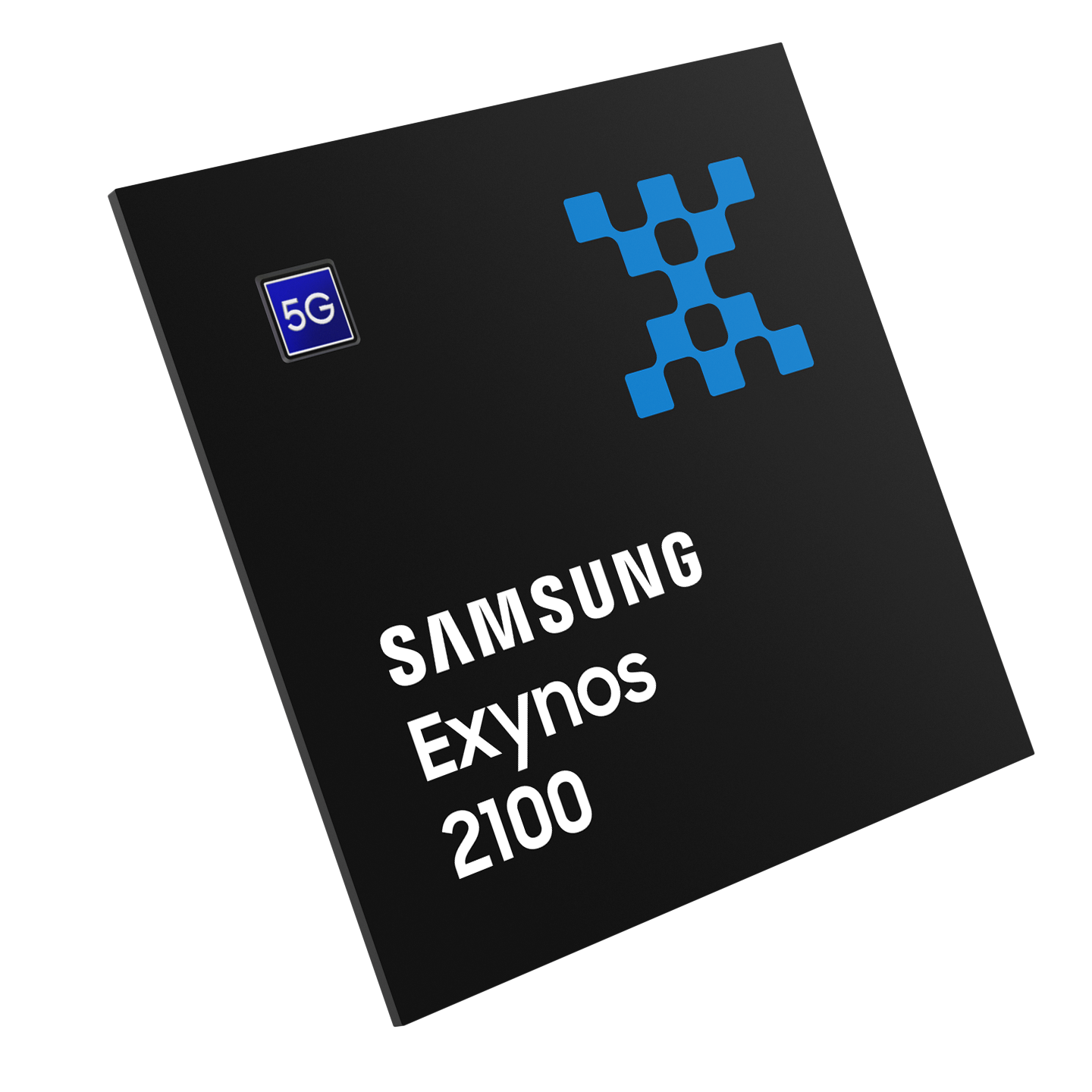
Samsung unveiled the Exynos 2100 processor today, and the company claims that its new chip offers improved performance and power efficiency over last year’s Exynos 990. After the Exynos 990’s dismal performance, Samsung aims to put behind all the woes that are generally attributed to Exynos chipsets. So, how improved is the Exynos 2100 over the Exynos 990? Let us find out.

With the Exynos 2100, Samsung has put an end to its custom CPU cores and introduced the Cortex-X1 CPU core from ARM. The company has also upgraded to a 5nm process, making the Exynos 2100 more power-efficient than the Exynos 990. The new processor also brings a beefier GPU, a more powerful NPU for faster AI and machine performance, and more advanced connectivity.

Exynos 2100 vs Exynos 990: Full specs comparison

The Exynos 2100 is made using Samsung’s 5nm EUV process, while the Exynos 990 was fabricated using the 7nm process. A newer fabrication process alone is expected to offer 20% lower power consumption or 10% higher overall performance than the Exynos 990. Then there are architectural improvements as well.

Exynos 2100 has a faster CPU, beefier GPU, better performance under sustained loads

The Exynos 2100 uses a Cortex-X1 CPU core clocked at 2.9GHz, three Cortex-A78 CPU cores, and four Cortex-A55 CPU cores. In comparison, the company’s last year’s flagship processor featured two custom Mongoose M5 CPU cores clocked at 2.73GHz, two Cortex-A76 CPU cores clocked at 2.5GHz, and four Cortex-A55 CPU cores. Samsung says that the new processor offers up to 30% higher CPU performance. The Mali-G78 GPU used inside the Exynos 2100 offers up to 40% higher performance compared to the Exynos 990’s Mali-G77 GPU.

The company says that it has tweaked its scheduler and cache memory handling. The Exynos 2100’s advanced multi-IP governer technology called AMIGO optimizes power usage of the CPU, GPU, and other components to offer higher sustained performance even with intense on-screen activities. If this claim is true, it would be a huge win for Samsung, especially after the disappointing sustained performance of the Exynos 990.

Exynos 2100’s tri-core NPU means faster AI, machine learning performance

The Exynos 2100 supports LPDDR5 RAM (51.2Gbps) and UFS 3.1 storage. The Exynos 990 was launched with support for LPDDR5 RAM as well, but in terms of storage, it was only limited to UFS 3.0 chips. So, you can expect faster storage access, and ultimately, faster app launches and faster data transfer. The tri-core NPU inside the Exynos 2100 can perform up to 26 TOPS, while the Exynos 990’s dual-core NPU maxes out at 15 TOPS.

Exynos 2100 supports up to 200MP camera sensors

Samsung has improved the camera handling capabilities of its new processor. The Exynos 2100’s ISP can work with up to 200MP camera sensors, and up to six sensors are supported. It can take signals from up to four cameras simultaneously, which means smoother zooming and switching between multiple camera sensors. It also offers improved image quality from telephoto and ultrawide cameras. In comparison, last year’s Exynos 990 SoC offered compatibility with up to 108MP camera sensors. It can work with six sensors as well, but it can only take signals from three sensors simultaneously. The Exynos 2100 can record up to 8K 30fps or up to 4K 120fps videos, similar to the Exynos 990. However, in terms of video playback, the new processor can play up to 8K 60fps videos. In comparison, the Exynos 990 could only play up to 8K 30fps videos.

Exynos 2100 has an integrated 5G modem

In terms of connectivity, the Exynos 2100 features a fully-integrated 5G modem that is compatible with both mmWave and sub-6GHz networks. The Exynos 990 did not have an integrated modem, and it needed to be paired with the Exynos Modem 5123 for 5G connectivity. Both processors support Wi-Fi 6, Bluetooth 5.1, GPS, NFC, and USB Type-C connectivity.

On the whole, you can expect the Exynos 2100 to offer faster CPU performance when compared to the Exynos 990, especially under sustained workloads. Plus, the new processor offers improved gaming and camera performance. It also offers faster AI (Artificial Intelligence) and ML (Machine Learning) performance compared to the Exynos 990. You can also read our Exynos 2100 vs Snapdragon 888 comparison article to know how well-matched these flagship processors are.

Exynos 2100 Exynos 990
Process 5nm LPE EUV 7nm LPP EUV
CPU 1x Cortex-X1 + 3x Cortex-A78 + 4x Cortex-A55 2x Mongoose M5 + 2x Cortex-A76 + 4x Cortex-A55
GPU ARM Mali-G77 ARM Mali-G77
Memory LPDDR5 (51.2GB/s) LPDDR4X & LPDDR5
Storage UFS 3.1, UFS 2.1 UFS 3.0, UFS 2.1
NPU Tri-core (26 TOPS) Dual-core (15 TOPS)
ISP Up to 200MP, up to 6 sensors, 4 sensors simultaneously Up to 108MP, up to 6 sensors, 3 sensors simultaneously
Video Encode/Decode Up to 4K 120fps or 8K 30fps encode, up to 4K 120fps or 8K 60fps decode Up to 4K 120fps or 8K 30fps encode, up to 4K 120fps or 8K 30fps decode
Modem Fully-integrated 5G modem, mmWave (7.35Gbps), sub-6GHz (5.1Gbps), 4G LTE (3Gbps), 3G, 2G Non-integrated 5G modem, mmWave (7.35Gbps), sub-6GHz (5.1Gbps), 4G LTE (3Gbps), 3G, 2G

The post Exynos 2100 vs Exynos 990: How much improvement to expect? appeared first on SamMobile.


from SamMobile https://ift.tt/2XEUEON
via IFTTT

Samsung unveils the Exynos 2100 to finally kill your Qualcomm envy

Samsung has a habit of unveiling its new flagship mobile chipset a few days before launching new flagship phones. As we await the Galaxy S21 launch on January 14, the company went ahead and unveiled the chipset that will be powering the new lineup.

The Exynos 2100 is Samsung’s flagship processor for 2021. It’s going to power the entire Galaxy S21 series. It’s also going to be the one to kill the Qualcomm envy that many Samsung fans have suffered in the past.

Exynos 2100 is Samsung’s most advanced chipset yet

As many of you might be aware, Samsung’s flagship smartphones utilize the company’s Exynos chipsets in most markets. However, select markets get the latest Qualcomm chip instead. There has always been a noticeable difference between their capabilities with the Snapdragon chipsets coming out on top.

Last year’s Exynos 990 vs Snapdragon 865 debacle rarely needs to be brought up any more. It became evident last year that Samsung would no longer make its own custom processor cores for Exynos chipsets. It would do what Qualcomm does and simply license IP from ARM. That is exactly what it has done for the Exynos 2100.

The Exynos 2100 is Samsung’s first 5G-integrated mobile chipset that’s built on the most advanced 5nm EVU process node. The process technology evolution delivers an up to 20% lower power consumption or 10% higher overall performance than its 7nm predecessor.

The company has gone with a tri-cluster structure for the processor. It consists of an ARM Cortex-X1 maximum performance core that can run at up to 2.9GHz, three high-performing Cortex-A78 and four power efficient Cortex-A55 cores. Qualcomm’s 2021 flagship, the Snapdragon 888, also utilizes a tri-cluster structure with the Cortex X1, A78 and A55 cores.

Samsung says that this package delivers an over 30% improvement in multi-core performance compared to its predecessor. The Cortex-A1 is ARM’s new performance-oriented and the Exynos 2100 is among the first mobile chipsets to utilize it. ARM claims that it is 23% faster than even its new Cortex-A78 cores.

The graphics processing is handled by an ARM Mali-G78 GPU for an up to 40% improvement in graphics performance. A new tri-core neural processing unit (NPU) is included for significantly improved AI processing. There’s support for UFS 3.1 and UFS 2.1 storage as well.

The image signal processor in the Exynos 2100 can support camera resolutions of up to 200-megapixels with the ability to connect up to six individual sensors. It can process four camera sensors concurrently for multi-camera experiences. The chipset also has an integrated 5G modem that supports both sub-6GHz and mmWave spectrums from 2G up. The modem can provide a maximum downlink speed of up to 5.1Gbps in sub-6GHz and 7.35Gbps in mmWave.

There are still many factors that will determine who comes out on top of the Exynos 2100 vs Snapdragon 888 battle. However, there’s reason to be cautiously optimistic for the Exynos. It uses the same core building blocks as the Snapdragon so the Exynos won’t be hampered by the shortcomings of the custom Mongoose cores. We might still see a noticeable difference as far as GPU performance is concerned.

Samsung says that the Exynos 2100 is already in mass production. The Galaxy S21, Galaxy S21+ and the Galaxy S21 Ultra will be the first handsets to utilize this chipset. As it stands, it seems that those who buy the Exynos variant of these devices may not feel they got the short end of the stick compared to those who get the Snapdragon variant.

The post Samsung unveils the Exynos 2100 to finally kill your Qualcomm envy appeared first on SamMobile.


from SamMobile https://ift.tt/3ihRLxf
via IFTTT

Samsung’s CES 2021 live stream sets viewership record

Samsung’s CES 2021 live-stream-slash-virtual-event set a new viewership record for the company, having amassed over 30 million views on YouTube within the first 24 hours. That’s a massive improvement over last year’s showing whose opening keynote and subsequent announcements generated some eight million views in total  – to date. In contrast, the “Better Normal for All” live stream that opened Samsung’s CES 2021 appearance nearly quadrupled that figure all on its own.

As of this writing, the 30-minute broadcast has been viewed over 33.5 million times, and that number is poised to continue spiking as we approach today’s Exynos 2100 event.

Can any other CES 2021 exhibitor hope to escape Samsung’s shadow?

The latest edition of the Consumer Electronics Show is its first online-only iteration – for obvious reasons. The lack of an offline component of the event might be why Samsung doubled down on promoting its day-one virtual event.

As things stand right now, every other CES 2021 exhibitor will have an extremely difficult time with seizing significant spotlight from Samsung. The company’s Monday announcements spanned everything from the much-anticipated MicroLED TV models, new QLED television sets, and digital fitness solutions to updated robot vacuum cleaners, AI-infused refrigerators, and an unprecedented global device recycling program. Not to mention a commitment to even more eco-friendly product packaging practices and some quite futuristic vehicle cockpits.

The tech giant’s CES 2021 showing is scheduled to continue in just a few hours with the announcement of the Exynos 2100. The said silicon is likely to become Samsung’s most significant chipset generation in at least half a decade, so make sure to tune in for today’s stream or at least check back for our recap of the event.

The post Samsung’s CES 2021 live stream sets viewership record appeared first on SamMobile.


from SamMobile https://ift.tt/2XwFfjR
via IFTTT

Samsung just made a product teaser out of Exynos 990 hate

While 2020 might have been a year to forget for Samsung’s chipmaking division, the company wants to let everyone know that it has learned its lesson. How else would you explain the fact that its latest product teaser has been made entirely out of Exynos 990 hate?

Namely, the video that you can view below does not sugar-coat how disappointing last year’s flagship Exynos chip ended up being.

Is Exynos truly back?

Samsung shared this remarkably self-aware promo in the run-up to today’s Exynos 2100 launch event. Now, whether its next high-end system-on-a-chip actually gives Qualcomm a run for its money this year remains to be seen. But given how bold Samsung’s recent communications have been, it would appear the Exynos 2100 has a legitimate shot at making history.

And need we even remind how Samsung SLI felt humiliated by the whole Exynos 990 fiasco last year? To the point that it had to take a step back in order to truly rethink how to salvage that debacle. So, if nothing else, there’s no doubt the South Korean tech giant is highly motivated to set the record straight with its next premium SoC.

The Exynos 2100 launch event will begin in a couple of hours, at 9 AM EST / 3 PM CET. And the star of the show will indirectly reveal quite a bit about Samsung’s 2021 flagships, including not just the imminent Galaxy S21 series, but also the likes of the Galaxy Note 21 and Galaxy Z Fold 3.

The post Samsung just made a product teaser out of Exynos 990 hate appeared first on SamMobile.


from SamMobile https://ift.tt/3nFWgSZ
via IFTTT

Samsung India heavily drops Galaxy S20 prices ahead of Galaxy S21 launch

To make room for the upcoming Galaxy S21 series, Samsung has dropped the prices of the Galaxy S20, Galaxy S20+, and the Galaxy S20 Ultra in India. The company had recently dropped the prices of its mid-range smartphones, the Galaxy A51 and the Galaxy A71, in the country.

The Galaxy S20, Galaxy S20+, and the Galaxy S20 Ultra now cost INR 49,999 (around $681), INR 56,999 (around $776), and INR 76,999 (around $1,049), respectively. These smartphones were launched in India in February 2020 with price tags of INR 66,999 (around $913), INR 73,999 (around $1,008), and INR 92,999 (around $1,267) for the Galaxy S20, Galaxy S20+, and the Galaxy S20 Ultra, respectively. That’s a price drop of a whopping INR 17,000 for the Galaxy S20 and the Galaxy S20+, and INR 16,000 for the Galaxy S20 Ultra.

Interestingly, these prices are only available via offline retailers and Samsung’s online store. Amazon.in and Flipkart are selling the Galaxy S20 for INR 54,999 (around $749). Although the company has reportedly mentioned to retailers that the price cut will be effective until the end of January 2021, we expect the price to stay the same or even drop further in the future.

Current Price Launch Price
Galaxy S20 INR 49,999 INR 66,999
Galaxy S20+ INR 56,999 INR 73,999
Galaxy S20 Ultra INR 76,999 INR 92,999


  • Model: SM-G980F
  • Dimensions: Bar: 151.7 x 69.1 x 7.9 mm
  • Display: 6.2 inch / 157.48 mm Dynamic AMOLED 2X
  • CPU: Exynos 990
  • Camera: 12MP
  • Model: SM-G985F
  • Dimensions: Bar: 161.9 x 73.7 x 7.8 mm
  • Display: 6.7 inch / 170.18 mm Dynamic AMOLED 2X
  • CPU: Exynos 990
  • Camera: 12MP
  • Model: SM-G988B
  • Dimensions: Bar: 166.9 x 76.0 x 8.8 mm
  • Display: 6.9 inch / 175.26 mm Dynamic AMOLED 2X
  • CPU: Exynos 990
  • Camera: 12MP

The post Samsung India heavily drops Galaxy S20 prices ahead of Galaxy S21 launch appeared first on SamMobile.


from SamMobile https://ift.tt/39pkYlB
via IFTTT

Samsung’s upcoming 65W USB-PD charger gets pictured

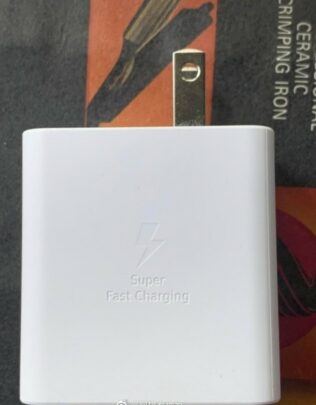
Samsung has stayed out of the smartphone charging speed wars. While the competition has gone as high as 120W fast charging with recent flagship releases, the South Korean tech giant’s smartphones support only up to 45W charging. Now, a newly leaked picture shows a 65W charger from Samsung.

The company’s upcoming 65W charger (EP-TA865) was certified by South Korean authorities in September 2020, but this is the first time we are seeing it in the flesh. It features a single USB Type-C port, and it supports USB Power Delivery at up to 20V and 3.25A. It is also PPS (Programmable Power Supply)-compliant, which means it would be compatible with a wide range of devices, including smartphones and laptops. While there is no indication that the new charger is for the upcoming Galaxy S21 series, it may be bundled with one of its upcoming laptops and even the Galaxy Note 21.

In the past, the company had released two USB PD 3.0 power controller chips (SE8A and MM101) that support up to 100W charging. Do you want Samsung to up its game and bring a faster charging technology to its smartphones?

Samsung 65W Super Fast Charger Ratings Samsung 65W Super Fast Charger Samsung 65W Super Fast Charger Port

The post Samsung’s upcoming 65W USB-PD charger gets pictured appeared first on SamMobile.


from SamMobile https://ift.tt/3qdf0Lm
via IFTTT

جميع الحقوق محفوظة لمدونة الغريب 2013