الأربعاء، 27 يناير 2021

Galaxy Buds Pro review: Samsung’s best wireless earbuds yet

It’s a new year and Samsung has a new pair of wireless earbuds for us to review. Arriving merely six months after the Galaxy Buds Live, the Galaxy Buds Pro are Samsung’s second earbuds to feature Active Noise Cancellation.

These earbuds are the true successors to Samsung’s Galaxy Buds/Buds+. They have a similar design but many new improvements under the hood. This makes them seem, at least on paper, much better than any previous Samsung earbuds.

In this Galaxy Buds Pro review, we’ll closely look at all of the improvements that Samsung has made. We’ll see if the sound quality really has been improved. Perhaps most importantly, we’ll put the advanced Active Noise Cancellation to the test. So let’s dive right in.

Galaxy Buds Pro design and fit
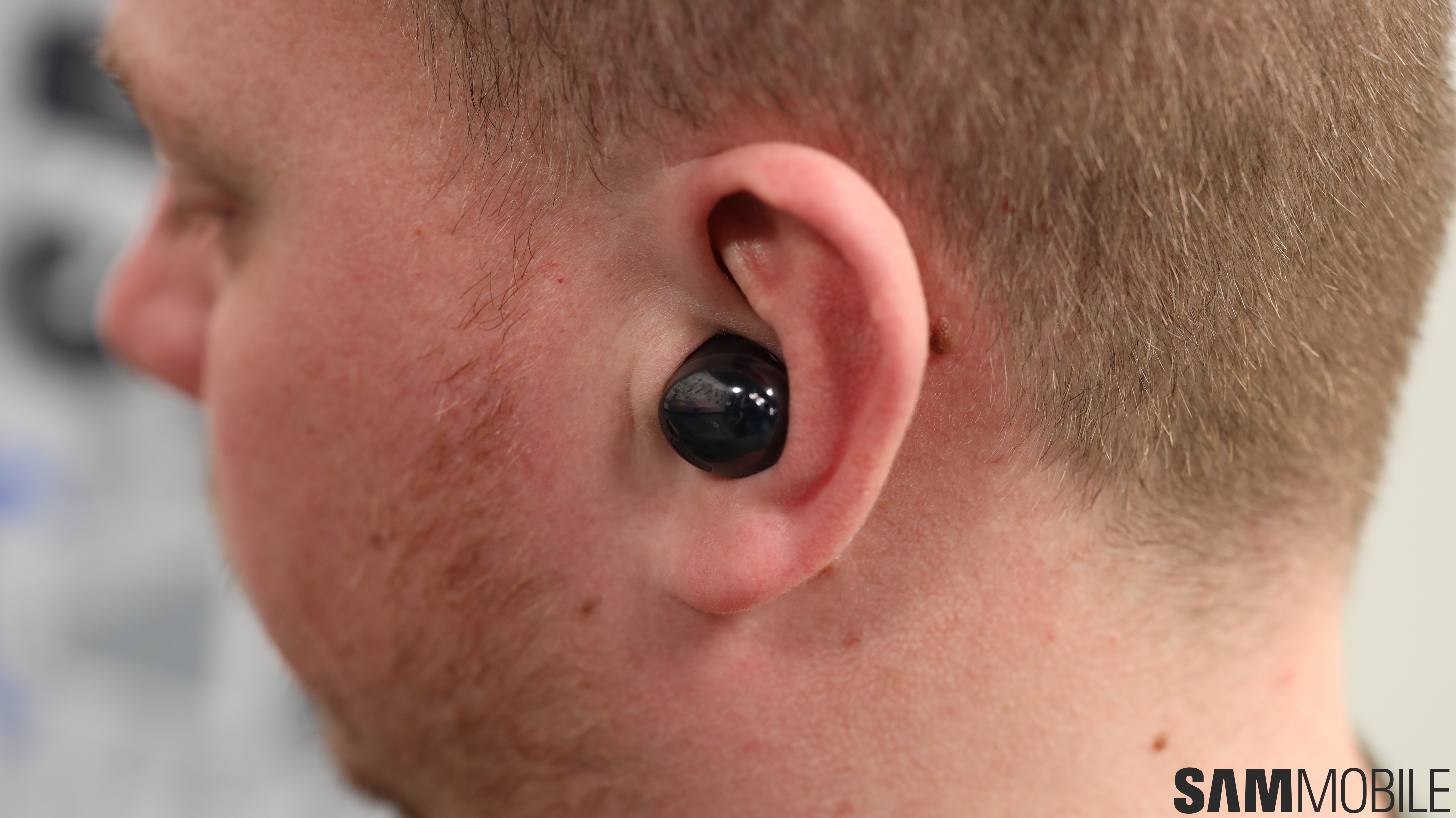
To ensure a more comfortable fit, Samsung opted for a low-profile, ergonomic design. This reduces the contact area between the ear and the bud to minimize the clogged-up feeling that most users will be quite familiar with. That’s something we didn’t particularly like about the Galaxy Buds or Buds+ for that matter. Wearing them for extended periods of time was uncomfortable.

The minor design changes Samsung has made here do make a big difference. They don’t protrude out of the ear much and certainly feel more comfortable to wear for much longer. This comfort hasn’t come at the cost of a secure fit, though. The Galaxy Buds Pro fit securely in the ear canal and they remain firmly in place even during the most intense workouts.
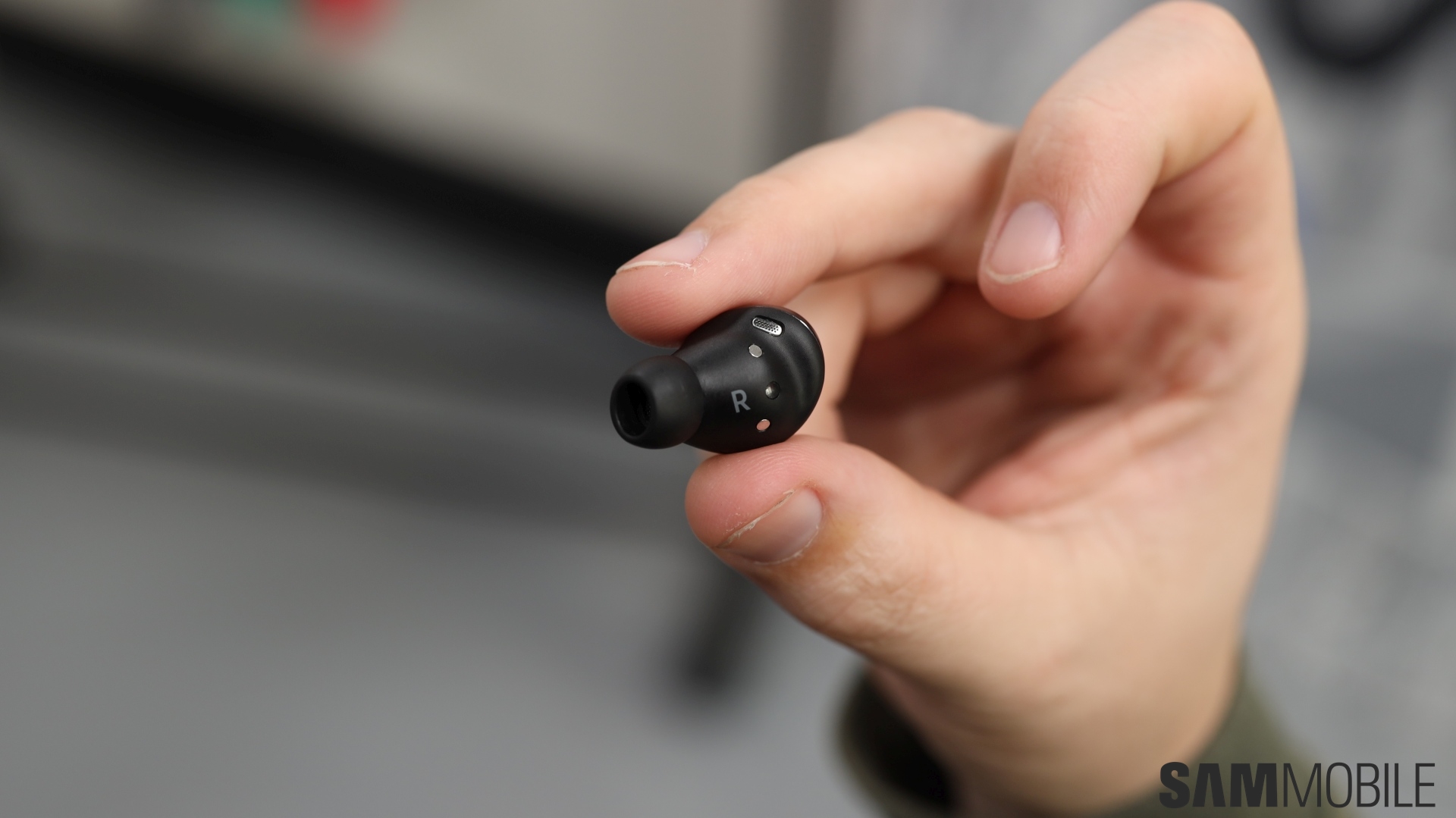
The unassuming, understated design isn’t as eye-catching as the Galaxy Buds Live but Samsung has added some glossy elements to the shell to make them stand out. This is going to be an acquired taste. We felt that a matte finish would have been better. It would certainly have matched more precisely with the Galaxy S21’s matte finish but this is only a minor inconvenience if you don’t like the glossy look.

The touch panels on the earbuds often feel too sensitive so accidental touches are unavoidable. This has been the case with all previous Galaxy Buds. As irritating as that may be, the touchpad serves an important purpose. It allows you to control playback, increase/decrease volume, skip tracks, launch Bixby and more with simple taps and gestures. You can customize them via the Galaxy Wearable app which also allows you to lock the touchpads if you’d like.

Durability was on Samsung’s mind when it built these. The Galaxy Buds Pro have an IPX7 rating, the highest water resistance standard of any product in the Galaxy Buds series. This gives you the peace of mind that you can use them in all weather conditions and that even the sweatiest of workouts won’t wreck them.

There’s not much to complain about as far as the design is concerned. The build quality seems solid and the earbuds are nicely put together. The slimmer design provides a comfortable fit. There’s little to no discomfort when using them for a long time, which is basically what most users are mainly concerned about when looking at earbuds to buy. The Galaxy Buds Pro does spectacularly well in that department.

Galaxy Buds Pro sound quality and performance
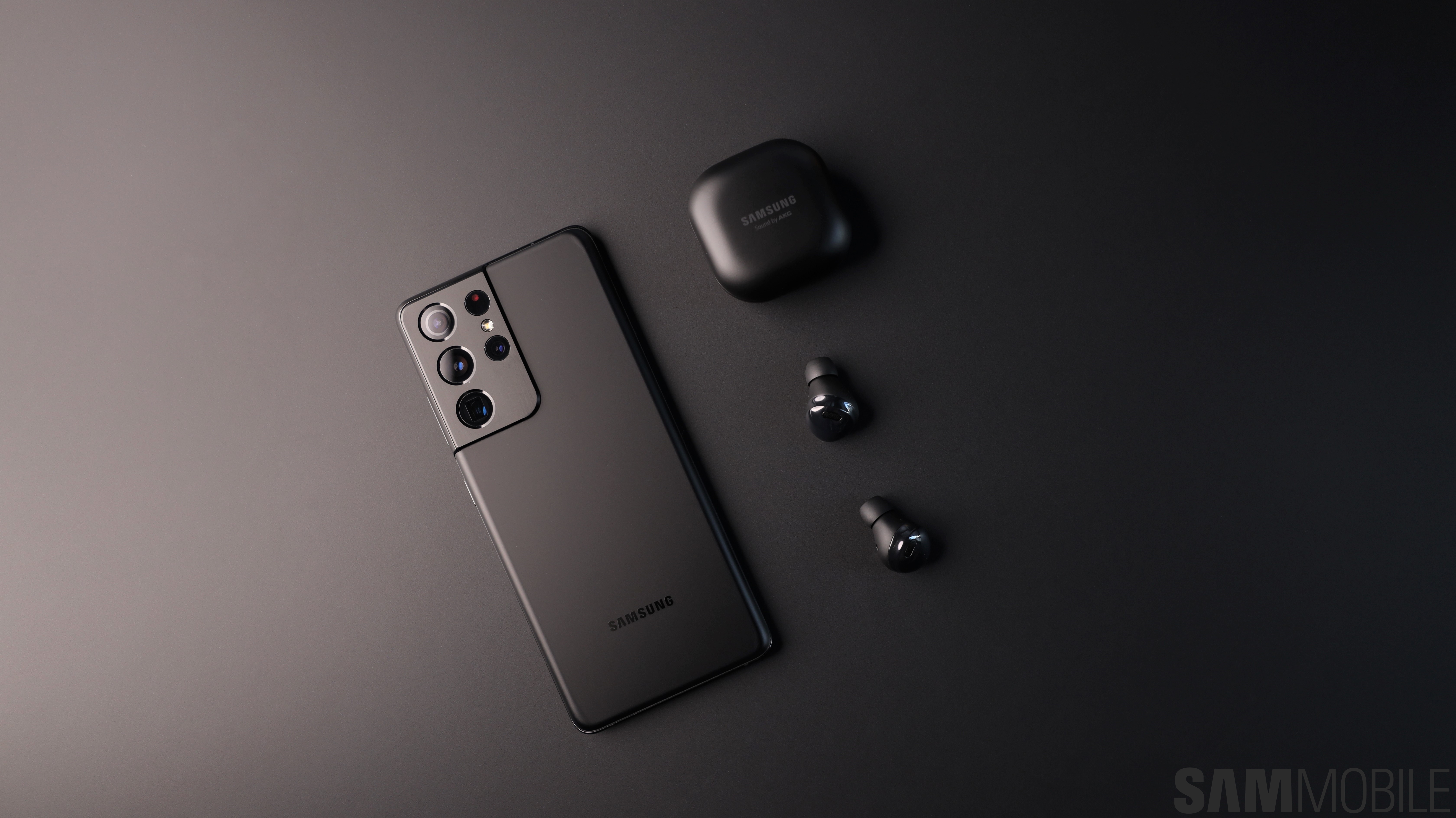
Samsung has focused a lot on improving the sound quality that its latest earbuds provide. It has added two-way speakers that include an 11mm woofer and a 6.5mm tweeter. Obviously, there are a lot of claims of detailed sound and full bass attached to these speakers in Samsung’s marketing materials, but how do they actually perform?

The two-way speakers Samsung is using for the Galaxy Buds Pro do sound much better than all of its previous earbuds. They certainly provide a very enjoyable listening experience. They create a pleasant soundstage with clear treble and surprisingly punchy and well balanced bass. The output from these tiny earbuds is quite impressive.

There are plenty of EQ settings to choose from if you’d like to tweak the sound. Choose “Bass boost” if you’d like more oomph or “Treble boost” if you want the higher frequencies to stand out more. Compared to the Galaxy Buds Live, there’s significantly less sound leakage, so people around you won’t be disturbed even if you’re listing to Drake on full blast, though I’m not sure why anybody wouldn’t like Drake.

To sum it all up, there’s merit in Samsung’s claims. It’s tough competing with more high-end options from the likes of Sony and Bose, but the Galaxy Buds Pro do offer a very enjoyable listening experience.

Galaxy Buds Pro Active Noise Cancellation
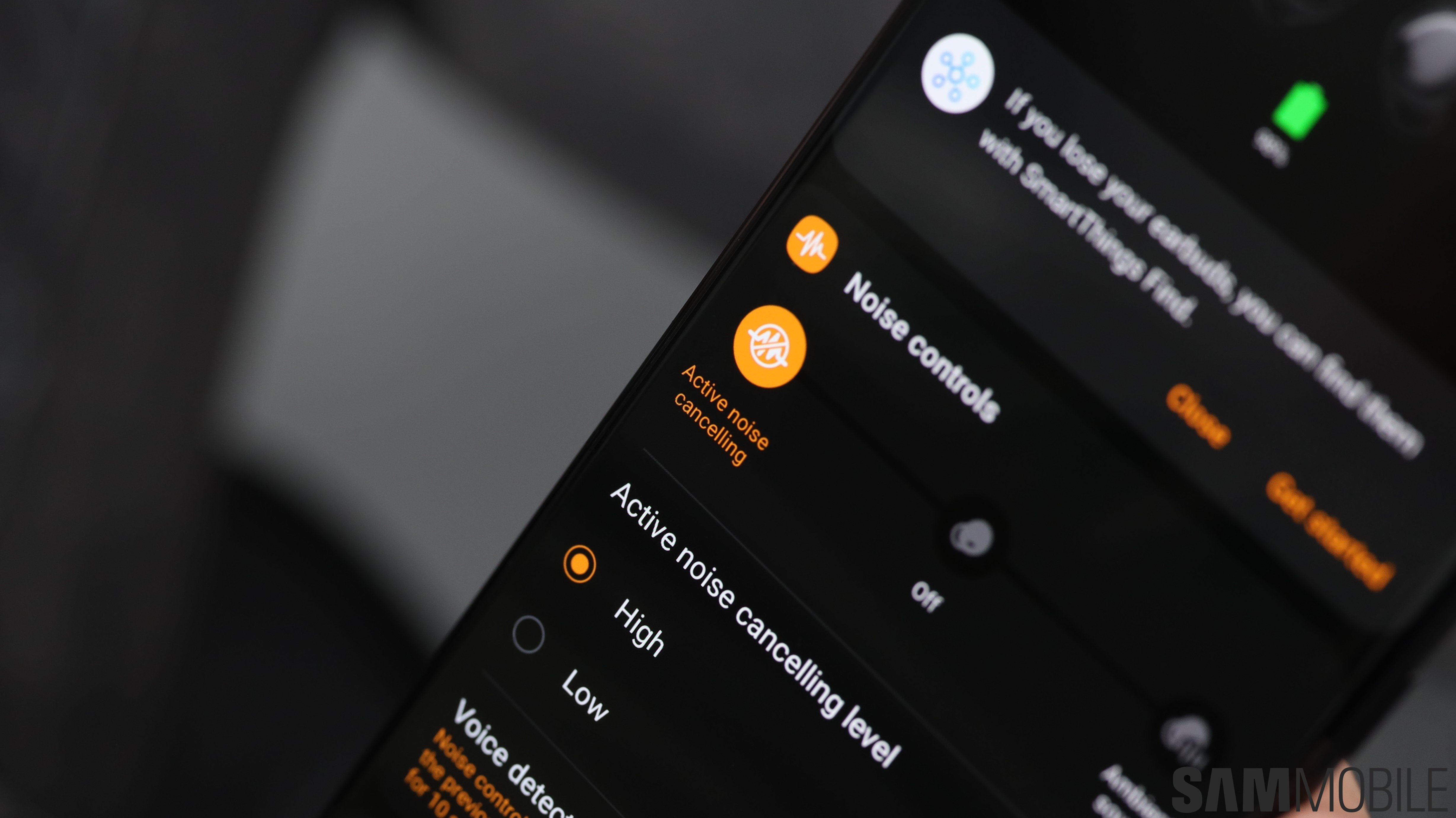
These are the first in-ear design earbuds from Samsung to feature Active Noise Cancellation. ANC left a lot to be desired on the Galaxy Buds Live, partly because of their design. The in-ear design already provides a bit of sound isolation and that provides a great base for ANC to work off of.

Samsung says that the Galaxy Buds Pro can cancel out 99% of external background noise. That’s a tall claim but if you use ANC on the new earbuds after using the Galaxy Buds Live, you’ll instantly notice that it’s much better on the Galaxy Buds Pro. The ANC level is actually adjustable. You can choose between High and Low depending on the environment you’re in.

The Galaxy Buds Pro are perfectly capable of canceling out the background noise in your home or office. Outside, even when turned up to High, ANC won’t tune you out from your surroundings. You’ll notice the sound of cars speeding by you which is probably a good thing. It’ll be interesting to see how good the Galaxy Buds Pro are at canceling out engine noise on a flight, we can’t say for sure since we haven’t jumped on a plane for quite some time now.

What we’re absolutely blown away by is the Advanced Ambient Sound mode. It allows you to amplify nearby voices so that you’re always aware of your surroundings even when you’re immersed in your favorite song. It’s quite the improvement over earlier models that made amplified noises sound very robotic. There are four levels of amplification to choose from – Low, Medium, High and Extra High. Cycle through the options and you’re bound to land on one that best fits the environment you’re in.

Voice detect is perhaps the most useful feature on the Galaxy Buds Pro. ANC and Ambient Sound work together intelligently so that you can have conversations and interact with people around you without having to take the earbuds out or manually turn the volume down. There’s an accelerometer inside the earbuds that picks up jaw movement to know when you’re speaking.

It then switches from ANC to Ambient Sound so that you can have the conversation. Once it senses that you’ve stopped talking for a few seconds, ANC resumes and your music plays at the same volume as before. Do keep in mind, though, that this feature will trigger even if you like to sing along to your favorite songs.

Galaxy Buds Pro call quality
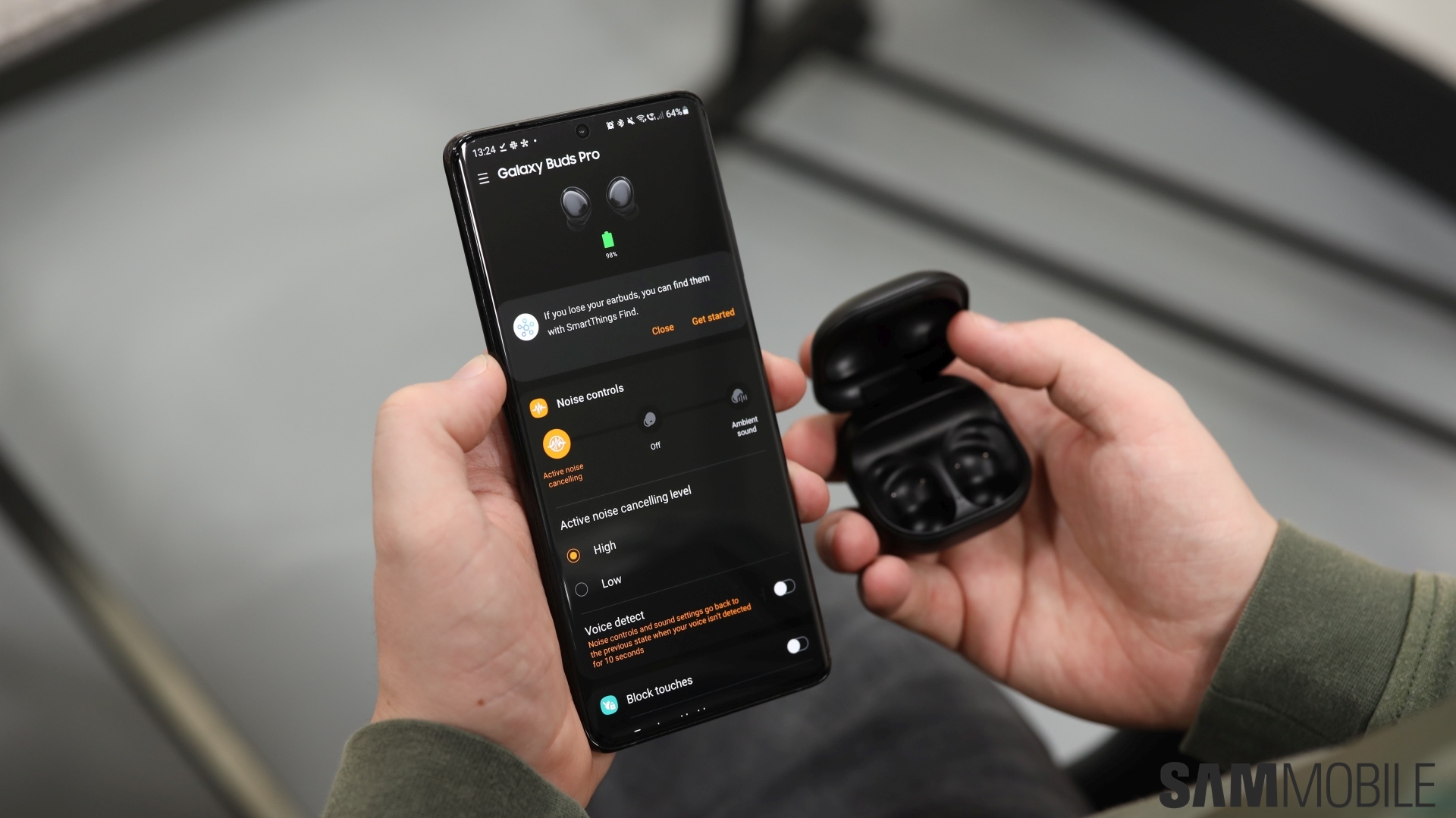
Call quality has always been less than ideal on Samsung’s earbuds, there’s a noticeable improvement in the Galaxy Buds Pro. Each earbud has two outer mics and one inner mic. The less protrusive shape of the earbud already reduces wind contact area and the effect of wind is further reduced through the mesh-covered Wind Shield chamber.

The earbuds use beamforming to isolate your voice so that it can be clearly picked up for audio calls. The result is a much better calling experience than what we’ve seen with other earbuds from Samsung. The hardware upgrades are definitely playing their part here. Getting absolutely perfect call quality from truly wireless earbuds is a tall ask, but the Galaxy Buds Pro manage to provide respectable quality.

Galaxy Buds Pro connectivity and features
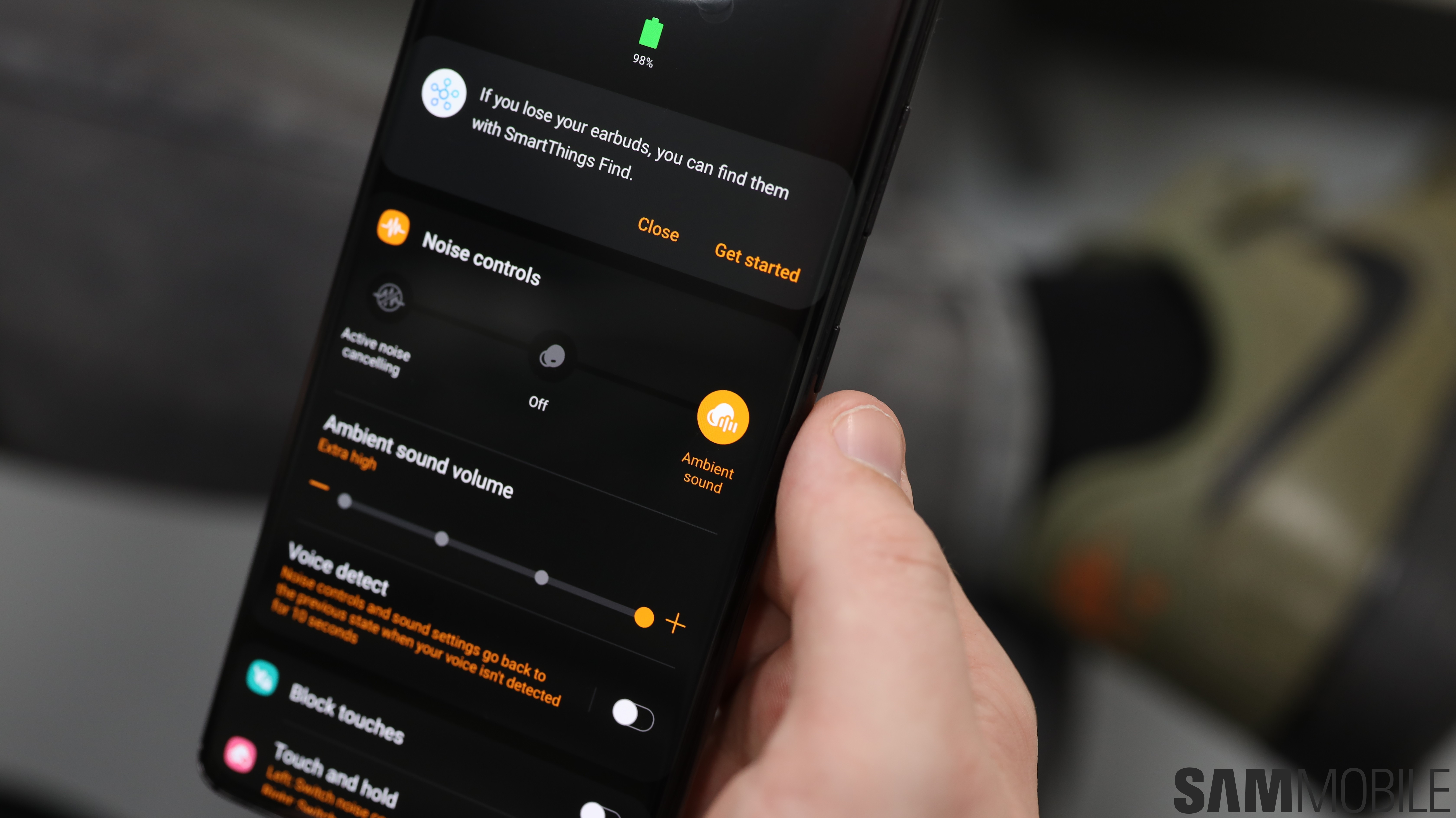
There are a number of familiar features available. This includes hands-free Bixby Voice wake up with the “Hi Bixby” command. Swift Pair, which allows for easy pairing of the earbuds with a Windows 10 PC, is also present. Game Mode is another useful feature. It reduces the lag between audio and video when playing games on the device.

Samsung has also introduced a couple of new features with 360 Audio being a particular highlight. It replicates multi-dimensional sound with Dolby Head Tracking to provide “theater-like” sound. There’s a lot of wizardry that goes behind making this happen. The 360 Audio feature can be enabled via the Galaxy Wearable app.

Do keep in mind that it requires One UI 3.1 which is only going to be available on the Galaxy S21 series initially. We tested out the feature on our Galaxy S21 Ultra and found that it works as advertised. You can really feel which direction the sound is coming from even when moving your head.

Another One UI 3.1-only feature is Multi-Mic Recording. You can capture recordings using the mics on both a compatible Galaxy smartphone and the Galaxy Buds Pro. This is a great feature for YouTubers and vloggers in particular and it works very well.

Auto Switch is a new addition as well. It enables the Galaxy Buds Pro to automatically switch between Galaxy devices. You could be watching Netflix on your tablet when you receive a call on your Galaxy smartphone. Auto Switch will let you answer the call with the Galaxy Buds Pro and once it’s over, the earbuds will automatically switch back to the tablet so you can continue watching your show. No manual input required.

Samsung has limited Auto Switch to its own ecosystem. You can’t use it with any other Android device. Laptops are out of the question as well even though this feature would be a perfect fit, especially now since most people are working at home with multiple devices.

Galaxy Buds Pro battery life
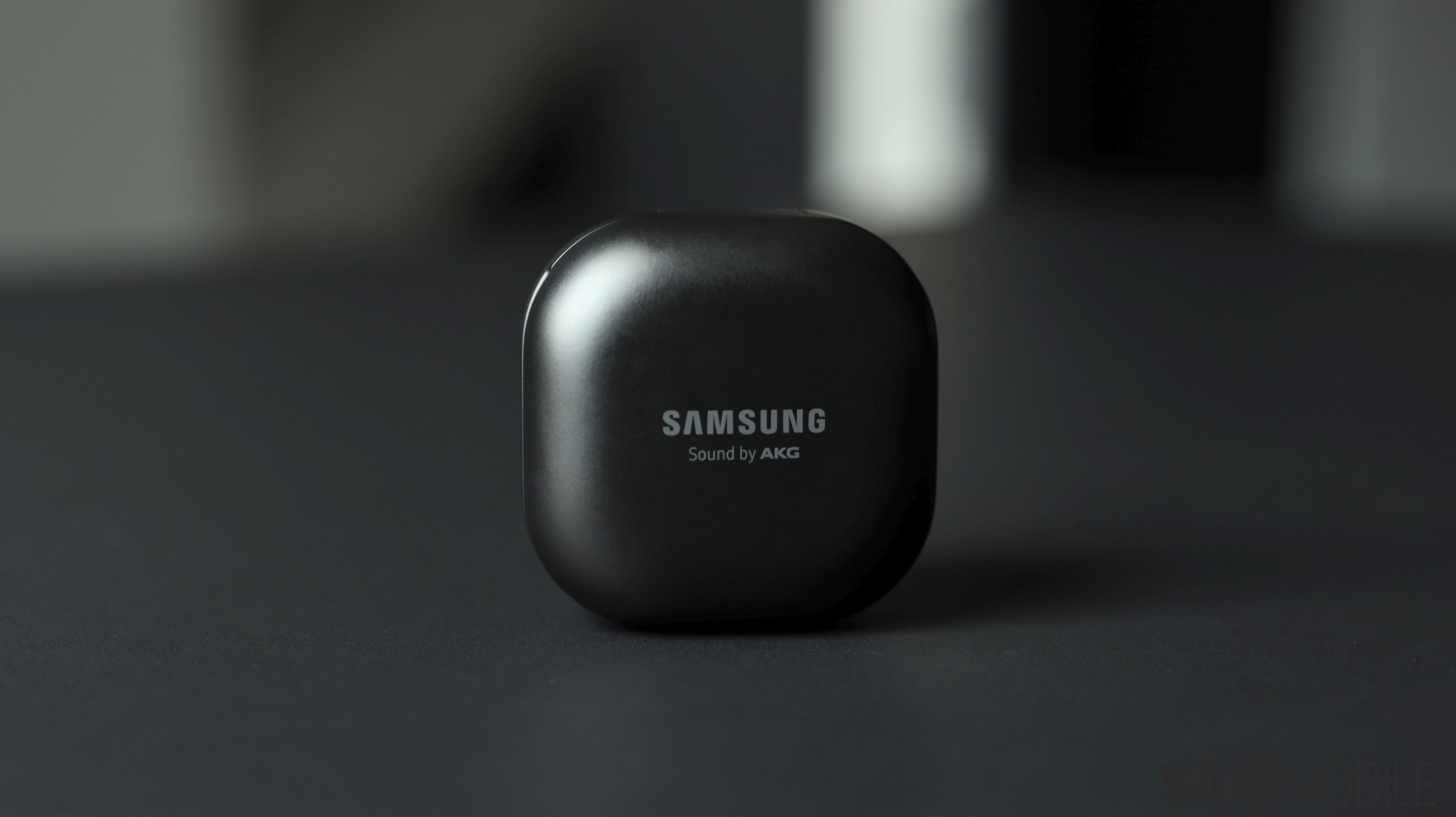
The Galaxy Buds Pro provide you with decent but not remarkable battery life from their 61mAh batteries. The charging case has a 472mAh battery that can provide an hour of listening time with just a 5 minute quick charge.

You can make them last for longer if you only use them for listening to music a couple of hours. Samsung promises up to 18 hours with ANC on, that includes 5 hours of listening time and 13 hours of charge provided with the case. You can stretch it to 8 hours of listening time and up to 20 hours charging with ANC off.

Real world performance is quite similar to Samsung’s published figures. It’s not bad at all but again, not entirely remarkable, either. There are obviously size limitations with earbuds so we’ve got to make the most of what we can get. Even with heavy use throughout the day with ANC and other special features, you can get a full day’s use out of it but you’ll need to charge them before heading out in the morning.

Galaxy Buds Pro verdict
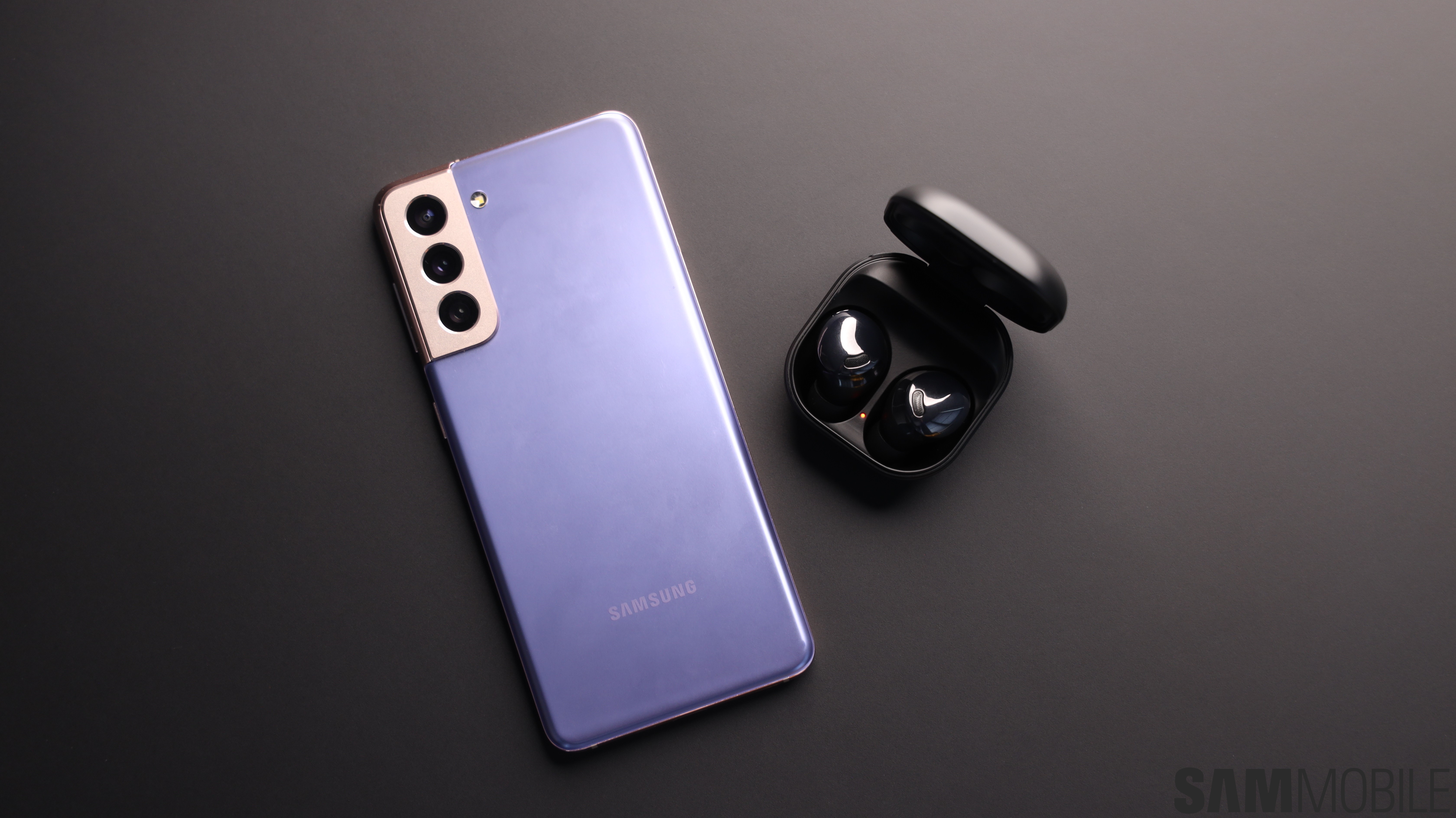
For those who are committed to the Samsung ecosystem, the Galaxy Buds Pro are definitely worth the $199 asking price. Features like Auto Switch and 360 Audio are how Samsung gets them their money’s worth with these earbuds. Buy them without a second thought if you’ve already bought a Galaxy S21 and are now on the hunt for earbuds.

The Galaxy Buds Pro are also worth the asking price even if you’re not entirely within the ecosystem. They’re better than any other Samsung earbuds at providing an elevated listening experience. The ANC is also much more effective compared to the Buds Live.

They look good, too, though we would have preferred a matte finish over glossy. The fit is secure and very comfortable indeed with the IPX7 rating being a plus point as well. What we have here is basically a perfect blend of everything that was great about the Galaxy Buds+ and Galaxy Buds Live.

So should you buy them? As far as truly wireless earbuds in this range go, the Galaxy Buds Pro are the best that Samsung has made so far. I’d even urge you to consider them if you already own a pair of the earlier Buds. The improvements in sound quality alone are enough of a reason to.

Pros Cons
Secure and comfortable fit Glossy finish isn’t as appealing
Significantly improved audio experience Some features only work with Galaxy devices
ANC and Ambient Sound work well Battery life could have been better
IPX7 rating provides peace of mind


The post Galaxy Buds Pro review: Samsung’s best wireless earbuds yet appeared first on SamMobile.


from SamMobile https://ift.tt/3a6VSZg
via IFTTT
Samsung Electro-Mechanics reports astonishing profitability surge in Q4

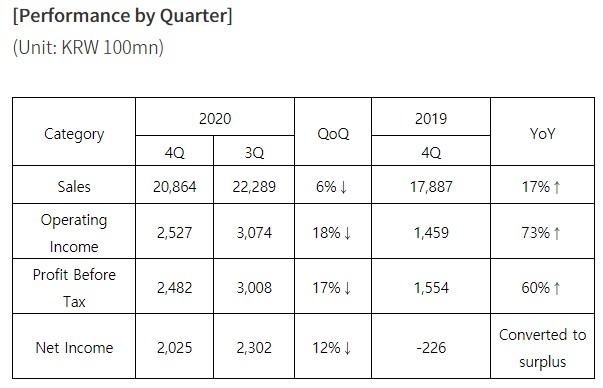
Samsung Electro-Mechanics just wrapped up another quarter of absolutely stellar business results. As best illustrated by the company itself, thanks to its newly published financials detailing the fourth quarter of 2020. Namely, the lesser-known sister company of Samsung Electronics reported the equivalents of about $1.88 billion in revenue and $228 million in operating income over the previous three months.

Compared to the same period last year, sales increased by 17%, while operating income surged a whopping 73%. For the whole year, Samsung Electro-Mechanics reported roughly $7.43 billion in sales, up 6% annually. At the same time, pre-tax earnings rose by about 12% year-over-year, finishing in the ballpark of $750 million.

Can 5G continue fueling Samsung’s remarkable growth?

How did Samsung Electro-Mechanics manage to end 2020 on such a high note? The short answer is “5G”. Because Samsung EM is still primarily a manufacturer of various electronic components used in countless consumer-ready goods. And as far as the newly concluded quarter goes, the consistent growth of the global market for 5G smartphones allowed it to move a lot more cutting-edge tech designed for premium integrated circuitry than it usually would. Multi-layer ceramic capacitors (MLCC) were a particularly lucrative business during the quarter, the company said.

With 5G being a key factor contributing to this remarkable quarter, it should come as no surprise that Samsung Electro-Mechanics does not appear to be as fixated on the idea of selling its wireless division as it was until just several weeks ago. In the meantime, the conglomerate’s flagship unit, Samsung Electronics, is scheduled to release its latest financials tomorrow.

The post Samsung Electro-Mechanics reports astonishing profitability surge in Q4 appeared first on SamMobile.


from SamMobile https://ift.tt/3cghDbu
via IFTTT

Samsung wins massive chip contract from its largest chipmaking rival

You know what they say: if you can’t beat them, win a few of their lucrative contracts covering massive volumes of cutting-edge silicon. OK, that might not ring a bell to everyone, but it certainly rang true to the person leading Samsung Foundry’s recent procurement talks with Intel. Because Intel’s largest rival in the chipmaking sphere just became one of its major chip suppliers, according to newly emerged reports out of South Korea.

Despite the somewhat unusual situation, Samsung’s achievement might not seem this impressive for long. As a number of reports from the past few weeks suggested Intel is also looking to offload some of its surplus production to TSMC, another one of its major rivals among silicon manufacturers.

Unusual or not, would this arrangement even change anything?

Today’s report mentions TSMC’s involvement, as well, with insiders claiming Intel opted to adopt a dual-vendor strategy for its next range of 14nm CPUs. This would be a so-called consignment manufacturing agreement, sometimes referred to as partial outsourcing.

While the details of the agreement between the two industry behemoths are still scarce, one figure that’s been floated around is the alleged size of Intel’s initial outsourcing order – 15,000 wafers per month. Assuming the new report is legitimate, this batch would undoubtedly be produced at Samsung’s existing 300nm plant in Austin, Texas. And yet the bottom line is that even had Intel completely ditched TSMC in favor of Samsung, the overall balance of powers in this tech segment would have probably remained the same.

In the meantime, TSMC is dashing ahead with the construction of its 5nm Arizona plant expected to begin operating in 2023. Samsung isn’t sitting idly, either, with last week’s reports alleging it’s fast-tracking plans for the construction of yet another foundry facility next to its existing Texas campus. And given the timing of its growing ambitions in the region, Samsung might very well ally with the newly inaugurated Biden administration before all is said and done.

The post Samsung wins massive chip contract from its largest chipmaking rival appeared first on SamMobile.


from SamMobile https://ift.tt/2YoPRRX
via IFTTT

الثلاثاء، 26 يناير 2021

Samsung silently introduces Galaxy A02 with a 5,000mAh battery

We had reported yesterday that Samsung could soon launch one more budget smartphone, the Galaxy A02. Today, the South Korean tech giant unveiled the Galaxy A02 in Thailand. The smartphone was silently listed on Samsung Thailand’s website, revealing all the features and specifications of the device.

The Galaxy A02 has a large, 6.5-inch Infinity-V display that uses a PLS TF LCD panel with HD+ resolution. It comes in four colors: Denim Black, Denim Blue, Denim Gray, and Denim Red. The phone is equipped with the MediaTek MT6739W quad-core processor (with PowerVR Rogue GE8100 GPU), 2/3GB RAM, and 32GB/64GB internal storage. It also features a microSD card slot for storage expansion (up to 1TB) and a dedicated dual-SIM card slot.

At the rear, the Galaxy A02 features a 13MP+2MP dual-camera setup and an LED flash. The 2MP camera has a macro lens for close-up shots. The phone can record Full HD (1080p) videos at 30fps. At the front, the entry-level smartphone features a 5MP selfie camera with an F2.0 aperture. Sadly, the phone runs Android 10 (with One UI 2), which is more than a year old. The phone has LTE, GPS, Wi-Fi b/g/n, Bluetooth 5.0, headphone jack, a microUSB port, and a 5,000mAh battery with 7.75W charging.

Samsung hasn’t unveiled the Galaxy A02’s availability yet, but its price is THB 2,999 (around $99.99) in Thailand. We expect the entry-level device to make it to more markets soon.

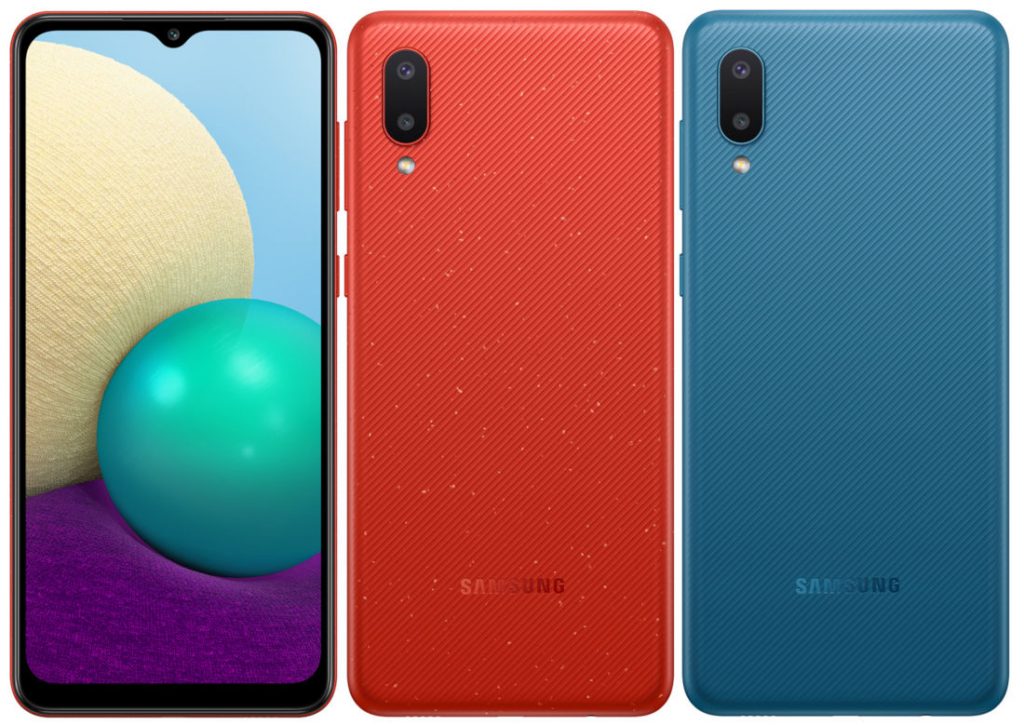
Samsung Galaxy A02 Blue Red

The post Samsung silently introduces Galaxy A02 with a 5,000mAh battery appeared first on SamMobile.


from SamMobile https://ift.tt/2M70iqY
via IFTTT

How much does that cheap Galaxy S21 price actually cost us?

With the Galaxy S21, Samsung is releasing its cheapest full-fledged Android flagship in years. And despite some high-level operational (re)thinking that’s going on at the moment in Seoul, Samsung verifiably doesn’t want to be in the business of making less money than it previously did. Another certainty is that the global smartphone market is extremely saturated, and its premium segment doubly so. Meaning that for this device to be as affordable as it is, some compromises had to have been made.

So, how much does this relatively cheap price of the Galaxy S21 actually cost us? Assuming it’s even us, the consumers, who are the ones shouldering the difference indirectly? That’s what aim to find out, and we’ll also be taking a closer look at the Galaxy S21+ and Galaxy S21 Ultra. Because the other two-thirds of the high-end mobile range is getting the same generational discount as the entry-level model.

Is a $200 price cut really that big of a deal?

But first, our reference point: the Galaxy S20 series released globally in early 2020 with an introductory price of $999. Not even ten months later, the Galaxy S21 line is scheduled to hit digital and physical store shelves with a 20% lower starting point – $799.

Given Samsung’s track record, a $200 price cut right off the bat is a pretty big anomaly. Not that such a move wasn’t overdue. After all, we have just witnessed the end of a prolonged flagship price creep period spanning multiple years. And yet this much more affordable entry point might not be coming out of Samsung’s profit margins.

Over the past decade, the company typically introduced a new Galaxy S generation along with a price hike. The price remained unchanged compared to the previous year only twice, which was the case with the Galaxy S5 and Galaxy S6. And prior to this year’s 20% cut, Samsung slashed the lineup’s entry price just once, as the Galaxy S9 range debuted in 2018 at $719, a whole 4% ($30) cheaper than the Galaxy S8 family.

To answer the above: yes, a $200 price decrease within less than a year is a pretty big deal for Samsung’s staple smartphone series.

Can one charger and a pair of headphones account for a $200-shaped hole?

Of course, this is the first Galaxy S generation that will be sold without a complimentary pair of headphones or a charging adapter. The official story is that Samsung is becoming a more environmentally friendly business. Unofficially, it’s getting rid of both accessories simply because Apple already demonstrated it can get away with such a move. That turn of events might be unfortunate from a consumer perspective, but it’s nowhere near enough to account for $200 worth of difference.

Mind you, Samsung isn’t claiming otherwise, as evidenced by the fact you can already buy an official Galaxy S21 charger for just $20. It’s hence safe to say manufacturing this accessory costs Samsung (way) less than $20. Ditto for the omitted pair of USB-C headphones from AKG; you can still buy a replacement pair of earbuds bundled along with the Galaxy Note 20 and Galaxy S20 at an identical price point.

Are there significant hardware differences (or even downgrades) across the last two Galaxy S generations?

Much like last year’s line, the Galaxy S21, Galaxy S21+, and the Galaxy S21 Ultra all use the same system-on-chip. Well, the same two, depending on the market, between the Exynos 2100 and Snapdragon 888. Beyond that is where we start seeing significant differences – if not outright downgrades – across the two product generations.

E.g., only the flagship model will offer a hardware upgrade in the camera department, whereas the other two will be identical to their predecessors, photography-wise. And only the Galaxy S21 Ultra will feature a WQHD+ (1,440 x 3,200) display, whereas the 6.2-inch Galaxy S20 and 6.7-inch Galaxy S20+ will both peak at an FHD+ resolution of 1,080 by 2,400 pixels. Given how mobile VR failed to take off, this fidelity downgrade might not seem significant in 2021, and yet it arguably lowers Samsung’s production costs by around $30 per unit, based on past bill of materials estimates.

The good news is that the Galaxy S21 and Galaxy S21+ at least offer an adaptive refresh rate amounting to 48-120Hz. And given how last year’s devices weren’t able to push past 60Hz at resolutions above FHD+, this difference shouldn’t be that obvious if you’re upgrading from something like the Galaxy S20+. But the Galaxy S21 Ultra is still superior in this regard, seeing how its higher-resolution display covers an even wider adaptive range – from 10Hz to 120Hz.

Speaking of display features that probably won’t be missed but help explain the massive price decrease across the last two Galaxy S generations, the two more affordable members of the new family both feature completely flat screens. This leaves the Galaxy S21 Ultra as the sole remaining champion of Samsung’s curved display technology.

A potentially more controversial difference hides behind the entry-level Galaxy S21. Namely, this particular smartphone features a plastic back, unlike its two peers (and dozens of direct predecessors) which utilize a glass rear panel. Not that high-quality plastic doesn’t offer some advantages over glass, but it’s certainly cheaper to manufacture, and the general consensus is that it doesn’t feel as premium in hand.

Then there’s the fact that the entire Galaxy S21 range will be missing out on MST tech in certain countries. And the shorter end of this stick doesn’t just include the largest, most valuable smartphone market on the planet (the U.S.), but also the fastest-growing one (India). Up until today, the Magnetic Secure Transmission standard was arguably the main thing shielding Samsung Pay users from a horribly disjointed and inconsistent contactless payment experience (so, Apple Pay, basically). Only time will tell whether it’s too early for Samsung to be ditching this stop-gap solution that worked with any old Point-of-Sale terminal equipped with a magnetic strip, unlike NFC. Whatever the case might be, UWB tech could feasibly replace both just a few years down the line.

Last but not least, the Galaxy S21 series also lacks a microSD card slot across the board. This isn’t the first time Samsung cut expandable storage from its premium flagship range, so fingers crossed we get it back eventually – or immediately, like the last time this happened.

So, there you have it: Between last year’s cameras, a lower-resolution display lacking in curvature, no MST support in major markets, no expandable storage at all, no headphones, no charger, and no plastic back, the entry-level Galaxy S21 isn’t so much of a discounted follow-up but a sidegrade to the Galaxy S20. The Galaxy S21 Ultra, on the other hand…

  • Model: SM-G991B
  • Dimensions: Bar: 151.7 x 71.2 x 7.9 mm
  • Display: 6.2 inch / 157.48 mm Dynamic AMOLED 2X
  • CPU: Exynos 2100
  • Camera: 12MP
  • Model: SM-G996B
  • Dimensions: Bar: 161.5 x 75.6 x 7.8 mm
  • Display: 6.7 inch / 170.18 mm Dynamic AMOLED 2X
  • CPU: Exynos 2100
  • Camera: 12MP
  • Model: SM-G998B
  • Dimensions: Bar: 165.1 x 75.6 x 8.9 mm
  • Display: 6.8 inch / 172.72 mm Dynamic AMOLED 2X
  • CPU: Exynos 2100
  • Camera: 12MP

The post How much does that cheap Galaxy S21 price actually cost us? appeared first on SamMobile.


from SamMobile https://ift.tt/2NFaPKt
via IFTTT

Samsung might soon launch Galaxy A72 mid-range smartphone

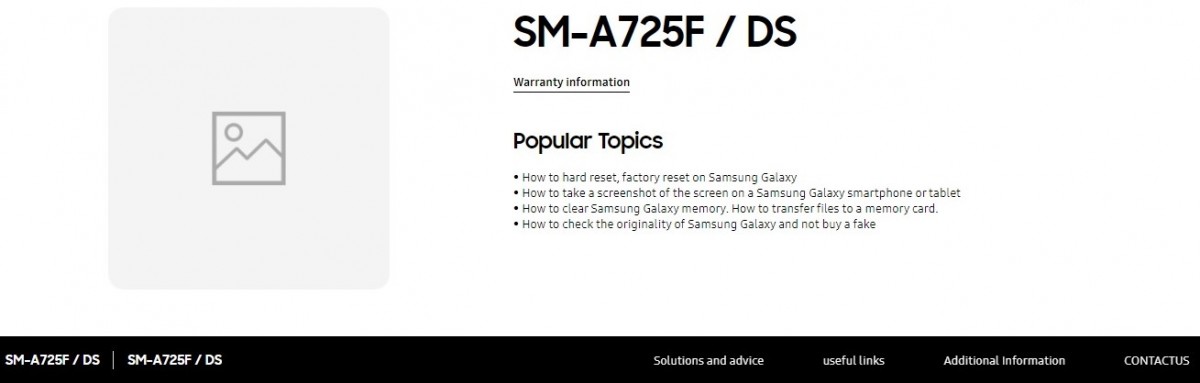
Samsung might soon launch the Galaxy A52 and the Galaxy A72 as the phones have received the required certifications. The company is working on 4G and 5G variants of its upcoming mid-range smartphones, and the two devices have been leaked already. Now, Samsung has created a support page for the 4G variant of the Galaxy A72 on its website.

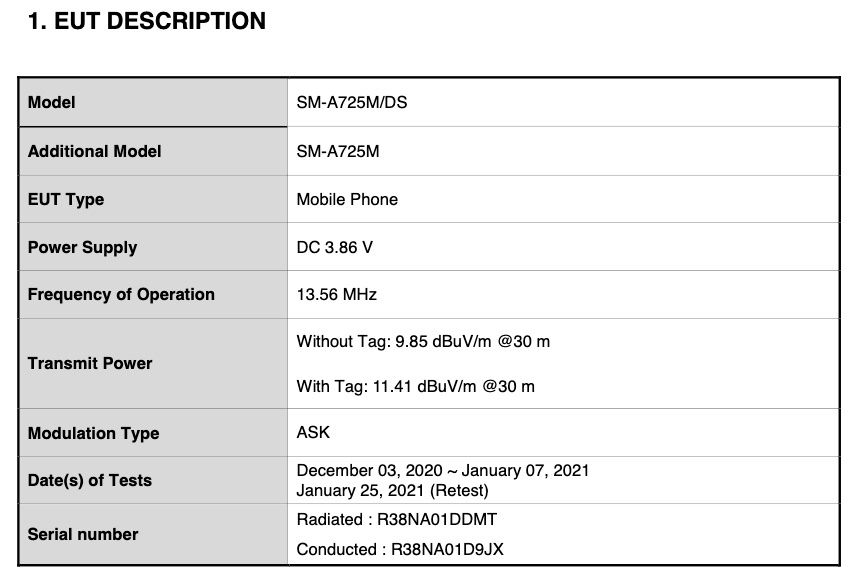
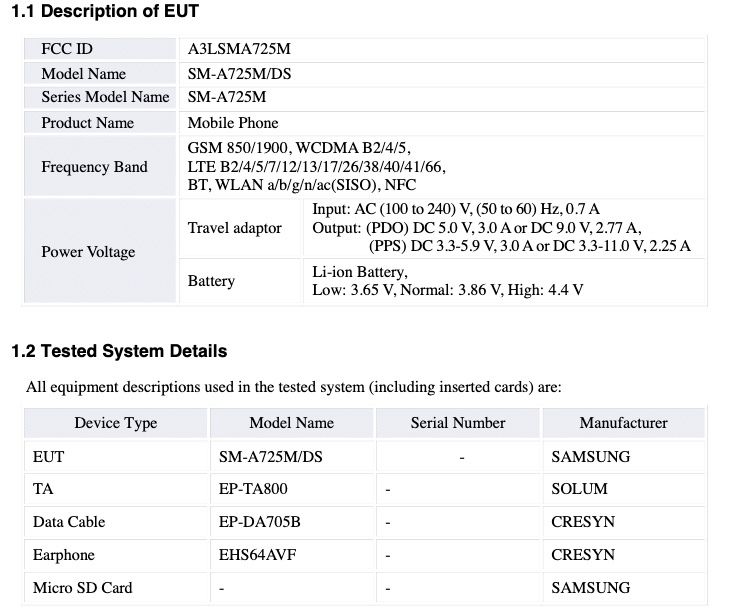
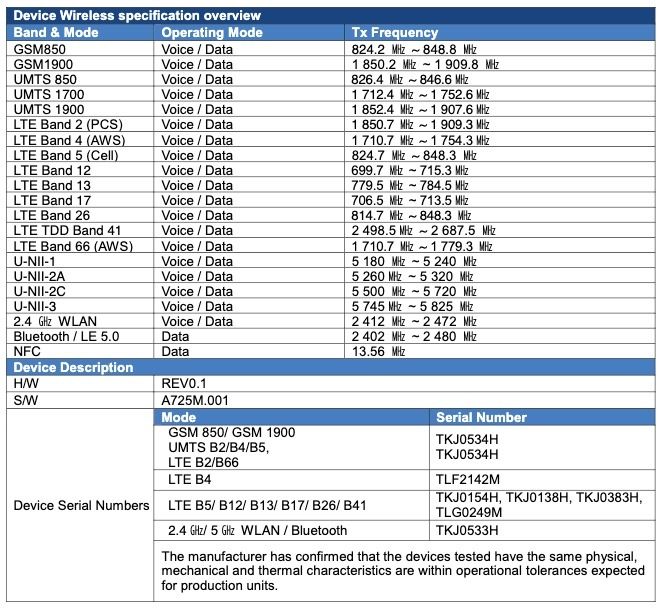
The Galaxy A72 4G’s (SM-A725F/DS) support webpage went live on Samsung Russia’s website, clearly hinting towards the phone’s imminent launch. The device has even received the FCC certification, revealing its connectivity and charging features. The Galaxy A72 4G features a dual-SIM card slot, 4G LTE (Bands 2/4/5/7/12/13/17/26/38/40/41/66), dual-band Wi-Fi b/g/n/ac, Bluetooth, and NFC. It also supports up to 25W fast charging, and could come bundled with Samsung’s 25W USB-PD charger EP-TA800.

It looks like Samsung will use a Snapdragon processor in both 4G and 5G variants of the Galaxy A72. The Galaxy A72 4G will feature the Snapdragon 720G processor, while the 5G variant will be equipped with the Snapdragon 750G processor. The phone could come with 6GB/8GB RAM, 128GB/256GB internal storage, a quad-camera (64MP+12MP+5MP+5MP) setup at the rear.

The Galaxy A72’s design was leaked last month, revealing its 6.7-inch Infinity-O display, a USB Type-C port, and a headphone jack. It could also feature an in-display fingerprint reader and will come with Android 11 pre-installed. The phone will reportedly be launched in four colors: black, blue, violet, and white.

Samsung Galaxy A72 4G Support Page On Samsung Russia Website


Samsung Galaxy A72 4G FCC Certification - 02

Samsung Galaxy A72 4G FCC Certification - 01

Samsung Galaxy A72 4G FCC Certification - 03

The post Samsung might soon launch Galaxy A72 mid-range smartphone appeared first on SamMobile.


from SamMobile https://ift.tt/2YjBsqs
via IFTTT

Samsung is rolling out the 2nd Galaxy S21 pre-release firmware update

Samsung has released another firmware update for the Galaxy S21 series. Indeed, the new flagship trio has yet to reach customers but the company has already rolled out a first firmware update in anticipation of the phone’s imminent market release, while a second rollout is now taking place for the Galaxy S21 lineup in countless regions.

Given that the Galaxy S21 series has yet to hit the market, details on the second update’s changelog are nonexistent but we can take an educated guess and assume that both firmware updates that got released so far are meant to iron out any kinks left behind during the Galaxy S21 / One UI 3.1 development process.

The Galaxy S21 flagship trio is available for pre-order and it will start shipping to customers later this week on January 29. The lineup runs Android 11 and One UI 3.1, and the firmware is virtually complete, though there are a few bugs that need to be addressed. SmartThings, for example, doesn’t seem to be working all that well on the Galaxy S21 Ultra running pre-release firmware, leading to massive battery life losses.

While it’s unclear what changes the new firmware update has introduced to the Galaxy S21 series, the new firmware (versions G99xBXXU1AUAC) will be waiting for customers upon unboxing the phones, assuming an even newer update won’t be released by Samsung before then. And if you’re looking to download the latest Galaxy S21 firmware files whenever they roll out, you can refer to our firmware archive via the links below.

  • Model: SM-G991B
  • Dimensions: Bar: 151.7 x 71.2 x 7.9 mm
  • Display: 6.2 inch / 157.48 mm Dynamic AMOLED 2X
  • CPU: Exynos 2100
  • Camera: 12MP

  • Model: SM-G996B
  • Dimensions: Bar: 161.5 x 75.6 x 7.8 mm
  • Display: 6.7 inch / 170.18 mm Dynamic AMOLED 2X
  • CPU: Exynos 2100
  • Camera: 12MP

  • Model: SM-G998B
  • Dimensions: Bar: 165.1 x 75.6 x 8.9 mm
  • Display: 6.8 inch / 172.72 mm Dynamic AMOLED 2X
  • CPU: Exynos 2100
  • Camera: 12MP

The post Samsung is rolling out the 2nd Galaxy S21 pre-release firmware update appeared first on SamMobile.


from SamMobile https://ift.tt/36cMDFu
via IFTTT

جميع الحقوق محفوظة لمدونة الغريب 2013