الخميس، 4 مارس 2021

Samsung and Mastercard announce biometric card with fingerprint sensor

Samsung Electronics and Mastercard have announced a new strategic collaboration today for the purpose of developing a Samsung Card with a built-in fingerprint scanner and ensure secure transactions at in-store payment terminals.

Technical details regarding the upcoming product are few but it sounds like Samsung’s solution will be similar to the Mastercard Biometric Payment Card that was first released a few years ago with a fingerprint scanner in tow.

However, the biometric Samsung Card will be equipped with a new chipset manufactured by Samsung’s System LSI Business and it will be compatible with any point of sale (POS) or Mastercard chip terminals.

As yet, it’s unclear whether the biometric Samsung Card will offer any compatibility with the Samsung Pay platform.

Samsung Card with built-in fingerprint scanner will debut in South Korea

We’re bound to learn more about the upcoming Samsung Card in the coming months, but as far as availability is concerned, Samsung has confirmed that it will debut in South Korea later this year. It hasn’t revealed what other markets — if any — could be next in line to offer the service.

Even in South Korea, Samsung claims that the launch of the biometric card will be gradual and the release will kick off at a corporate level where more frequent international transactions are being recorded.

According to Samsung Card Vice President Hanjoo Yoon, the biometric card is an example of Samsung Card’s efforts to deliver innovative and convenient solutions to consumers. It leverages the company’s expertise and fraud detection systems to deliver a secure and powerful solution.

The post Samsung and Mastercard announce biometric card with fingerprint sensor appeared first on SamMobile.


from SamMobile https://ift.tt/30fjFBw
via IFTTT
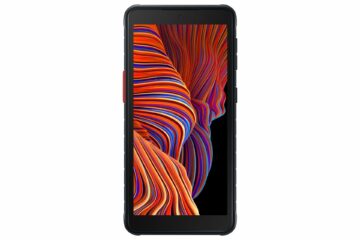
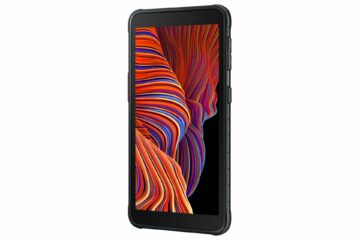
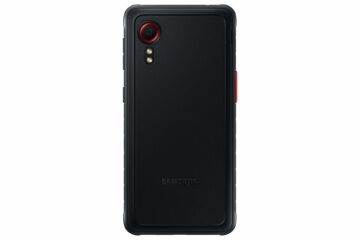
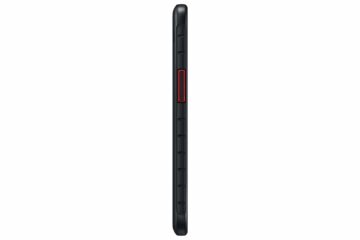
Galaxy Xcover 5 announced, here’s when and where it will hit the shelves

The Galaxy Xcover 5 wasn’t left out the rumor mill and after a few interesting leaks pertaining to its specifications and design, Samsung’s next-gen rugged phone finally went official moments ago. The latest model will be available for purchase in Asia, Europe, and Latin America by the end of March, and availability will expand to additional regions at a later, unspecified date.

As expected, the Galaxy Xcover 5 is an enterprise device first and foremost, so it features push-to-talk capabilities and it supports the walkie talkie function in Microsoft Teams. So far, however, Samsung hasn’t mentioned a 5G variant being in the works, but an announcement pertaining to a 5G model could still happen later down the line.

A new rugged phone with a removable battery and Live Focus

Samsung has officially confirmed the Galaxy Xcover 5’s specifications today, some of which were already known. The 3,000mAh battery doesn’t come as a surprise but the company has finally put an end to the question of whether or not the Galaxy Xcover 5 has a removable battery. The answer is that it has, and the unit supports 15W fast charging.

The Galaxy Xcover 5 is equipped with a 5.3-inch HD+ TFT display and it’s powered by the Exynos 850 chipset paired with 4GB of RAM and 64GB of internal storage. The rear-facing camera has a resolution of 16MP, autofocus, and an f/1.8 aperture, while the selfie camera clocks in at a resolution of 5MP but has fixed autofocus and an f/2.2 aperture.

The camera setup takes advantage of Live Focus, while Samsung Knox Capture enables enterprise-grade scanning at a competitive value, without compromising device performance.

Samsung’s new rugged phone is equipped with one programable key, an LED flashlight, and it supports NFC-based transactions. The components are wrapped in a body that boasts an IP68 rating for dust and water resistance, as well as a MIL-STD810H certificate, meaning that the phone should be able to survive drops of up to 1.5 meters.

Pricing details haven’t been officially confirmed yet but previous rumors have hinted at a €299 price tag for Europe.

The post Galaxy Xcover 5 announced, here’s when and where it will hit the shelves appeared first on SamMobile.


from SamMobile https://ift.tt/3kLPOdx
via IFTTT

Smartwatch compatibility for Samsung Pay goes live in Germany today

Starting today, March 4, Samsung Pay customers in Germany can make mobile payments using their Galaxy smartwatches, with the list of supported models including the Galaxy Watch, the Galaxy Watch Active and Galaxy Watch Active 2, as well as the latest Galaxy Watch 3 model.

A beta program for Samsung Pay was released in Germany in September and the platform went live a month later. Unlike in most other regions, Samsung has partnered with Solarisbank AG to allow German customers to link virtually any bank account to Samsung Pay.

At launch, the platform was available only for smartphone models including the Galaxy S10 and S20 series, the Galaxy Note 10 and Note 20, as well as the company’s foldable phones. Now, Samsung Pay customers in Germany can activate their Galaxy smartwatches via the Galaxy Wearable app and perform mobile payments from their wrists.

Using Samsung Pay with Galaxy smartwatches is as easy as pie

Once Samsung Pay is set up on the smartwatch, users can press Back on the device to activate the payment mode and enter the PIN once. The PIN doesn’t have to be reintroduced for every payment as long as the smartwatch wasn’t removed from the user’s wrist since it was last authenticated.

Samsung Pay customers can make contactless payments via their smartwatches wherever contactless payments with VISA are accepted. Installment payment options through Splitpay are also available and can be activated from the Samsung Pay app to be used on the connected smartwatch.

The post Smartwatch compatibility for Samsung Pay goes live in Germany today appeared first on SamMobile.


from SamMobile https://ift.tt/30anUyv
via IFTTT

Meet ISOCELL 2.0: Samsung’s pixel isolation tech is all grown up now

Samsung today detailed the first major upgrade of its pixel isolation technology ISOCELL. Simply called ISOCELL 2.0, this image sensor solution promises to usher in a new era of smartphone photography excellence.

The next-generation platform still features large pixels that are cordoned off from one another in order to cut down on signal interference. But instead of using metal barriers, it does so with reflective material so as to further optimize the end result, thus providing better image quality.

If that doesn’t make sense, think of it this way: metal is great at many things, but doubling as a mirror isn’t one of them. No matter the sort of metal you use to wall off your sensor pixels, some light will still get absorbed by the material itself. That’s the problem that the ISOCEL 2.0 addresses.

How big of a deal ISOCELL 2.0 really is?

This shift from metal already started with the ISOCELL Plus, which was sort of a stepping stone for Samsung’s sensor tech when it was introduced in 2018, five years following the launch of the original solution. ISOCELL 2.0 completely does away with metal components, offering not just greater optical quality but also significantly higher light sensitivity.

In other words, low-light photography stands to directly benefit from it. Particularly so in any implementation that also includes pixel size improvements. Large, ultra-sensitive pixels are the only “right” method of cutting down on image noise, anyway.

It remains to be seen how big of a deal ISOCELL 2.0 truly is. The tech is already available in Samsung’s latest imaging sensors which started hitting the market only recently.

The post Meet ISOCELL 2.0: Samsung’s pixel isolation tech is all grown up now appeared first on SamMobile.


from SamMobile https://ift.tt/3rts9Bj
via IFTTT

Samsung was second-biggest tablet brand in India in 2020

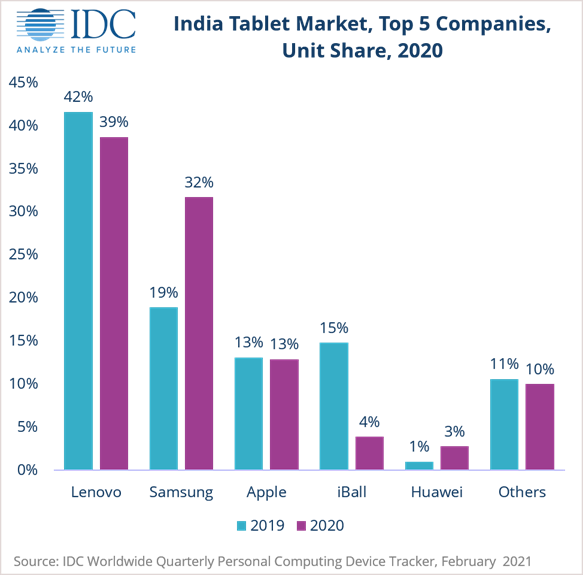
Samsung is among the biggest tablet brands in the world and it is Apple’s biggest rival in the segment. In 2020, the company was the biggest tablet vendor in Africa, Europe, and Middle-East. A new report states that Samsung was the second-biggest tablet brand in India in 2020, and it achieved impressive growth compared to the previous year.

IDC’s new report claims that Samsung had a 32% share of India’s tablet market last year. The company achieved an impressive 157% growth compared to 2019 when it had a 19% share of the market. The Galaxy Tab S6 Lite was Samsung’s best-selling tablet in the country. Interestingly, the report clubs both commercial and consumer market numbers, and Samsung was the biggest tablet brand in India in the consumer segment.

Lenovo was the biggest tablet brand in India, capturing a 42% share of the market. Apple’s market share in 2020 was similar to its 2019 numbers, at 13%. Huawei, despite losing access to the Google Play Store and other Google services, shipped more tablets in 2020 than it did in 2019. iBall was the biggest loser in the segment, losing 11% points.

Thanks to the rising demand for PCs and tablets since the COVID-19 pandemic for remote learning and work-from-home tasks, Samsung shipped more than 30 million tablets worldwide last year. Apart from the impressive Galaxy Tab S7 series, the company also launched various mid-range tablets like the Galaxy Tab S6 Lite and the Galaxy Tab A7 (2020).

Samsung Tablet Market Share India 2020 IDC

The post Samsung was second-biggest tablet brand in India in 2020 appeared first on SamMobile.


from SamMobile https://ift.tt/3bf5CT2
via IFTTT

Samsung’s new 5G technology breaks speed records

Samsung has announced that it has broken previous 5G speed records with its new technology. The company achieved a record download speed of 5.23Gbps on a single device using the E-UTRAN New Radio Dual Connectivity (EN-DC) technology. The demonstration was carried out in its lab in Samsung Digital City in Suwon, South Korea.

The EN-DC technology leverages 4G networks to boost 5G speeds. During its demonstration, Samsung Networks used a combination of 800MHz of mmWave 5G frequency and 40MHz of 4G frequency. The company also used commercially available devices, including the Galaxy S20+, 4G and 5G radios, and a 4G/5G common core. Using both 4G and 5G networks at the same time helps carriers in improving coverage, efficiency, reliability, and speed. At 5.23Gbps, a device can download a Full HD movie (4GB file size) in just 6 seconds.

Samsung develops end-to-end 5G solutions, including 5G radios, 5G core and vRAN, 5G chipsets, and 5G smartphones. In 2018, the company started demonstrating its 5G technologies, achieving a download speed of 1.7Gbps. In 2019, the company read download speeds of up to 2.65Gbps on a 5G network. Last year, the South Korean firm broke its previous records by reaching a download speed of 4.3Gbps.

Ji-Yun Seol, Vice President and Head of Air Technology Group, Networks Business at Samsung, said, “Through this demonstration, Samsung is proud to achieve another breakthrough record in 5G data speeds, now spotlighting the power of using a dual 4G and 5G approach, delivered directly to a single user. This reinforces our commitment to delivering the best possible 5G solutions to our customers and our ongoing support to help mobile operators accelerate the benefits of 5G services to their users.

The company has successfully helped operators around the world, including Verizon, KT, SKT, LG Uplus, and Telus, in deploying 5G networks.

The post Samsung’s new 5G technology breaks speed records appeared first on SamMobile.


from SamMobile https://ift.tt/3uVJoNo
via IFTTT

الأربعاء، 3 مارس 2021

Next-gen Nintendo Switch could use a Samsung OLED display

Samsung is the world’s number one manufacturer of small-sized OLED displays. Its OLED displays are used by a majority of smartphone and smartwatch brands, including Apple. It is now being reported that even Nintendo could switch to the South Korean firm’s OLED display for its next-generation portable gaming console.

According to a report from Bloomberg, the next-generation Nintendo Switch will use a 7-inch HD OLED display panel made by Samsung Display. Even though the newer panel’s resolution is similar to the Switch’s 6.2-inch and the Switch Lite’s 5.5-inch LCD screens, the OLED panel should offer a much higher contrast ratio, deeper blacks, wider viewing angles, and improved power efficiency. The next-generation Switch could offer a much-needed visual boost to gamers, combined with the new OLED panel and rumored 4K output in the docked mode.

Samsung Display will reportedly start the mass production of display panels in June 2021, with an initial target of around 1 million units per month. The OLED display panels will then ship to Switch’s assembly lines in July. The pricing of rigid OLED panels has been dropping over the past few years, and winning Nintendo’s orders would mean a steady revenue stream for Samsung.

Nintendo may have to switch to a different chip vendor for its next Switch since Nvidia is not focusing on consumer-grade Tegra mobile chips anymore. It was rumored last year that the next-generation Nintendo Switch could use an Exynos chip made by Samsung, featuring an AMD Radeon GPU.

The post Next-gen Nintendo Switch could use a Samsung OLED display appeared first on SamMobile.


from SamMobile https://ift.tt/3bf2UwB
via IFTTT

جميع الحقوق محفوظة لمدونة الغريب 2013