الخميس، 11 مارس 2021

2nd Quantum phone is almost here and it’s based on the Galaxy A82

Samsung and South Korean network operator SK Telecom have reportedly joined forces once again for the purpose of creating a second Galaxy smartphone equipped with a so-called quantum RNG chip for advanced security. The first Galaxy A Quantum phone was released last year and it was based on the Galaxy A71 5G. This year, reports claim that the upcoming Galaxy A Quantum 2 will be a rebranded Galaxy A82 5G which will be equipped with the impressive QRNG chip.

The QRNG chip was developed by SK Telecom and IDQ, which is why the technology remains exclusive to South Korea and the country’s largest mobile carrier. Its purpose is to create truly random numbers and unpredictable patterns to enhance the security of various apps and services including SK Pay.

Galaxy A Quantum 2 / Galaxy A82 5G to go on sale next month

The Galaxy A82 5G and the Galaxy A Quantum 2 will share many hardware specs as they are essentially the same device with one key difference – the QRNG chip. Therefore, both the Galaxy A Quantum 2 and the Galaxy A82 5G are expected to be powered by the Snapdragon 855+ chipset.

According to the Korean media, the Galaxy A Quantum 2 was created because the original model proved to be successful enough. The first Galaxy A Quantum topped 300,000 sales in its first six months on the market after it was released in May 2020.

The Galaxy A Quantum 2 will reportedly go on sale next month for around 700,000-800,000 won ($618-$706). If true, then the standard Galaxy A82 5G is likely planned to hit the shelves around the same time.

The post 2nd Quantum phone is almost here and it’s based on the Galaxy A82 appeared first on SamMobile.


from SamMobile https://ift.tt/3lio1BT
via IFTTT
Samsung is readying its Xi’an NAND facility to produce 40% of all wafers

Samsung’s second phase of expansion at its NAND flash manufacturing facility in Xi’an, China, is advancing according to plan. The first round of investment for the second phase of expansion was concluded in March 2020, and today, Samsung’s upgraded Xi’an facility has reportedly entered the equipment installation phase.

Same as before, the second round of investment for Phase II is expected to be completed by mid-2021, which means nothing’s changed since last year and Samsung has so far been able to follow its original expansion plans without delays.

Up to 40% of Samsung’s NAND flash chips will be manufactured at Xi’an

With the second expansion phase completed later this year, sources believe that Samsung’s Xi’an facility will be expected to churn out 130,000 NAND flash wafers every month. In essence, this means that the Xi’an facility will be responsible for manufacturing around 40% of Samsung’s global supply of — similar — NAND flash wafers.

A cargo flight route operated by SF Airlines was reportedly opened in mid-January to supply Samsung’s Xi’an plant with raw materials and equipment from Tokyo. The flight is scheduled to take place once every week and it’s expected to lead to about 5,000 tons of materials being imported via the Xi’an Xianyang International Airport every year.

Samsung’s NAND flash market performance in Q4 2020 was good enough for the company to earn almost 2% market share. Its NAND flash shipments were up 7-9% quarter-on-quarter on the back of increased NAND orders from Chinese clients. Industry experts believe that Samsung will continue leading the NAND market this year through SSD and UFS-based products.

The post Samsung is readying its Xi’an NAND facility to produce 40% of all wafers appeared first on SamMobile.


from SamMobile https://ift.tt/30zFQCE
via IFTTT

New Galaxy M62 5G will help Samsung in making 5G more accessible

The Galaxy A series handsets were the first non-flagships from Samsung to get 5G support. The company has been on a mission to make 5G accessible to more customers across the globe. This means that it has to significantly lower the barrier of entry.

Samsung can do that by adding 5G support to its mid-range and low-end devices. There’s now reason to believe that the company wants to bring 5G to its affordable Galaxy M lineup. It may launch multiple Galaxy M models this year with 5G connectivity.

Galaxy M62 5G will be a rebadged Galaxy A52 5G

We reported earlier today that the Galaxy M42 5G could be the first smartphone in this series to get support for the next-gen network standard. The Bluetooth certification for the device has revealed that it’s simply going to be a rebadged Galaxy A42 5G.

Samsung has been using the rebadging strategy for its affordable lineups quite frequently now. The rebadged devices usually have one or two minor differences. We usually see a downgrade in some specs on these devices.

The company has another Galaxy M series device in the pipeline bearing model number SM-M626B. This would be launched as the Galaxy M62 5G. If you’ve been keeping up with Samsung’s recent releases, you’d be aware that the Galaxy M62 LTE is itself a rebadged version of the Galaxy F62. A Bluetooth certification reveals that the Galaxy M62 5G will be a rebadged Galaxy A52 5G. This means that the new device will likely see some spec downgrades compared to its LTE variant.

Samsung clearly doesn’t mind sacrificing some specs if it enables the company to lower the barrier of entry for 5G devices. Whether that will be enough to entice people to buy these phones just for the 5G connectivity is another matter entirely.

The post New Galaxy M62 5G will help Samsung in making 5G more accessible appeared first on SamMobile.


from SamMobile https://ift.tt/3cnD8G0
via IFTTT

Opinion: Xiaomi and co. can’t afford to match Samsung’s Android updates

The frequency at which Samsung keeps churning out security updates for its devices is getting more impressive on an almost daily basis. Especially at this time of the year, when what’s left of its competition in the Android smartphone industry is busy with its first annual product launches.

From the OnePlus One to the Wii U 11 or whatever the latest Xiaomi thing is called, I’ve been hearing about these supposed “flagship killers” for years now. But the only two flagship makers with market share and profit margins worth killing for are… well, they’re still here, going stronger than ever, for the most part.

Looking at the last 15 years, Samsung and Apple were the only two companies that enjoyed profit margins well into the double digits (that’s actually a gross understatement for Apple). Now, guess which two companies have also been going above and beyond what their rivals were offering on the mobile security and update front?

Samsung’s solution for this race to the bottom? Refuse to play

Security updates don’t sell consumer electronics any more than seatbelts sell cars. But because they’re more difficult for a layperson to wrap their head around, they were the first things on the chopping block in the mobile industry’s race to the bottom. And given how that rush is far from over, Xiaomi and co. might be yet to even realize that they cannot afford to match Samsung’s new update strategy.

In fact, that might be why Samsung decided to double and triple down on security updates in the first place. But that’s a topic for another time. Today’s takeaway is that you get what you pay for, and whenever there’s talk of flagship killing, you certainly aren’t paying for security. Especially since nowhere in the world do manufacturers have a real regulatory imperative; something preventing them from irresponsibly prioritizing profits over customer safety.

Now, this isn’t to say I didn’t expect great things after Samsung’s blockbuster pledge from last year. After all, promising an extra generation of Android updates to so many consumers was an unprecedented move. But even more seminal is how swiftly and zealously it started coming good on that guarantee.

By now, we’ve already reached security update parity between Samsung’s flagships and some of its most affordable devices. Even some budget smartphones such as the Galaxy M31s are nowadays keeping up with their flagship brethren in terms of major OS upgrades. Take a look at most self-proclaimed flagship killers from 2019 and you’ll see a device running a more outdated OS than what $200 gets you this year, so long as you’re buying Samsung.

Overall, it’s certainly not looking like any major Android manufacturer will be giving Samsung a run for its money in the security/update department anytime soon. This is potentially much more concerning than yet another bundle of false promises suggesting flagship-level products are within reach at a fraction of typical flagship prices. But whether Samsung smartphones actually become worse in this new climate is way too premature to discuss right now, considering the rest of the industry seems to be even laxer about this reduction in global competition levels.

The post Opinion: Xiaomi and co. can’t afford to match Samsung’s Android updates appeared first on SamMobile.


from SamMobile https://ift.tt/3vhrqWa
via IFTTT

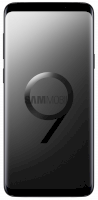
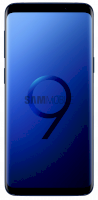
Galaxy S9 and S9+ now receiving March 2021 security update

The Galaxy S9 series is joining the already sizable pool of Samsung smartphones running the very latest Android security update, starting with the international, Exynos 9810 models. Not bad for a lineup that’s been pushing four as of two days ago. And not entirely unexpected, either, given how quickly these 2018 flagships adopted the first two security patches of the year.

Of course, this is just a new security patch level we’re looking at here. From a feature-first perspective, the Galaxy S9 and Galaxy S9+ have been done for a while, by now. Though they have also adopted a wide variety of new capabilities and improvements all the way up to last year’s release of One UI 2.5 based on Android 10.

Galaxy S9 stood the test of time better than most three-year-olds in the biz

Either way, the March 2021 Android security update has now officially started rolling out to both devices, identified by package version G96xFXXSFFUB3. You can expect it to reach your unit by the end of the month, and there’s nothing stopping you from manually checking for it whenever you’re feeling particularly impatient. To do so, go to Settings > Software update > Download and install. Give the phone a moment to check whether the deployment reached your particular corner of the world.

Alternatively, there’s also the option of downloading full system images containing the new security patch – dated March 1st, 2021 – from our firmware archives; then manually flashing them to your Galaxy S9 and/or Galaxy S9+. Assuming you know what you’re doing, but if you’re still holding on to the Galaxy S9 in 2021, you probably do.

  • Model: SM-G960F
  • Dimensions: Bar: 147.7 x 68.7 x 8.5 mm
  • Display: 5.8 inch / 147.32 mm Super AMOLED Display
  • CPU: Exynos 9810
  • Camera: 12MP
  • Model: SM-G965F
  • Dimensions: Bar: 158.1 x 73.8 x 8.5 mm
  • Display: 6.2 inch / 157.48 mm Super AMOLED Display
  • CPU: Exynos 9810
  • Camera: 12MP

The post Galaxy S9 and S9+ now receiving March 2021 security update appeared first on SamMobile.


from SamMobile https://ift.tt/3t6uNNC
via IFTTT

Galaxy M12 with 90Hz display launched in India

The Galaxy M12 was quietly launched in Vietnam last month, and then Samsung had started teasing the launch of the mid-range smartphone for the Indian market. Today, the company has finally launched the Galaxy M12 in India. The new affordable smartphone comes in two storage configurations and three color variants.

The Galaxy M12 is priced at INR 10,000 for the 4GB + 64GB variant, while the 6GB + 128GB variant is priced at INR 13,499. Samsung is offering INR 1,000 cashback on purchases made via ICICI Bank credit cards. The smartphone will go on sale in India at 12 PM from March 18. The Galaxy M12 can be purchased via Amazon.in, Samsung Shop, and select retail stores across the country. It will be available in three colors: Attractive Black, Elegant Blue, and Trendy Emerald Green.

Samsung has equipped the Galaxy M12 with a 6.5-inch IPS LCD Infinity-V display with HD+ resolution. The V-shaped notch accommodates the phone’s 8MP selfie camera. At the rear, the phone has a quad-camera setup, consisting of a 48MP primary camera, a 5MP ultrawide camera, a 2MP depth sensor, and a 2MP macro camera. The Galaxy M12 can record 1080p 30fps using its front and rear cameras.

There’s a side-mounted capacitive fingerprint reader for added security. The phone runs Android 11 with One UI 3.0. It is equipped with the Exynos 850 processor, 4GB/6GB RAM, 64GB/128GB internal storage, and a microSD card slot. Other features include a dual-SIM card slot, LTE, GPS, Wi-Fi b/g/n, Bluetooth 5.0, USB Type-C port, and a headphone jack. It is powered by a 6,000mAh battery and supports up to 15W fast charging.

The post Galaxy M12 with 90Hz display launched in India appeared first on SamMobile.


from SamMobile https://ift.tt/3bDoZW6
via IFTTT

BREAKING: Galaxy M42 could bring 5G connectivity to Samsung’s M series

Samsung’s Galaxy M series has been a massive hit in markets like India thanks to a mix of excellent specs and relatively low prices, and it seems the company is now working on future-proofing Galaxy M phones by introducing 5G connectivity. That’s evidenced by the Wi-Fi Alliance certification for the Samsung SM-M426B, which should be a 5G version of the Galaxy M42.

However, it doesn’t seem like the Galaxy M42 5G will be a completely new phone. According to the Bluetooth certification for the SM-M426B, it is simply a rebranded Galaxy A42 5G. That means its spec sheet will be rather humble and not as exciting as what people expect from Galaxy M smartphones.

For example, the Galaxy A42 5G features a 6.6-inch Super AMOLED display with a measly 720×1600-pixel resolution and only supports 15W charging for its 5,000 mAh battery. Meanwhile, we have Full HD+ screens on all the Galaxy M series phones in the same price segment, along with huge batteries (6,000 mAh to 7,000 mAh) and 25W charging support on at least two of them.

Should the Galaxy M42 5G turn out to be a rebranded Galaxy A42 5G, it will be yet another example of how Samsung is sacrificing important specs just to be able to provide faster cellular connectivity on a budget. Case in point: The Galaxy A32 5G has poorer specs than the LTE-only Galaxy A32. We’re not sure anyone is looking to buy a phone strictly for 5G connectivity, which makes these phones a lot less desirable than we would like.

However, since there’s very little information available about the Galaxy M42 5G at this time, it’s hard to say if it will indeed be a rebadged Galaxy A42 5G or something completely different. We’ll let you know once we have more details on the phone, so stay tuned.

The post BREAKING: Galaxy M42 could bring 5G connectivity to Samsung’s M series appeared first on SamMobile.


from SamMobile https://ift.tt/3qA1hhx
via IFTTT

جميع الحقوق محفوظة لمدونة الغريب 2013