الخميس، 12 أغسطس 2021

Galaxy Z Fold 3 vs Galaxy Fold: Your wishes from 2 years ago have come true

It’s been nearly two years since the original Galaxy Fold was released to bring a brand-new form factor to the stagnating mobile world, and it’s now time for Samsung to release the third model in the series. Predictably, it’s called the Galaxy Z Fold 3, and it boasts countless improvements across the board.

Samsung continued advancing various technologies over the past couple of years, including UTG (Ultra-Thin Glass) and UDC (Under-Display Camera). Indeed, the Galaxy Z Fold 3 is the company’s first mobile device to feature a UDC. It’s also the first foldable phone to support the S Pen and have an IP rating. Just how big of an upgrade is the Galaxy Z Fold 3 over the original Fold? Keep reading and check our device comparison widget below to find out.

Galaxy Z Fold 3 vs Fold build and design: Refinements galore

Two years after the original Galaxy Fold’s released, the basic design formula is mostly unchanged. The Galaxy Z Fold 3 has a book-like form factor with a rigid cover display, a foldable screen on the inside, and a side-mounted fingerprint scanner. But aside from the form factor itself, the Galaxy Z Fold 3 has little in common with the original model.
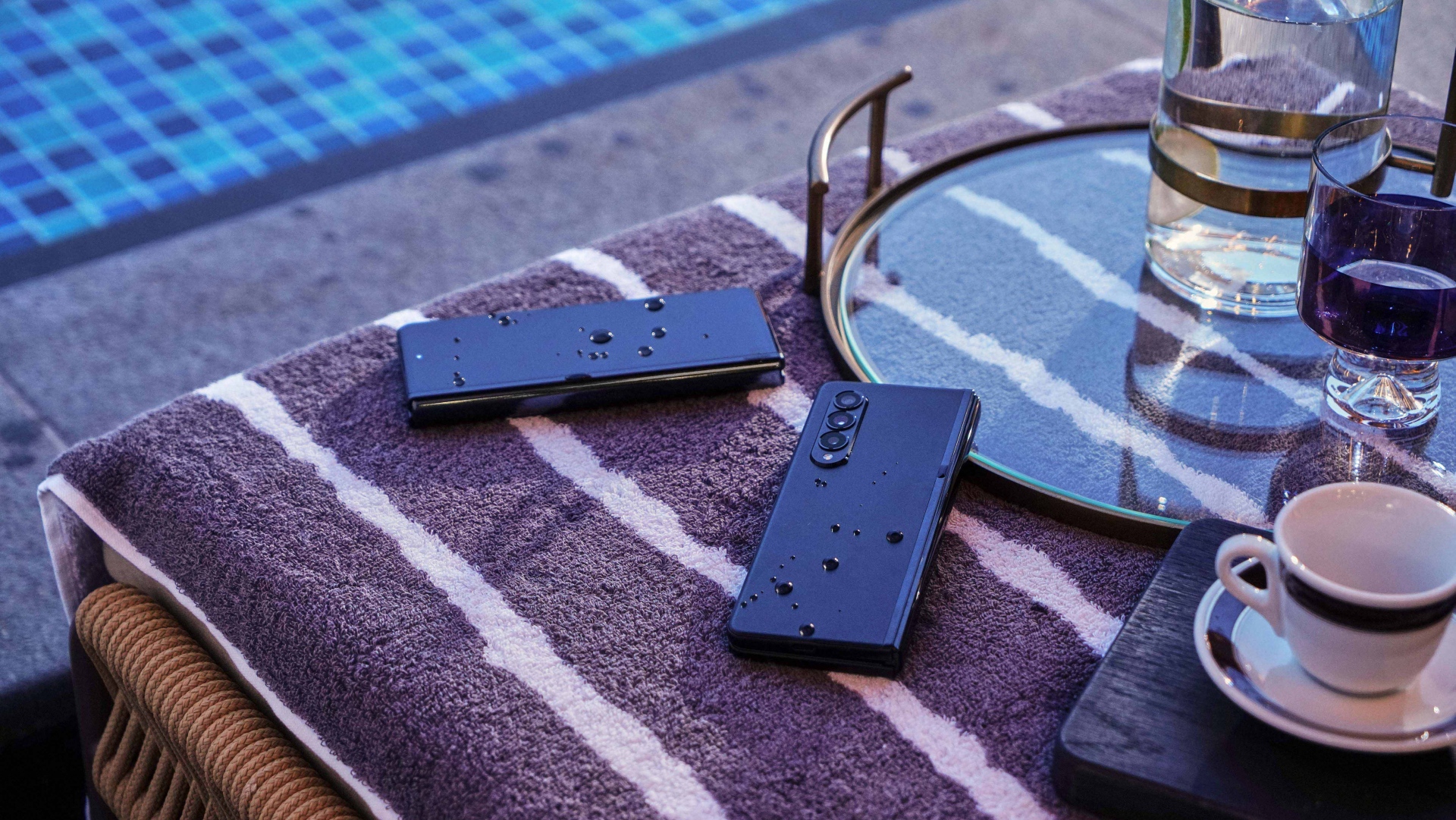
Both phones have a triple rear-facing camera but slightly different-looking camera housings. The new Galaxy Z Fold 3 has flatter edges all around, but one of the most striking upgrades over the original model is undoubtedly the large cover display.

Likewise, the foldable panel no longer has a display notch or a cutout, and it’s all thanks to the brand-new Under-Display Camera (UDC) hidden behind the Dynamic AMOLED 2X foldable panel. All these changes combined give the Galaxy Z Fold 3 a more modern look, fit for 2021.

One other important upgrade brought forth by the Galaxy Z Fold 3 is an IP rating. The phone has an IPX8 certificate, which means that although it hasn’t been tested for dust resistance, it does have water resistance.

Galaxy Z Fold 3 vs Fold displays: The new foldable panel makes the old look older

The Galaxy Z Fold 3 has a larger 6.23-inch cover display than the 4.5-inch AMOLED panel of 2019 and a slightly larger 7.6-inch foldable Dynamic AMOLED 2X panel. But more than that, they both support a 120Hz refresh rate, while the Galaxy Fold remains stuck in the 60Hz era.
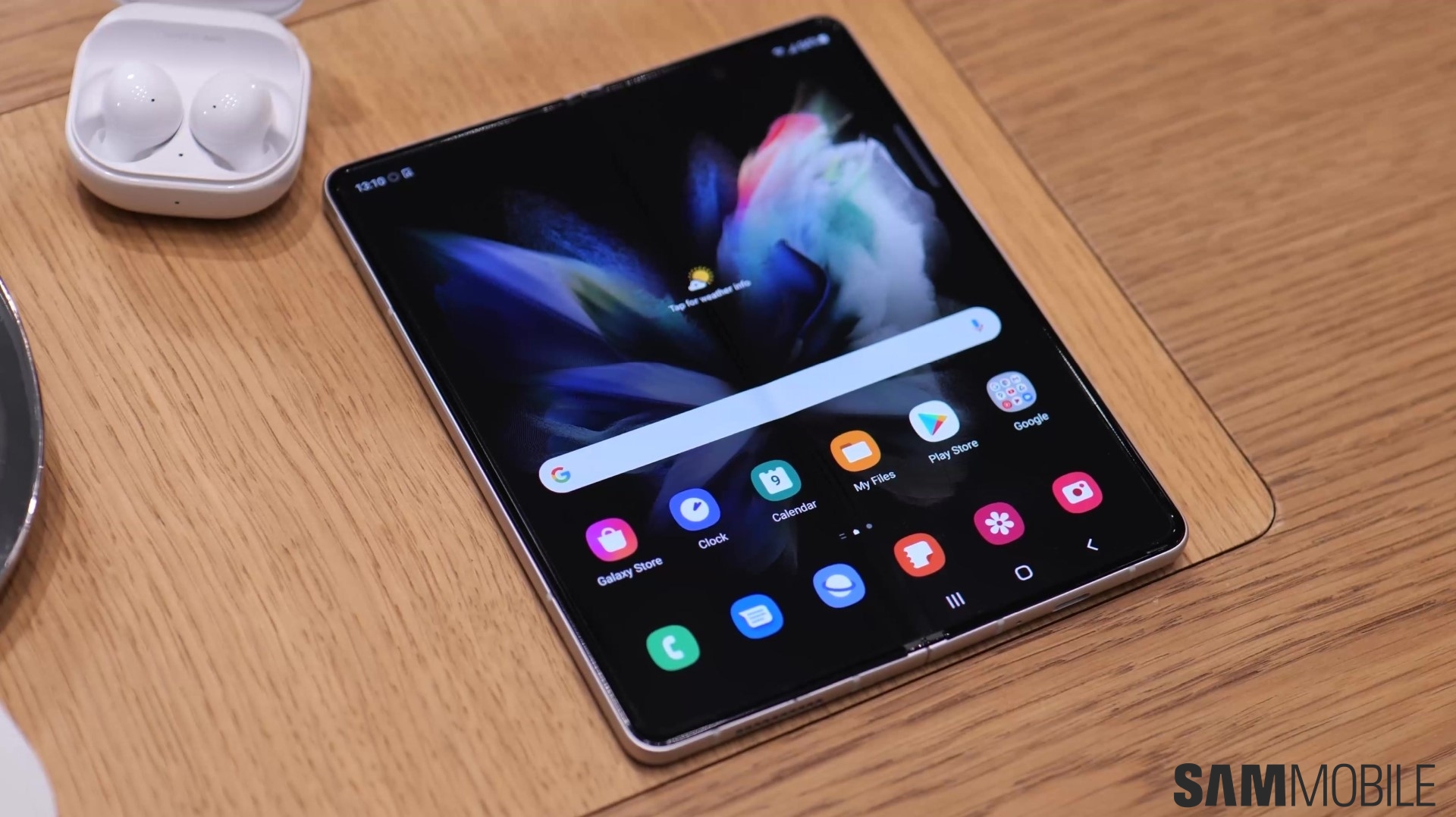
The new cover display is protected by Gorilla Glass Victus, whereas the foldable panel is covered in a new protective film that should be 80% more durable than the previous generation — and probably a whole lot more durable than the Galaxy Fold’s protective film. This component was upgraded partly because of the addition of the S Pen, which has a sharp enough tip that can damage the original Fold’s inner screen. The Galaxy Z Fold 3 also has brighter cover and foldable displays, and a less prominent crease.

All in all, even though the original Galaxy Fold remains an impressive piece of technology thanks to its foldable screen and form factor, it’s beginning to feel outright outdated compared to the Galaxy Z Fold 3 and the many technical advancements it introduces.

Galaxy Z Fold 3 vs Fold software: The experience is miles ahead

The Galaxy Z Fold 3 is the first foldable device to support the S Pen, which means that the new phone is accompanied by a multitude of software additions and improvements. Samsung Notes is available and has a new Two-Page mode, and there’s a new Taskbar for a more PC-like multitasking experience. Flex Mode got beefed up with S Pen and Notes integration, and third-party apps like Microsoft Teams can now take full advantage of the S Pen.
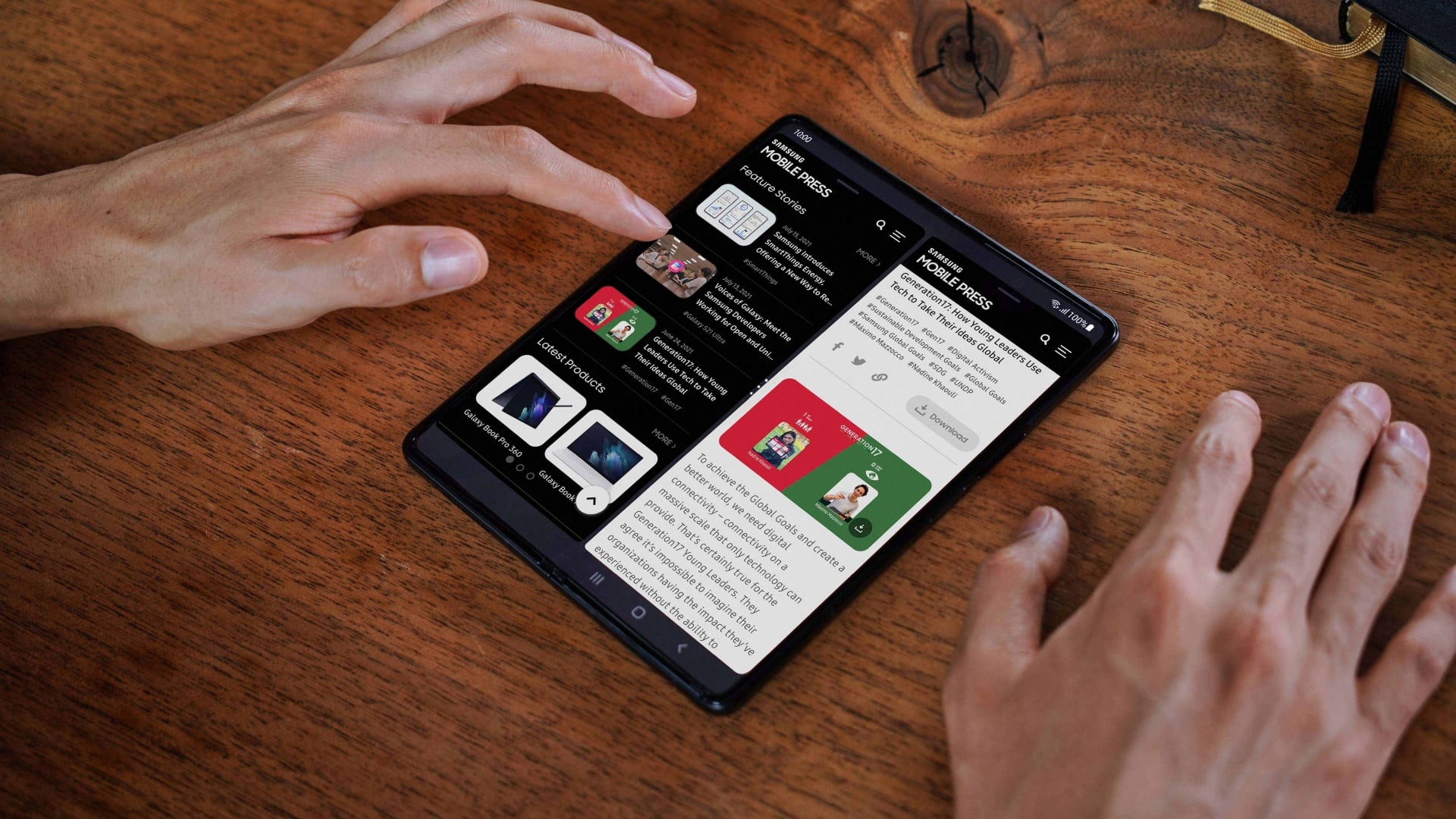
Multi-Active Window was also greatly improved. It’s more intuitive and has smoother animations. And there’s a new Drag & Split feature that lets you open a second webpage in split-screen or Multi-Active Window when browsing the web, without experiencing a jarring screen transition.

Obviously, the Galaxy Z Fold 3 ships with newer firmware, namely Android 11 and One UI 3.1.1.

Galaxy Z Fold 3 vs Fold cameras: Under-Display Camera debuts

Even though the Galaxy Z Fold 3 has pushed certain technological limits to a place that was once considered nearly impossible, Samsung’s latest foldable flagship doesn’t really go out of its way to improve everything, and mobile photography has clearly taken a back seat.
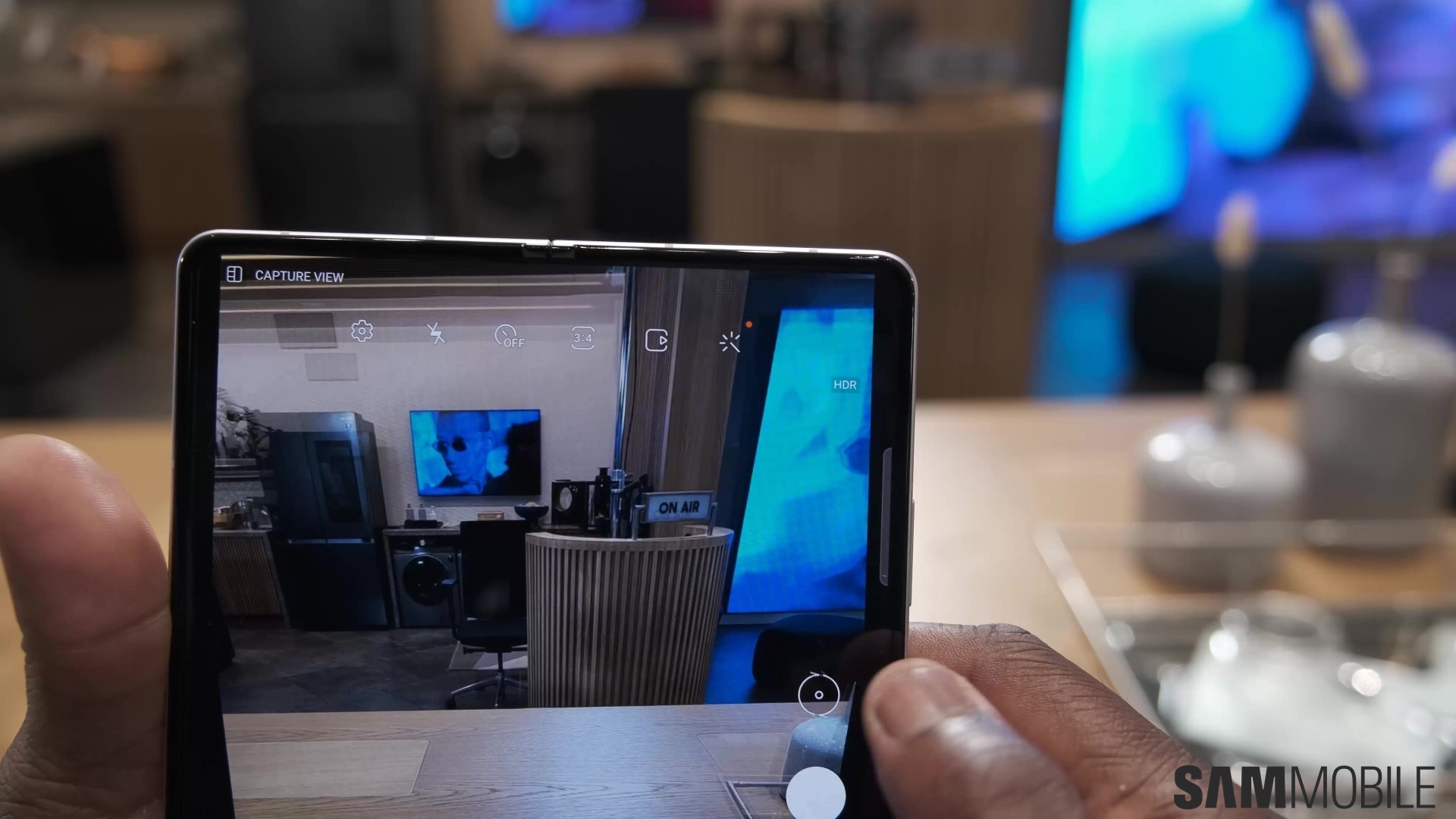
Galaxy Z Fold 3 under display camera

The 2021 and 2019 Galaxy Fold models have nearly identical camera specifications. The Galaxy Z Fold 3 comes with a 12MP wide sensor boasting Dual Pixel PDAF and OIS, just like the original Galaxy Fold, except this sensor has larger pixels and an f/1.8 aperture.

The main camera is accompanied by a 12MP telephoto sensor with 2x optical zoom, just like two years ago, and the ultrawide shooter clocks in at a resolution of 12MP instead of 16MP. The Galaxy Z Fold 3 essentially has the same ultrawide shooter as the Galaxy Z Fold 2.

Both the original Fold and the 3rd model in the series use a 10MP cover selfie camera. However, the Galaxy Z Fold 3 boasts an Under-Display Camera hidden behind the foldable display, while the original Galaxy Fold has a protruding notch that’s wide enough to accommodate two selfie sensors.

This means the Galaxy Fold is technically superior in terms of selfies, but the Galaxy Z Fold 3’s hidden camera design is a much better fit for usage scenarios that don’t include capturing selfies, such as watching videos or playing mobile games. It’s a good compromise, given that the phone already has a 10MP cover selfie sensor.

Galaxy Z Fold 3 vs Fold specs: A few new components are par for the course

Samsung’s latest foldable flagship is equipped with a new powerful chipset to boot, but memory options are almost the same as two years ago. They include 12GB of RAM and 256GB or 512GB of internal storage. This time, however, the storage specification got upgraded from UFS3.0 to UFS 3.1.

The Galaxy Z Fold 3 uses the Snapdragon 888 SoC from Qualcomm, which is considerably more powerful than the Snapdragon 855 chipset found inside the original Galaxy Fold. It’s more energy-efficient, it has more cache, it supports higher memory bandwidth, and it has a more powerful Adreno 660 GPU as opposed to an Adreno 640.

Samsung’s new foldable phone-tablet hybrid will perform better across the board, and it will be more futureproof for the simple fact that it’s newer.

Galaxy Z Fold 3 vs Fold conclusion: Now’s the time!

A lot can happen in two years, especially in the mobile world where old technologies get upgraded or replaced by new ones regularly. And a lot did happen in regards to the Galaxy Z Fold series.
For many Samsung fans, the original Galaxy Fold wasn’t good enough because it had a small cover display, or it lacked an IP rating, or because it didn’t support the S Pen.

All of these issues are addressed two years down the line, so if you were going to buy a foldable phone but decided against it due to the original model’s shortcomings, now’s the time to reconsider.

Thanks to the improved hardware, the 120Hz displays, the Under-Display Camera, the IP rating, and the added S Pen support, to name a few, the Galaxy Z Fold 3 sounds like the ideal foldable flagship to buy, regardless if you own the original Galaxy Fold or not. If you do, you can be sure that the Galaxy Z Fold 3 is a worthy upgrade — if you’re an S Pen enthusiast. And if you don’t, well, the Galaxy Z Fold 3 is the best foldable phone money can buy anyway, unless you prefer the smaller form factor of the Galaxy Z Flip 3.

Looking two years back, the Galaxy Fold was considered an experimental device meant to test the viability and marketability of foldable displays. But two years later, the Galaxy Z Fold 3 is a full-fledged consumer-ready device with S Pen support, an IP rating, high refresh rate displays, and numerous other great features.

Interested in Samsung’s new Galaxy devices? Don’t forget to support SamMobile by visiting this link and purchasing them directly from Samsung!

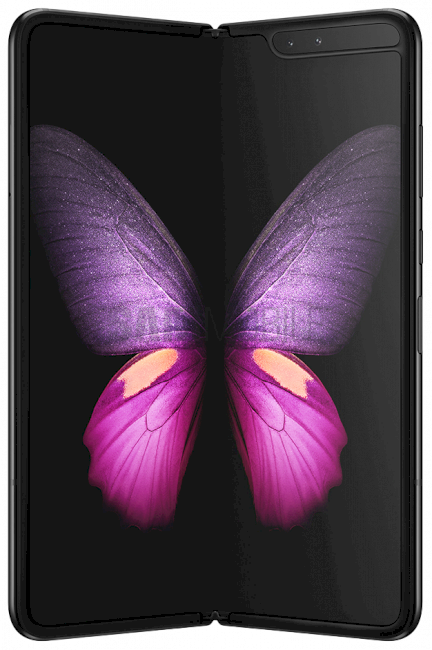
Galaxy Z Fold 3
VS.
Galaxy Fold
General Information
Model name Galaxy Z Fold 3 Galaxy Fold
Model number SM-F926B SM-F900F
Model type Foldable Foldable
Color Cream (Cream)
Green (Green)
Lavender (Lavender)
Black (Black)
Silver (Silver)
Black (Black)
Announced 2021, August 2019, April
Released 2021, August 2019, April
Physical Specifications
Dimensions Unfolded: 158.2 x 128.1 x 6.4 mm
Folded: 158.2 x 67.1 x 14.4~16 mm
Folded: 160.9 x 62.8 x 17.1 mm
Unfolded: 160.9 x 117.9 x 6.9 mm
Weights 271g 276g
Operating System
Operating system Android 11 Android 11
One UI version 3.1.1 3.0
Network
Networks 5G
2G
3G
4G
2G
3G
4G
Display
Kind Main Display Main Display
Name Infinity Display Infinity Flex Display
Technology Dynamic AMOLED 2X Dynamic AMOLED Display
Size 7.6 inch / mm 7.3 inch / 185.42 mm
Resolution QXGA+ / 2208x1768 pixels QXGA+ / 2152x1536 pixels
Pixel density 374 PPI 362 PPI
Screen to body ratio % ~85.7%
Memory
RAM/ROM sizes 12 GB RAM with 256 GB ROM
12 GB RAM with 512 GB ROM
Rear camera
Megapixels 12MP 16MP
Aperture F1.8 F2.2
Battery
Standard battery capacity 4400 mAh 4380 mAh

The post Galaxy Z Fold 3 vs Galaxy Fold: Your wishes from 2 years ago have come true appeared first on SamMobile.


from SamMobile https://ift.tt/37DxD3Q
via IFTTT

Pixel 6 appears to be using Samsung’s 50MP ISOCELL sensor, Exynos 5G modem

Google is finally going to compete with Samsung’s flagship smartphones. This year’s high-end Pixel phones—Pixel 6 and Pixel 6 Pro—have impressive specifications, but it looks like most of the components used by the upcoming devices are made by Samsung. In a recent report, it has been revealed that the Pixel 6 series uses camera sensors and a 5G modem made by Samsung.

According to recent findings, the Pixel 6 and the Pixel 6 Pro use Samsung’s 50MP ISOCELL GN1 camera sensor that was launched last year. The devices also appear to be using a variant of the Exynos 5123 5G modem. It is already known that Google’s first smartphone processing chipset that is debuting with the Pixel 6 series, the Tensor, has been co-developed with Samsung’s System LSI division. It is also possible that the 120Hz OLED screens used in the upcoming Pixel phones are made by Samsung Display.

The ISOCELL GN1 is a 1/1.31-inch sensor with 50MP resolution, 1.2µm ISOCELL Plus pixels, dual-pixel phase-detection autofocus, and 8K video recording. The sensor also features improved HDR, thanks to Samsung’s Tetra HDR technology. It can capture 10-bit images and HDR videos and supports up to 400fps 1080p slow-motion videos.

The Exynos 5123 is a 5G modem that supports sub-6GHz and mmWave 5G networks (SA/NSA). It is built using a 7nm process that offers maximum download speeds of up to 7.35Gbps on mmWave 5G networks and 5.1Gbps on sub-6GHz 5G networks. It supports up to 8CA (8-carrier aggregation). It was announced alongside the Exynos 990 chipset last year and was used in the Galaxy S20 and Galaxy Note 20 series.

The post Pixel 6 appears to be using Samsung’s 50MP ISOCELL sensor, Exynos 5G modem appeared first on SamMobile.


from SamMobile https://ift.tt/3lW0MzD
via IFTTT

Bixby is about to become 35% faster on newer Galaxy devices

Apart from unveiling its new foldable smartphones, Wear OS smartwatches, and wireless earbuds, Samsung also announced a few updates related to its software design, brand partnerships, and Bixby. While the company has toned down marketing its digital voice assistant over the past few years, Samsung is still improving Bixby’s design and features. The South Korean firm has now announced that Bixby will get faster on its new devices.

Samsung mentioned during its event that Bixby will work 35% faster on the Galaxy Z Flip 3 and the Galaxy Z Fold 3. This improvement is a result of on-device voice processing rather than going through Samsung’s servers. On-device voice processing is done via the NPU (Neural Processing Unit) that is embedded in modern-day smartphone processors. The company hasn’t revealed whether this improvement will come to other older Galaxy devices, though.

This new improvement is similar to what Apple has been doing with some Siri requests through on-device voice processing, starting with iOS 15. Even Google has been processing some Google Assistant requests right on the devices since 2019. Some Alexa smart speakers can do that as well. As NPUs inside chipsets keep on improving in the future, Bixby could become even faster on upcoming smartphones.

Bixby recently received a UI makeover. The digital voice assistant now takes up less screen real estate, similar to the newer Google Assistant and Siri designs. Samsung also launched Bixby in new markets like India. However, it remains to be seen how many people find it useful since all Android smartphones already have Google Assistant which is better at understanding voice and answering requests.

The post Bixby is about to become 35% faster on newer Galaxy devices appeared first on SamMobile.


from SamMobile https://ift.tt/3AABSJX
via IFTTT

Galaxy Z Fold 3 has two physical SIM slots and an eSIM

The Galaxy Z Fold 3 brings plenty of big upgrades over the Galaxy Z Fold 2, and even more so over the Galaxy Fold. Samsung’s actually gone as far as making its new foldables water resistant to the same standard as its non-folding flagships, and the Z Fold 3 is also the company’s first-ever phone with an under-display camera.

Naturally, Samsung has focused on improving the little things as well, and one of those is the Galaxy Z Fold 3’s SIM card capabilities. Unlike the first two Galaxy Z Fold devices, the Z Fold 3 has two physical SIM card slots instead of one, and it has an embedded SIM (eSIM), as well.

So, technically, you can use three different carriers on the Galaxy Z Fold 3, although only two of them can be active at the same time. That is, you can either have the second physical SIM slot active or the eSIM, but you can switch between them on the fly. This is an excellent feature for those who may have multiple phone numbers, which is often the case in markets such as India, even though three phone numbers might be a stretch for most people.

Sadly, there’s still no expandable storage support, and considering it’s not available even on the Galaxy S21 lineup, there’s pretty much no chance that Samsung’s foldable phones will ever get it. Thankfully, you can pick up the Galaxy Z Fold 3 in 256GB and 512GB storage variants (both of which feature 12GB of RAM).

And if you’re wondering about the Galaxy Z Flip 3, you’re still getting just dual SIM functionality – one physical SIM slot and an eSIM, though we can hopefully expect this to change next year.

Interested in one of Samsung’s new Galaxy devices? Don’t forget to support SamMobile by visiting this link and purchasing it directly from Samsung!

The post Galaxy Z Fold 3 has two physical SIM slots and an eSIM appeared first on SamMobile.


from SamMobile https://ift.tt/3jN1QmN
via IFTTT

Reminder: Wear OS is not coming to Galaxy Watch 3 and older Samsung smartwatches

Samsung unveiled its first smartwatches running Wear OS during the Galaxy Unpacked event yesterday. With the Galaxy Watch 4 and the Galaxy Watch 4 Classic, Samsung has ditched Tizen OS in favor of Wear OS 3. So, what does that mean for older Galaxy Watches running Tizen OS? Will they be updated to Wear OS as well?

Nope. Samsung has made it clear that its older Galaxy Watch models will continue to run Tizen and they won’t be updated to Wear OS. This means that if you have a Galaxy Watch, Galaxy Watch Active, Galaxy Watch Active 2, or the Galaxy Watch 3, your smartwatch won’t get the Wear OS 3 update. However, that doesn’t mean it is the end of the road. The South Korean firm has promised that its older smartwatches will get three years of software updates (from their launch dates), which means that you will continue to get new features and bug fixes with future updates.

While we think that at least the Galaxy Watch 3 deserves an upgrade to Wear OS, that is not going to happen. It is possible that Samsung will release an updated version of One UI and some new software features to older Galaxy Watch models. Recently, Samsung announced that it will move its first smartwatch, the Galaxy Gear, from Android Wear to Tizen.

Tizen was good, but Wear OS 3 is better

Tizen is a good wearable platform and smartwatches based on the OS are fast and efficient. However, they have very few third-party apps, and consumers complain they their favorite app isn’t available on the Galaxy Store for Samsung’s smartwatches. With Wear OS 3, that shouldn’t be a problem anymore since Google’s Play Store has thousands of third-party apps and watch faces. It also features third-party watch face complications and Tiles and deeper integration with Android smartphones.

Will you keep using your Tizen-based Galaxy Watch or will you upgrade to the Galaxy Watch 4 series? Let us know in the comments section below.

The post Reminder: Wear OS is not coming to Galaxy Watch 3 and older Samsung smartwatches appeared first on SamMobile.


from SamMobile https://ift.tt/3sc81Vu
via IFTTT

الأربعاء، 11 أغسطس 2021

Do the Galaxy Buds 2 feature 360-degree Audio like the Galaxy Buds Pro?

Samsung launched the Galaxy Buds Pro about six months ago and it immediately became clear that they were the best earbuds yet from Samsung. They brought improvements for the listening experience, added ANC to a familiar Samsung earbud design, and more.

There was another feature that Samsung introduced with the Galaxy Buds Pro that we haven’t seen so far on any of the company’s earbuds. The 360-degree Audio feature significantly enhanced the audio experience on the company’s earbuds.

Galaxy Buds 2 are Samsung’s second new earbuds release this year

The 360-degree spatial audio feature with Dolby Head Tracking technology delivers an incredible immersive audio experience. The company advertised that this feature helps deliver “theater-like” sound on the Galaxy Buds Pro. As we highlighted in our Galaxy Buds Pro review, 360-degree Audio really works as advertised.

You can feel which direction the sound is coming from when you move your head. It’s important to note that the 360-degree Audio feature only works when the Galaxy Buds Pro are being used with a Samsung Galaxy device.

Samsung has now come out with a new pair of wireless earbuds. The Galaxy Buds 2 are quite similar to the Galaxy Buds Pro. There are more similarities than differences in these earbuds. It’s particularly great that at $150, the Galaxy Buds 2 are actually $50 cheaper than the Galaxy Buds Pro.

So what did Samsung take away to reduce the cost? You guessed it, 360-degree Audio. The Galaxy Buds 2 don’t feature 360-degree spatial audio. It may not necessarily have been a cost thing. Samsung wouldn’t have wanted to cannibalize the sales of the Galaxy Buds Pro.

So it had to leave something out. The company probably felt that 360-degree audio was the safest feature it could cut without reducing the appeal of the new earbuds for customers.

We tend to agree with that assessment. At $150 and with the features that it provides, such as Active Noise Cancellation, the Galaxy Buds 2 deliver incredible value for money.

Interested in Samsung’s new Galaxy devices? Don’t forget to support SamMobile by visiting this link and purchasing it directly from Samsung!

The post Do the Galaxy Buds 2 feature 360-degree Audio like the Galaxy Buds Pro? appeared first on SamMobile.


from SamMobile https://ift.tt/3jOQUVD
via IFTTT

Don’t even try using a regular S Pen with the Galaxy Z Fold 3!

The Galaxy Z Fold 3 is the first foldable phone to offer S Pen support, but as you may already know, it doesn’t work with just any S Pen. Samsung explained why the Galaxy Z Fold 3 is only compatible with the S Pen Fold Edition and the S Pen Pro, but what you might not know is that using any other type of S Pen with the new Galaxy Z Fold 3 could damage its foldable display.

It’s not an exaggeration or something related to software. Rather, the tip design of a regular S Pen can cause permanent physical damage to the Galaxy Z Fold 3’s foldable screen, and that’s with the new protective film claiming 80% more durability.

The S Pen Fold Edition and Pro have special retractable tips

To work around this inherent durability problem of the foldable display, Samsung developed the “Pro Tips” for the S Pen Fold Edition and S Pen Pro. These new tips are softer than the regular ones, but more importantly, they have a retractable mechanism that prevents damage to the foldable screen when pressure is applied.

No other S Pen models have these characteristics, and without them, they would damage the foldable screen. In other words, even if third parties could tweak the software and make the Galaxy Z Fold 3 work with any S Pens — something that’s likely impossible — it would be a dangerous mix.

All this said, if you will buy a Galaxy Z Fold 3 and you have a regular S Pen laying around, don’t even try using it with the foldable display unless you want to risk permanent hardware damage. Alternatively, you can buy the S Pen Fold Edition (without a case) from Samsung for $49.99 and/or the S Pen Pro for $99.99. Or you can pre-order the Galaxy Z Fold 3 and get the Note Pack with an S Pen case included, though availability might differ by region.

Interested in Samsung’s new Galaxy devices? Don’t forget to support SamMobile by visiting this link and purchasing it directly from Samsung!

The post Don’t even try using a regular S Pen with the Galaxy Z Fold 3! appeared first on SamMobile.


from SamMobile https://ift.tt/3CEvbbN
via IFTTT

جميع الحقوق محفوظة لمدونة الغريب 2013