الخميس، 12 أغسطس 2021

Best Galaxy Z Fold 3 features you need to know about

Samsung gave up on the Galaxy Note 21 and the colored Z Fold hinges to focus on building the best-possible foldable device and bring us the Galaxy Z Fold 3 at this year’s Unpacked event. And boy, does the new foldable show tons of improvements! There’s a lot to unpack here — pun intended — so let’s stop wasting time. Here are the very best Galaxy Z Fold 3 features.

Water resistance and 10% stronger ‘Armor Aluminum’
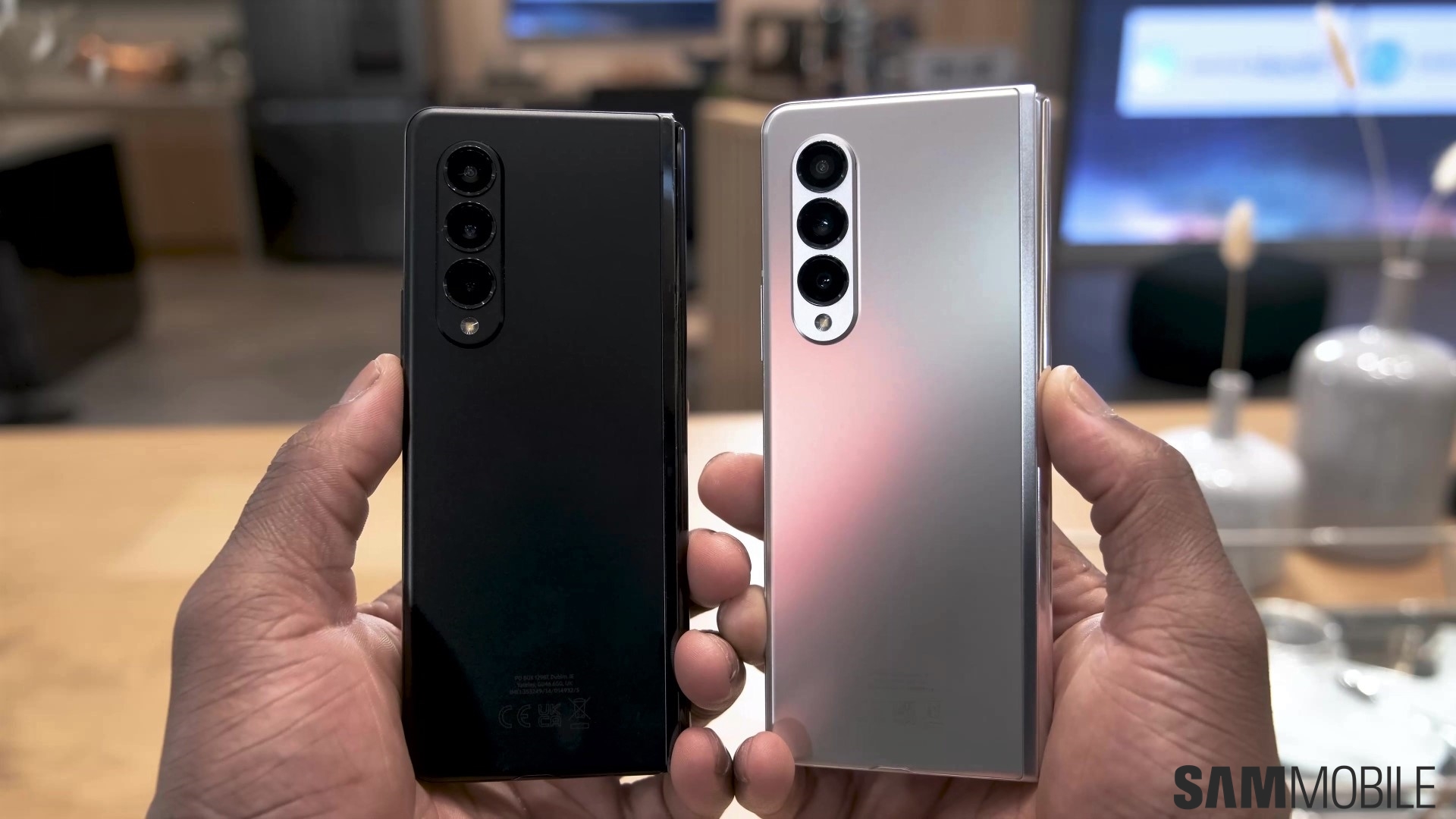
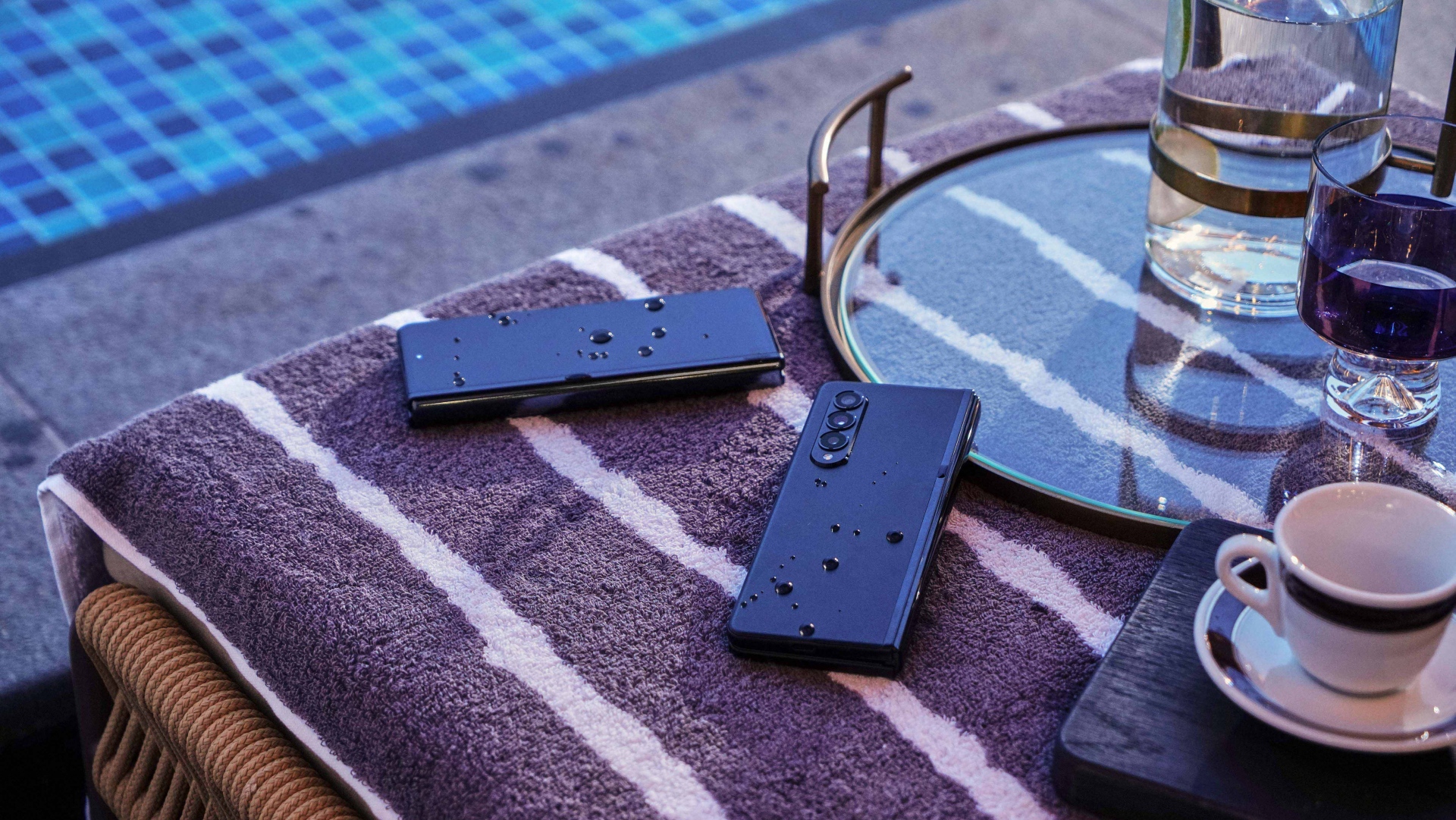
The Galaxy Z fold 3 is the first — but not the only — foldable phone to boast an IP rating — IPX8, to be exact. This code represents that Samsung hasn’t tested the foldable phone for dust ingress but determined that it’s water-resistant.

Samsung didn’t stop here. The company’s using 10% stronger “Armor Aluminum” in the phone’s construction this year, and of course, the cover display has Gorilla Glass Victus protection. And, as you’re about to find out, the foldable screen is also better protected.

A brighter foldable display with a more durable protective film
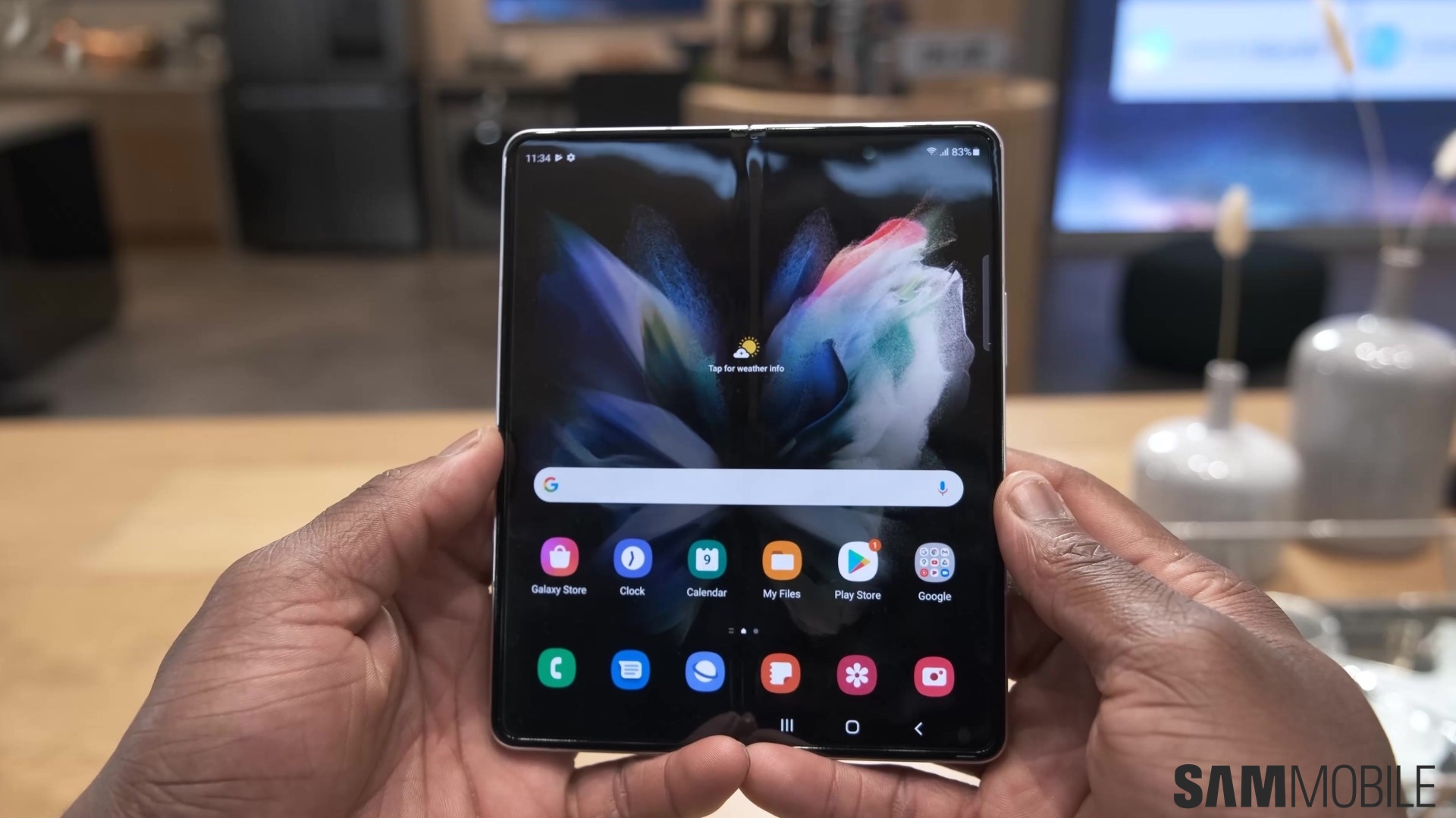
This year, the 7.6-inch Dynamic AMOED 2X Infinity Flex Display has a new protective layer on top, and it might even be the reason why the addition of an S Pen was possible. More on the S Pen later, but as far as general durability is concerned, Samsung claims that the new protective film provides a massive 80% boost in durability over the film used in the previous generation.

The foldable display’s 29% increased brightness compared to last year shouldn’t be overlooked either. Samsung’s foldable display always had poorer brightness than the non-foldable AMOLED screens, so a 29% improvement over the Galaxy Z Fold 2 will make using the Galaxy Z Fold 3 in direct sunlight more comfortable. The cherry on top is that the cover screen is also 25% brighter.

UDC (Under-Display Camera) technology is finally here
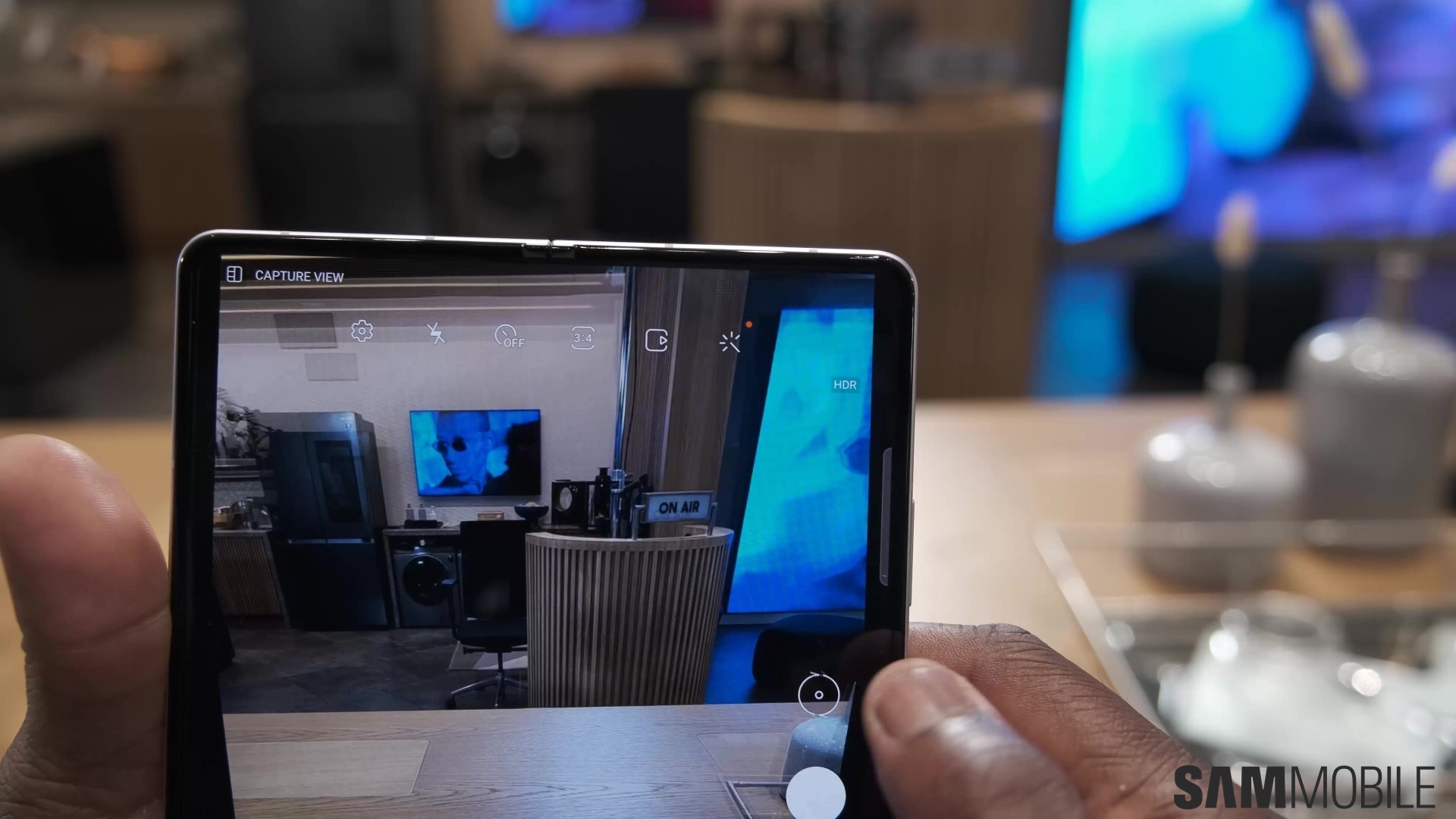
Galaxy Z Fold 3 under display camera

It’s been almost three years since Samsung introduced the first smartphone equipped with Infinity-O display technology, i.e., the Galaxy A8s. Infinity-O was Samsung’s response to the off-putting display notch widely adopted by the mobile industry. It was — and arguably still is — a more elegant alternative to the notch, and it paved the way for a massive improvement a few years down the line.

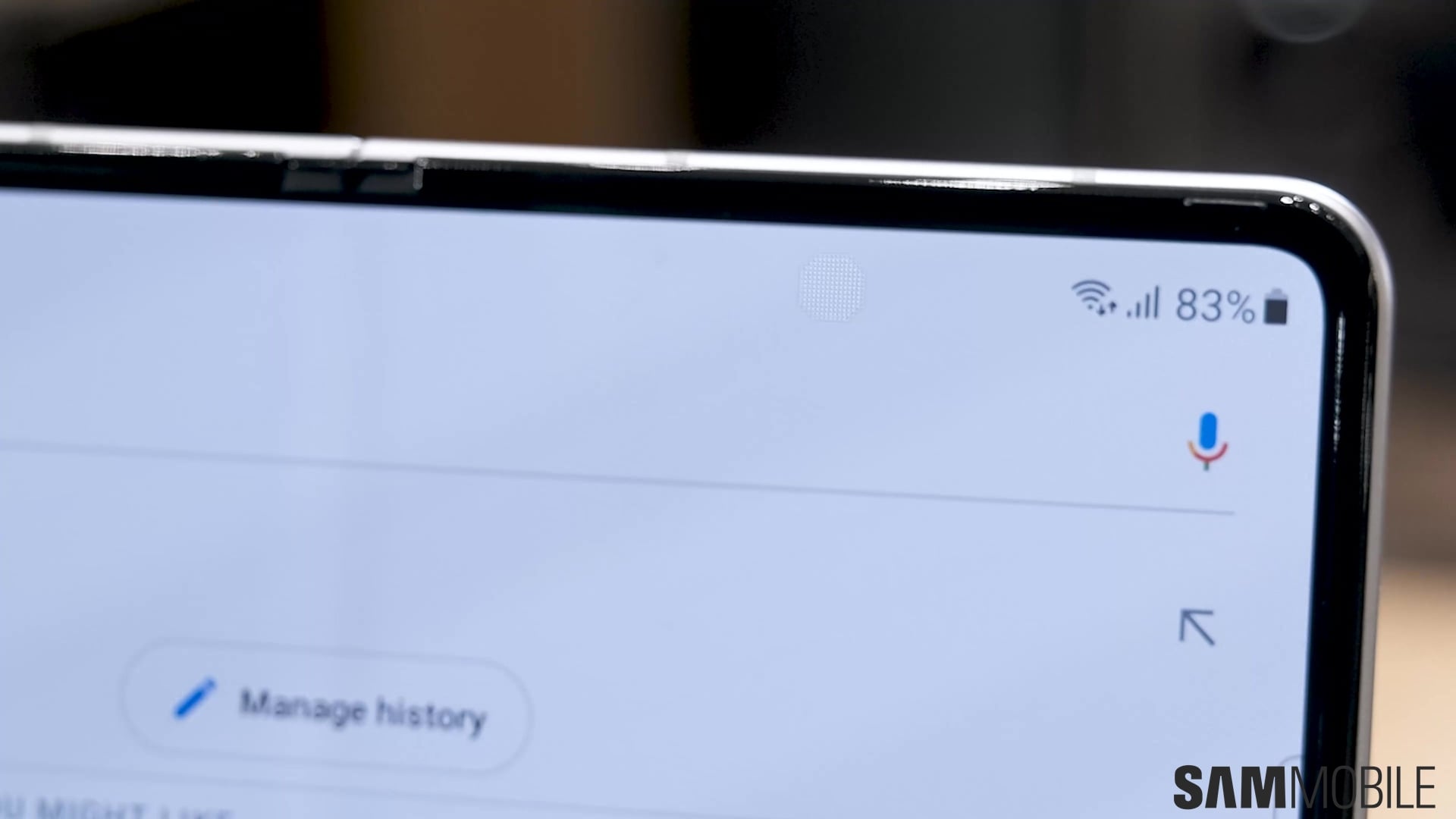
Enter UDC (Under-Display Camera) technology: A long-awaited evolutionary step in the Infinity-O timeline. In layman’s terms, UDC technology comprises a new 4MP camera with large 2-micron pixels capable of taking in more light, and the Infinity-O display cutout with active pixels covering the 4MP sensor. This combination allows the selfie camera to stay hidden, letting the 7.6-inch foldable display shine uninterrupted, without a visible cutout or a notch. Well, almost, but to an impressive level nonetheless.

Both displays support a 120Hz high refresh rate

Samsung’s foldable phones have fully entered the era of 120Hz high refresh rate displays. The Galaxy Z Fold 2 was the first to adopt this technology. However, it was limited to the inner foldable display, which led to a noticeable decrease in UI animation smoothness whenever switching to the 60Hz cover screen.

The Galaxy Z Fold 3 marks a new milestone, as it introduces 120Hz across the board, with both the cover screen and the inner foldable panel offering high refresh rate capabilities.

When dreams come true, foldable phones get S Pen support
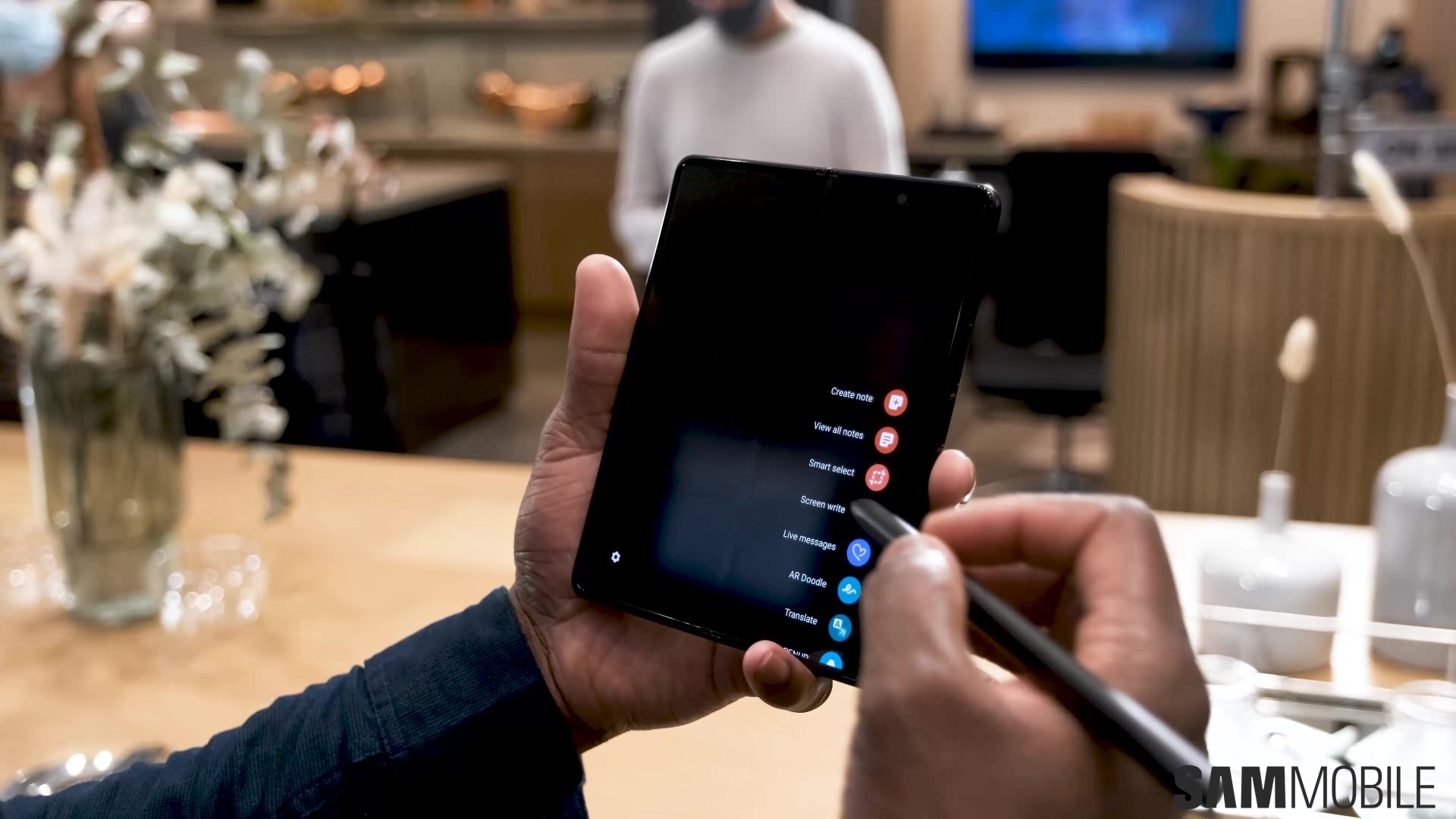
Adding S Pen support to the book-like Galaxy Fold form factor seemed like the natural thing to do ever since the first model was introduced in 2019. The technology just wasn’t there yet, but two years later, the Galaxy Z Fold 3 has become the first foldable device to support the S Pen.

Samsung created a unique digitizer for the foldable display, and two new S Pen models called the S Pen Fold Edition and the S Pen Pro. The S Pen Fold Edition is sold along with a case for the Galaxy Z Fold 3 and provides basic functionalities. It doesn’t have Bluetooth and Air Actions. The S Pen Pro has Bluetooth LE, Air Actions, and Find My S Pen via SmartThings Find, but it doesn’t come with a case for the Galaxy Z Fold 3. It’s more of a general-purpose S Pen that’s deeply integrated with the new foldable, though it’s carried separately.

The S Pen Fold Edition is compatible only with the Galaxy Z Fold 3 and no other Samsung device. However, the S Pen Pro works with the Galaxy Z Fold 3 and other Galaxy devices that offer S Pen support.

One last thing of note is that the Galaxy Z Fold 3 cover display does not offer S Pen support, and there arguably are a couple of good reasons for that.

Samsung Notes meets Flex Mode and with Two-Page templates
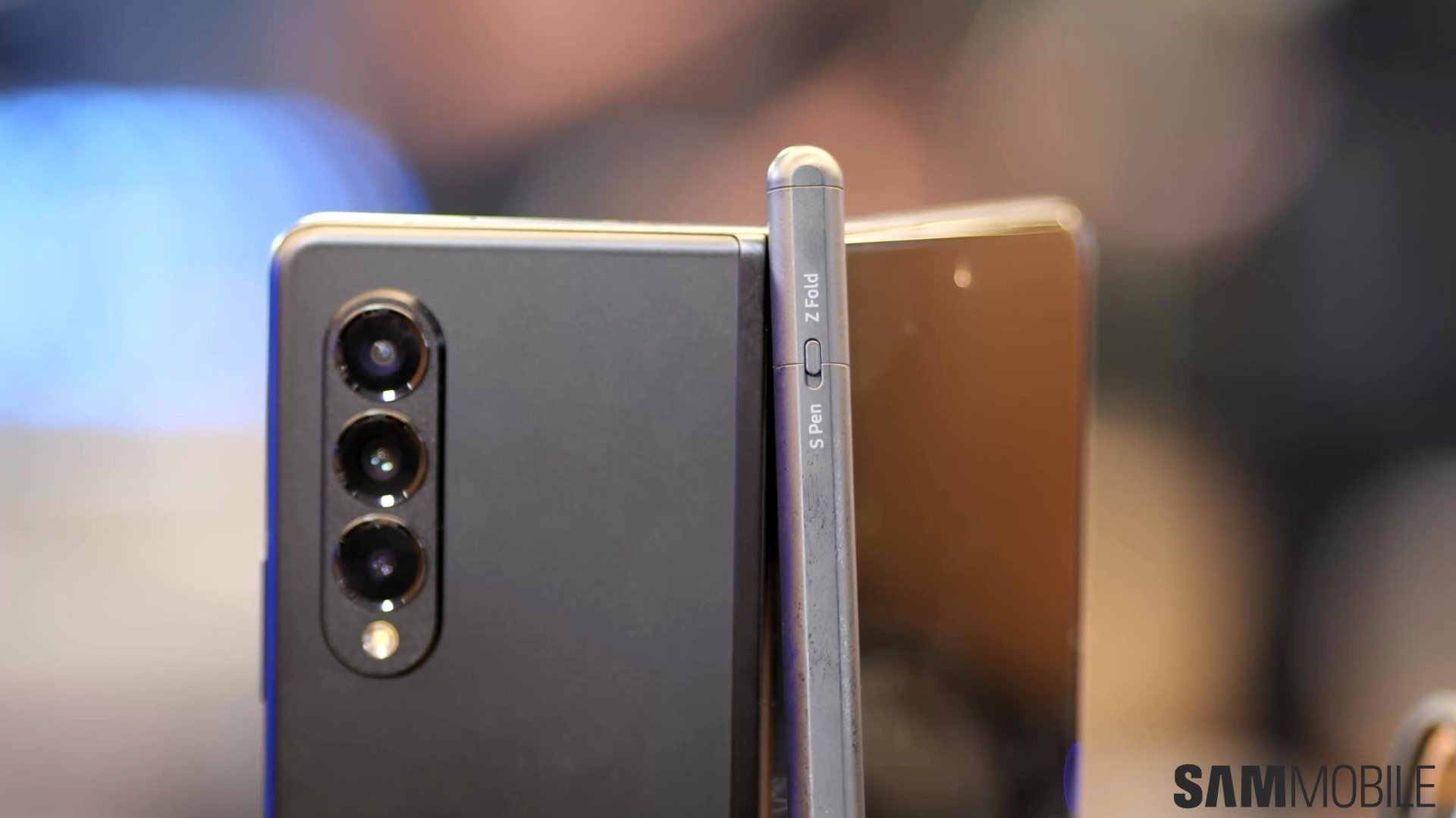
Included with the S Pen is the S Pen to text feature and a bunch of new software goodies like Samsung Notes. The popular note-taking app got updated for the occasion, with a few unique additions designed for the large, foldable display. The most fundamental characteristic of the Galaxy Z Fold 3 is that it unfolds like a book. So, why not allow the software to take advantage of this form factor more? Well, Samsung did just that.

Samsung Notes now has a new Two-Page feature, complete with various templates such as calendars, journals, and travel logs. People can use the Notes app as they usually would on one half of the screen, while the other half can extend to include said templates. It’s a neat addition for productivity-oriented users.

Another one is the integration of the S Pen and Samsung Notes with Flex Mode. Users can now double-tap the S Pen on the lower half of the screen in Flex Mode to bring up Samsung Notes instantly. This can be very useful, for example, when watching a video in Flex Mode and quickly wanting to jot down some notes without pausing the video.

And in case you’re wondering, the S Pen is integrated with other non-Samsung apps, including Microsoft’s. The input device is fully supported by Microsoft Teams, where it can be used for handwriting and sketching in conference calls.

Multi-Active Window improvements, Natural Switching, Drag & Split

The Galaxy Z Fold 3 brings a handful of UI improvements developed with input from the Framework R&D Group. Samsung describes “Framework” as “the task of optimizing Android OS for [its] foldable smartphones.”

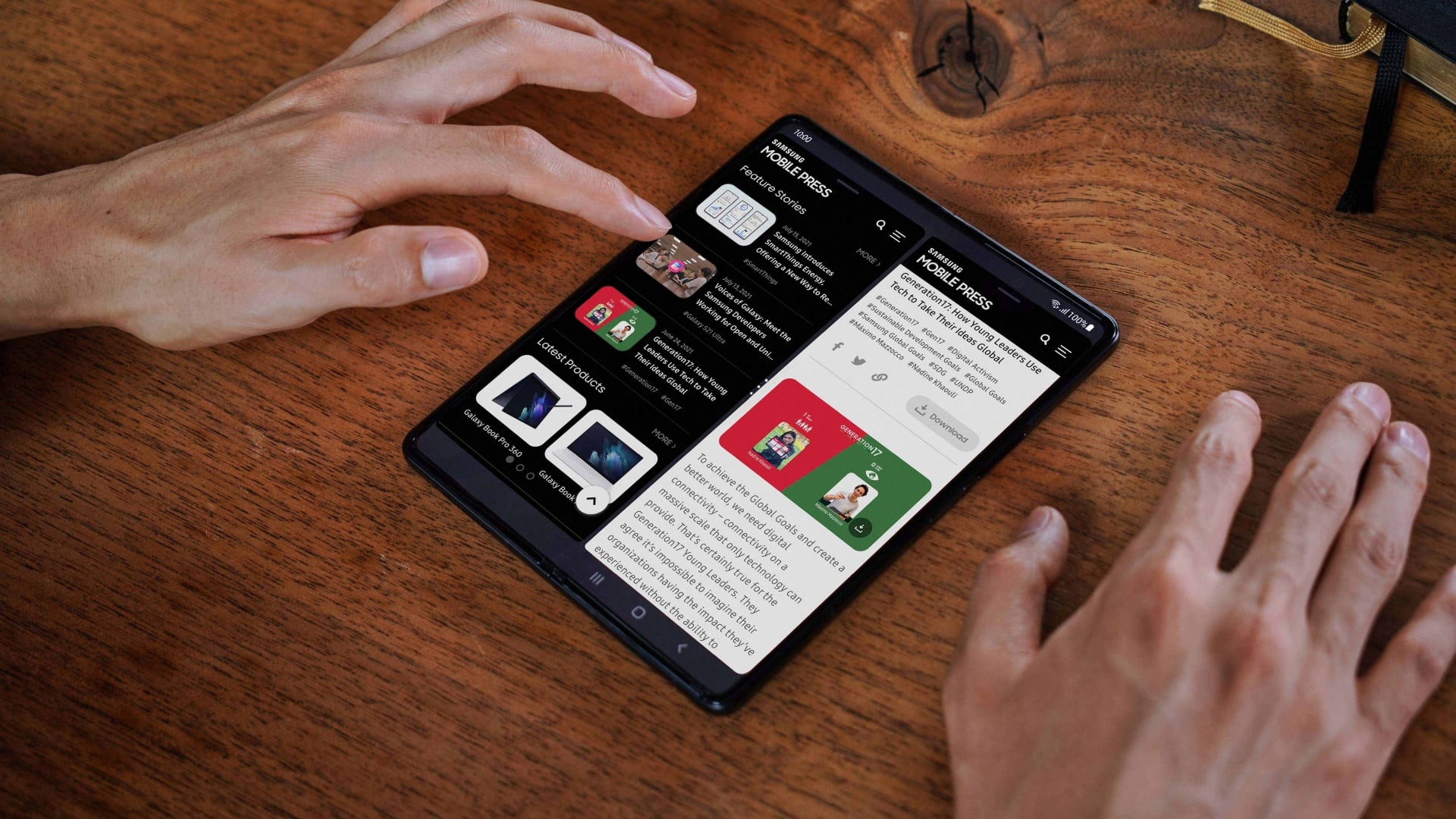
The main focus of the Framework division was to improve Multi-Active Window — the feature that allows two or three apps to run simultaneously on the foldable display.

Transitions when rotating apps in Multi-Active Window are now smoother thanks to the addition of what the Framework R&D Group calls “Natural Switching.” And now, launching apps in Multi-Active Window is more natural, as apps that are already open adapt better to size and aspect ratio changes.

The Galaxy Z Fold 3 UI also introduces a new and quite useful Drag & Split feature that ties in with the Multi-Active Window improvements. Applying Drag & Split when browsing the web or shopping online, for example, users can open links in split-screen seamlessly without leaving the webpage. It used to be that opening a link in a new tab would transition the entire screen, but Drag & Split brings a more PC-like experience to the foldable device. It’s somewhat reminiscent of window snapping in Windows 10, except it works with opening new web links in split-screen.

A more PC-like experience in partnership with Google and Microsoft
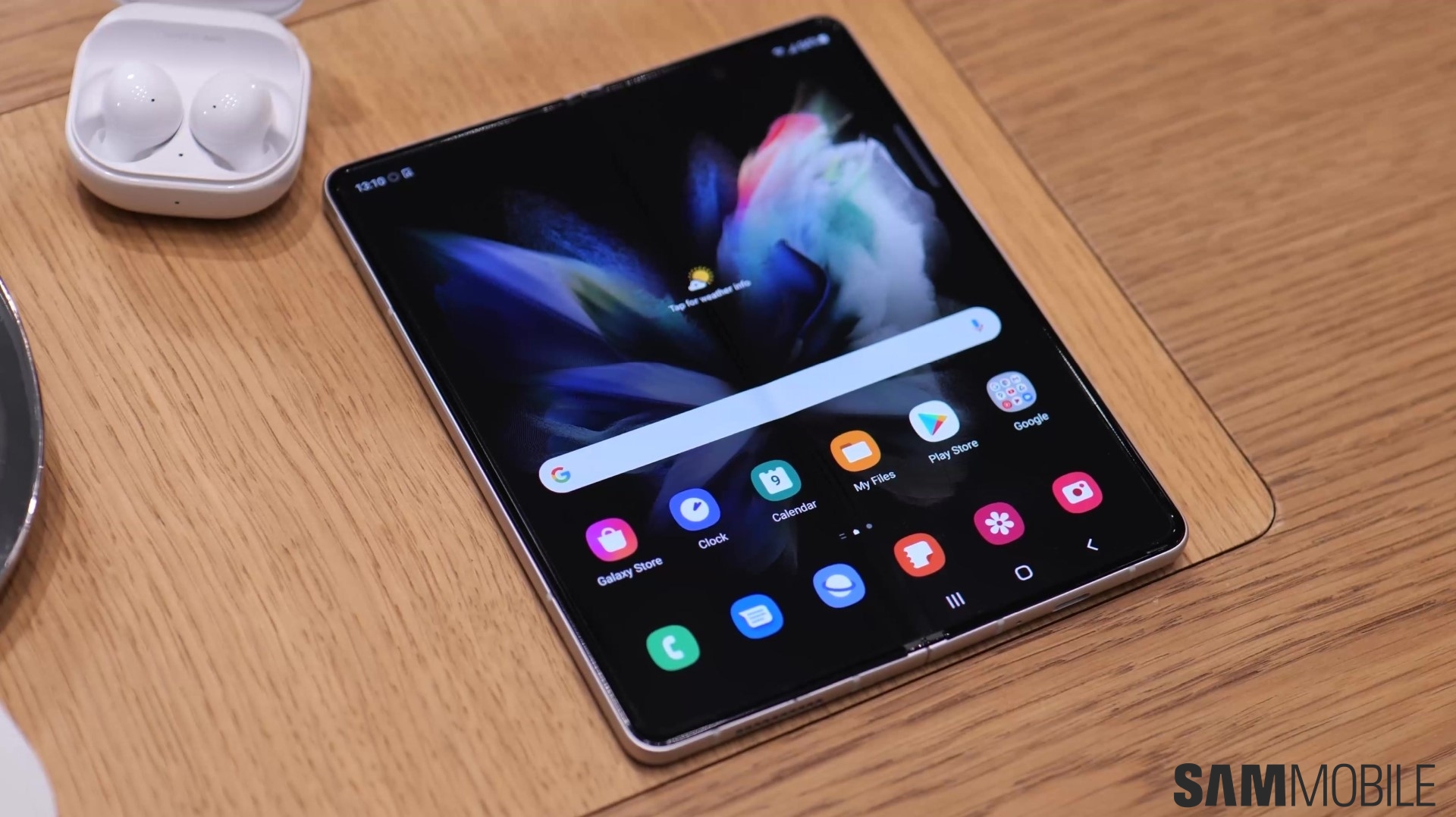
Samsung said it wanted to offer Galaxy Z Fold 3 users a more PC-like browsing experience on Chrome. And in partnership with Google, Samsung fully integrated the Drag & Split feature detailed above with the Chrome mobile browser for the new foldable flagship.

But here’s a lot more that went into creating a productivity-oriented experience closer to what personal computers offer. Samsung developed a new Taskbar for the large foldable screen, which sounds and acts like the type of taskbar you’d find in a PC-grade OS like Windows 10. The taskbar hosts app shortcuts, complete with notification badges, and it’s a much faster alternative to switching apps via the Recents screen.

Meanwhile, Samsung’s partnership with Microsoft brings us deeper integration with the Office suite of apps. Microsoft apps like Word now support Two-Page mode — similar to Samsung Notes. And even more in line with the PC-like experience for productivity, the Galaxy Z Fold 3 can launch two different Office files (of the same type) in Two-Page mode, allowing users to keep open and cross-edit two documents simultaneously.

One UI 3.1.1 Live app widgets

Live app widgets — the nomenclature is fuzzy — are another brand-new addition to One UI 3.1.1, and they’re debuting with the Galaxy Z Fold 3.

An example of Live app widgets in action is setting a timer via the Clock app and switching tasks. The Clock app turns into a live floating widget, which then morphs into a pill-shaped live timer widget that stays on top of other apps and can be moved around the screen. Now you’ll always have an eye on the timer, regardless of what apps are active in the foreground.

Galaxy Z Fold 3 best features overview

The Galaxy Z Fold 3 is packed with new useful software features and UI changes that play together very nicely. It’s IPX8-rated, and Samsung took extra steps to increase the phone’s — and the foldable display’s — durability. The company also made the Galaxy Z Fold 3 capable of a more PC-like experience, with both Google and Microsoft contributing to the outcome.

The Galaxy Z Fold 3 is, as expected, the best foldable device so far, but it’s not just because it has a new chipset. It’s a great evolutionary step over the Galaxy Z Fold 2, boasting meaningful additions, changes, upgrades, and of course, the S Pen. It’s a perfect match for the 7.6-inch foldable display, and so are many productivity apps that support the accessory.

Interested in the Samsung Galaxy Z Fold 3? Don’t forget to support SamMobile by visiting this link and purchasing the phone directly from Samsung!

The post Best Galaxy Z Fold 3 features you need to know about appeared first on SamMobile.


from SamMobile https://ift.tt/3iALSNb
via IFTTT
Galaxy A12 relaunched in India with a different processor

Samsung had introduced the Galaxy A12 in January 2021, and the smartphone was launched in India in February. The device was available in two storage variants: 64GB and 128GB. The South Korean firm has relaunched the Galaxy A12 in India, and the new variant of the phone comes with a different processor compared to the original version.

The new version of the Galaxy A12 features the Exynos 850 processor. In comparison, the original Galaxy A12 came equipped with the MediaTek Helio P35 chipset. The Exynos 850 is slightly more powerful and power-efficient (thanks to its 8nm manufacturing process) than the MediaTek Helio P35. The new version of the phone also comes with Android 11 (with One UI Core 3) out of the box, which should make it eligible for the Android 13 update.

The Exynos 850-equipped Galaxy A12 bears model number SM-A127F, while the Helio P35-equipped version has model number SM-A125F. The new variant of the phone was launched as the Galaxy A12 Nacho in Mexico.

The rest of its specifications remain similar to the original Galaxy A12. It means that the phone features a 6.5-inch PLS IPS LCD display with HD+ resolution, an 8MP selfie camera with Full HD video recording, and a 48MP+5MP+2MP+2MP quad-camera setup at the rear with Full HD video recording. The phone has a side-mounted fingerprint reader.

The Galaxy A12 has 4GB/6GB RAM and 64GB/128GB internal storage. It has a microSD card slot, too. Connectivity features of the device include a dual-SIM card slot, 4G LTE, GPS, Wi-Fi b/g/n, Bluetooth 5.0, a USB Type-C port, and a 3.5mm headphone jack. It is powered by the same 5,000mAh battery that is used by the original Galaxy A12. It also features 15W fast charging.

The 4GB RAM + 64GB storage variant of the Galaxy A12 is priced at INR 13,999 (around $189), while the variant with 6GB RAM and 128GB storage costs INR 16,499 (around $222).

The post Galaxy A12 relaunched in India with a different processor appeared first on SamMobile.


from SamMobile https://ift.tt/3fXB1uX
via IFTTT

Foldables vs wearables: Come vote for the best part of Galaxy Unpacked 2021!

The rumors always start early, but the wait for this latest iteration of the Galaxy Unpacked seemed particularly long-winded. It finally happened, though. And while this year might be a bit unconventional for Samsung (no Galaxy Note, yes Google Wear), the tech giant certainly delivered on the premium end. Between the Galaxy Buds 2, Galaxy Watch 4, and two shiny foldable smartphones to boot, anyone with an affinity for tech and money to burn will have plenty of decisions to make just a couple of weeks from now.

But in the meantime, it’s time to see what the most dedicated Samsung fans in the world — you — thought of this week’s Galaxy Unpacked.

Foldables vs wearables: What did you like better?

Especially if you can point to any individual announcement from the event as your decisive favorite. Which is easier said than done; doubly so if you’re still salty about the lack of a new Galaxy Note generation this year like I might be. But Samsung definitely kept the flagship-focused tradition of its summer Unpackeds alive.

Galaxy Z Fold 3 hands-on | Galaxy Z Flip 3 hands-on | Galaxy Watch 4 hands-on | Galaxy Buds 2 hands-on

And if you’re really adamant to get a new mobile powerhouse with stylus support this year, the Galaxy Z Fold 3 certainly seems like it can fit that bill. Assuming you have enough bills, that is. Alternatively, up to $1,000 off of the Galaxy Z Flip 3 doesn’t sound like too shabby of a deal, either. And both of the newly unveiled wearables seem like they’ll be offering decent bang for buck.

What was your favorite announcement from this Galaxy Unpacked?

Interested in Samsung’s new Galaxy devices? Don’t forget to support SamMobile by visiting this link and purchasing them directly from Samsung!

The post Foldables vs wearables: Come vote for the best part of Galaxy Unpacked 2021! appeared first on SamMobile.


from SamMobile https://ift.tt/3ySyWYA
via IFTTT

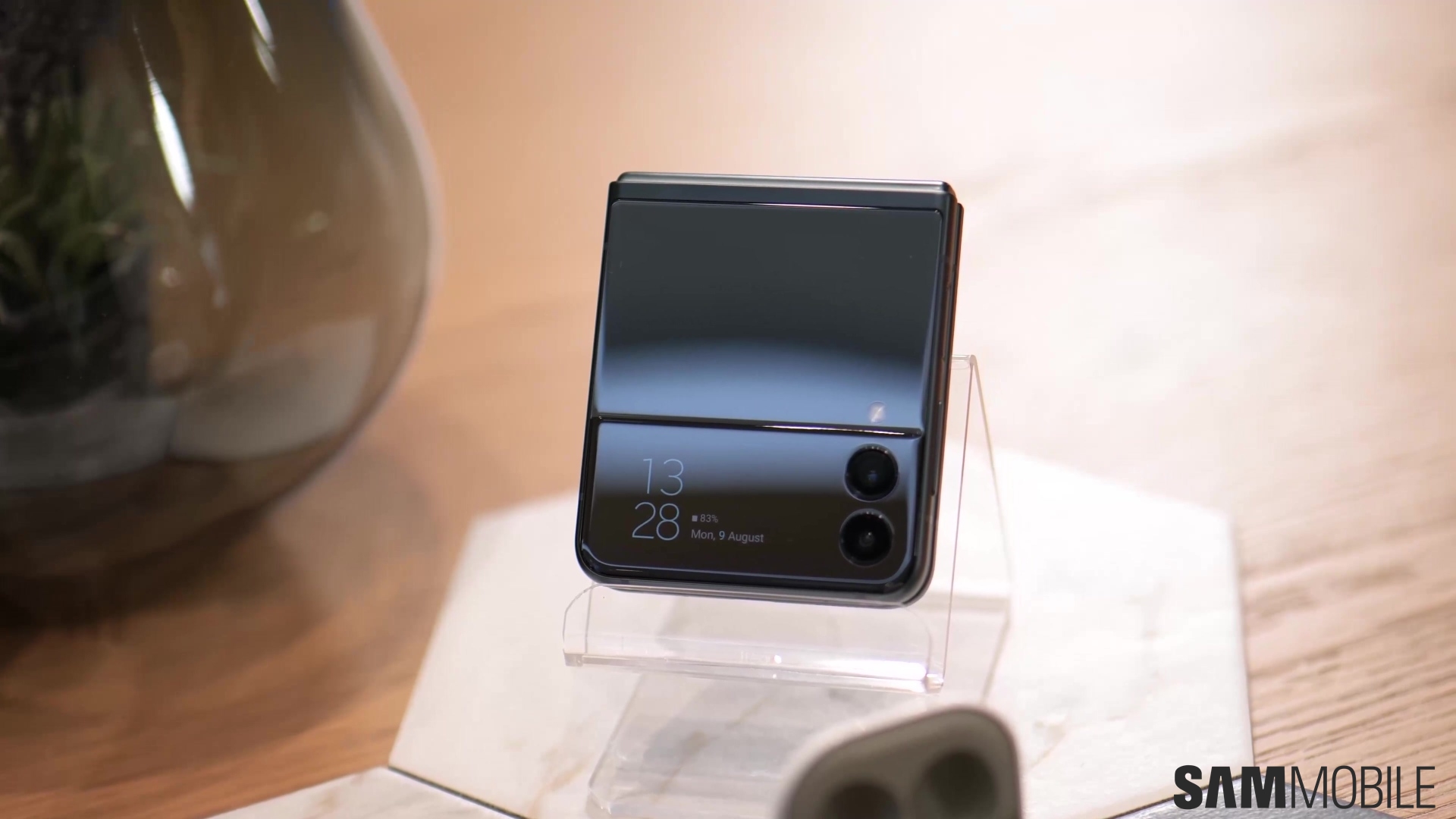
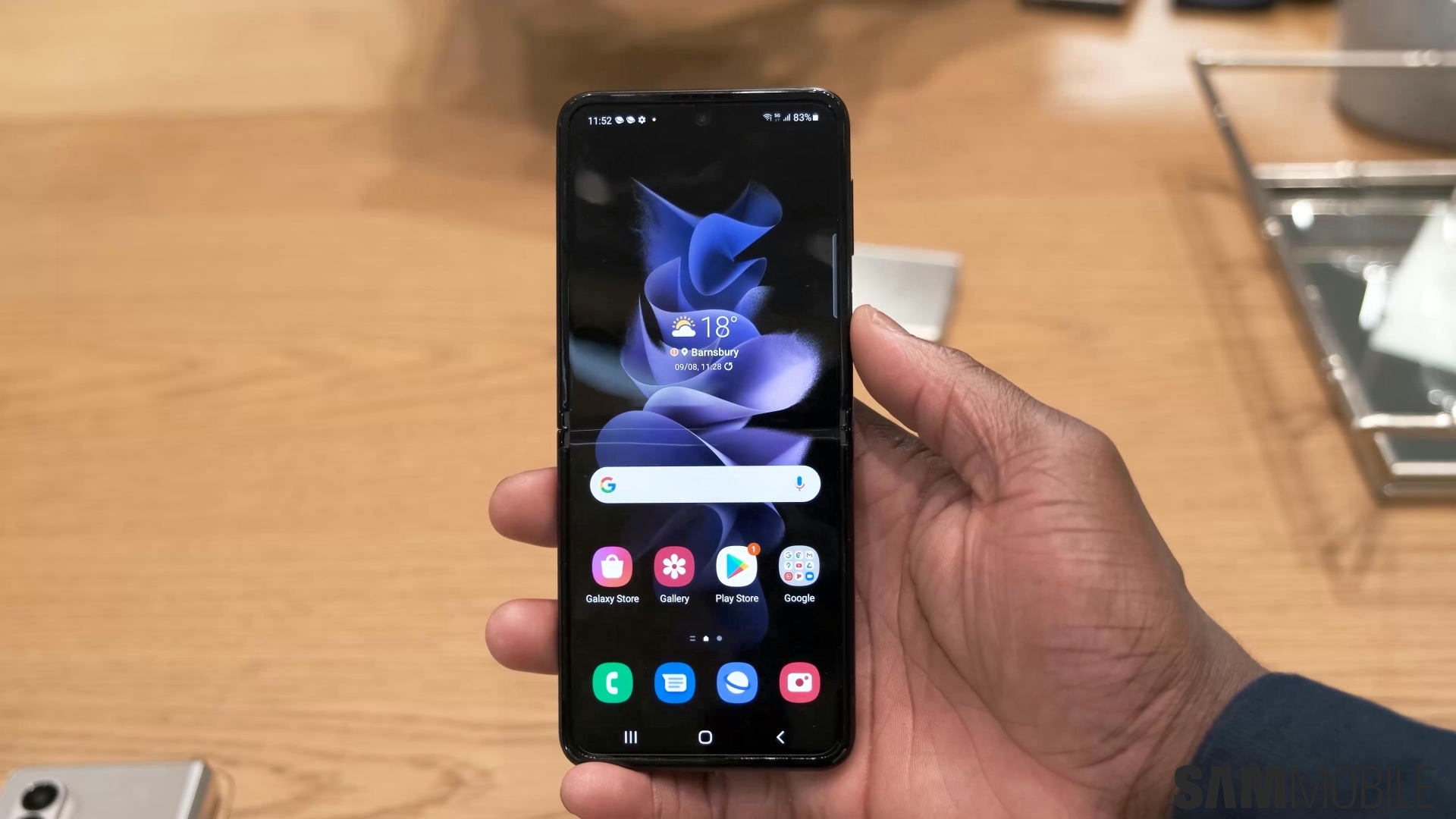
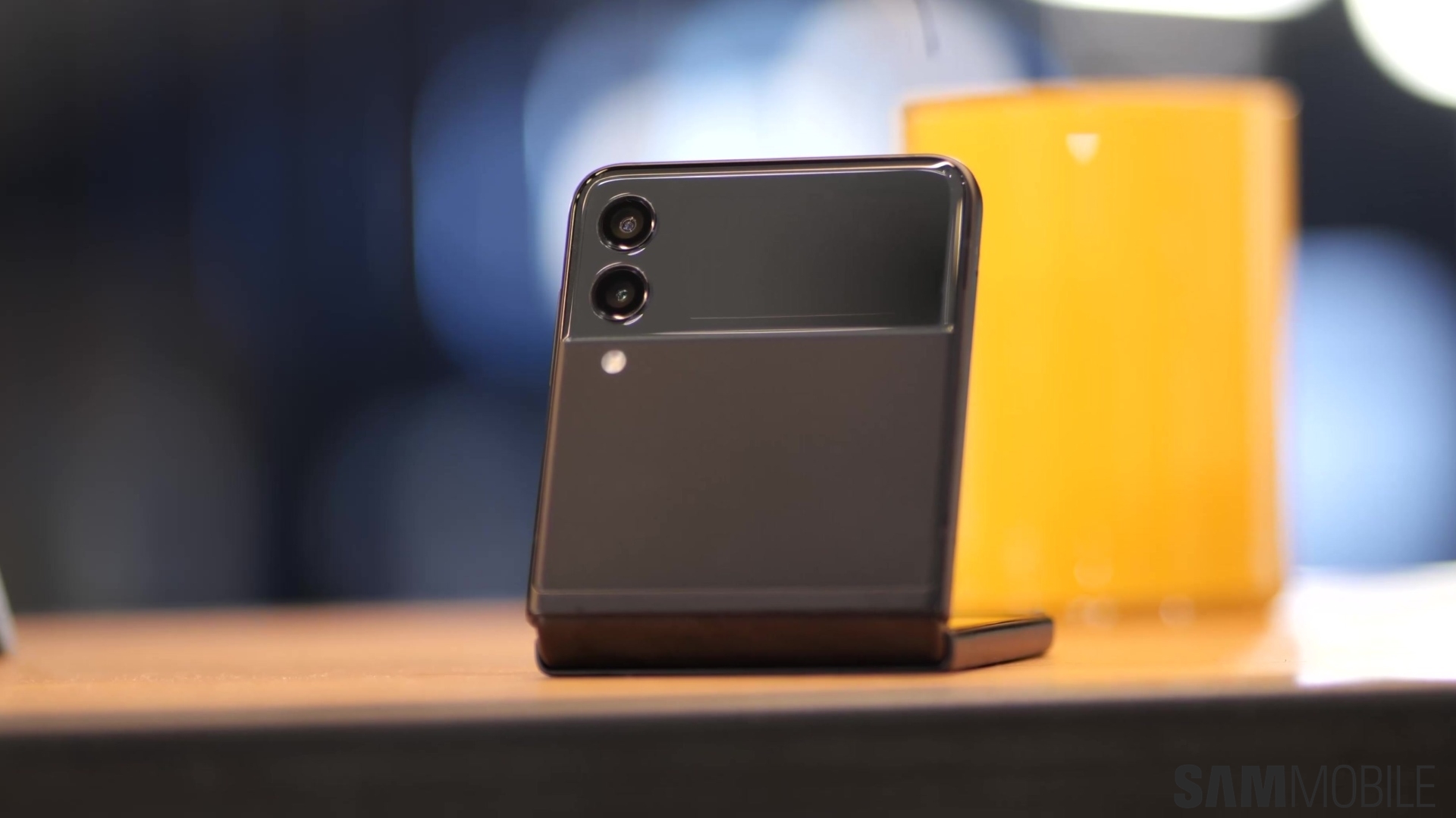
The Galaxy Z Flip 3 is stunning, and these are its best features

Although the new Galaxy Z Flip 3 isn’t as feature-packed as its larger sibling unveiled at Unpacked, it’s arguably a more exciting release. At least in the sense that there was no Galaxy Z Flip 2 between it and the old model, so it’s been a long time coming.

Samsung took all this time to improve the compact foldable phone in ways that matter, and although the form factor is virtually the same, the new clamshell foldable certainly exudes an air of refinement. So, without further ado, here are the best features that define the Galaxy Z Flip 3.

A more refined and durable design with water resistance

best galaxy z flip 3 features

Samsung has spent a lot of energy refining the Galaxy Z Flip 3’s build quality and design, giving the latest model a 10% stronger frame made from what the company calls “Armor Aluminum,” and a foldable protective film providing 80% more durability. It’s also water-resistant, with Samsung claiming an IPX8 ingress protection rating.

As for the overall design, Samsung went on to refining the smallest of details. The company’s designers even looked at how the light reflects off the phone’s edges to find the most attractive shapes. The final touch is a softer finish that should attract fewer fingerprints than the mirror-like paint job of the previous generations.

The larger, more useful cover screen that supports Samsung Pay

best galaxy z flip 3 features

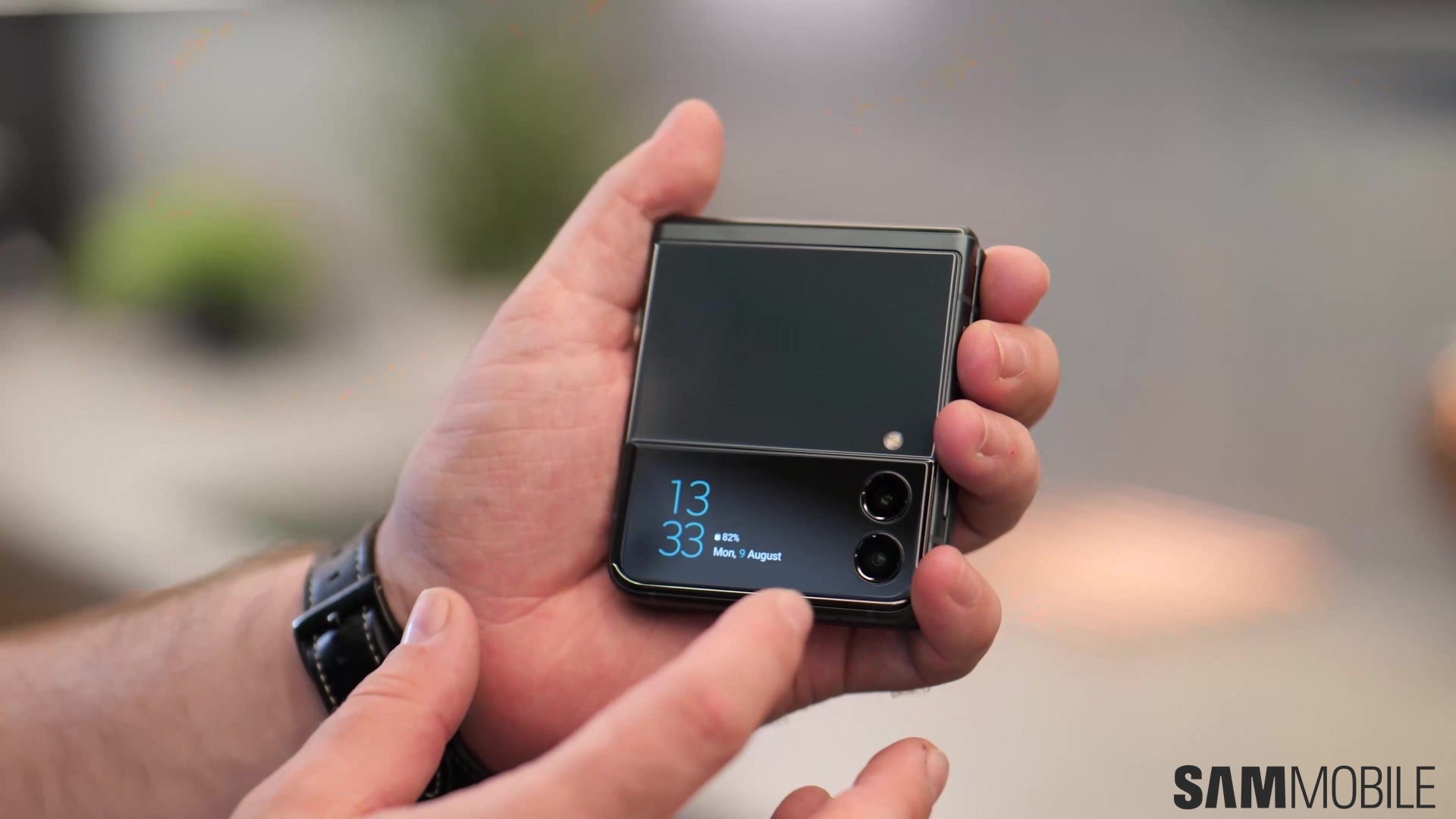
The enlarged cover screen is one of the most meaningful improvements introduced with the new Galaxy Z Fold 3. It’s a 1.9-inch Super AMOLED panel — up from the barely usable 1.1-inch screen of the previous models — with a resolution of 512 by 260 pixels and 303ppi.

This addition improves the user experience massively. The cover screen supports four swiping gestures and can be used for reading notifications and interacting with Samsung apps such as Music, Weather, Samsung Health, Alarm, Timer, Voice Recorder, Buds controller, and Schedule.

Galaxy Z Flip 3 owners can also make mobile payments without having to unfold the phone. They can use the cover screen to select a Samsung Pay account before securing the transaction using the phone’s side-mounted fingerprint sensor.

A more durable 120Hz foldable screen that’s 29% brighter

best galaxy z flip 3 features

The original Galaxy Flip and the 5G model that followed had 60Hz displays. However, since even low-cost Galaxy phones now support a higher refresh rate, it was only natural for the Galaxy Z Flip series to eventually start using this technology.

The Galaxy Z Flip 3 is the first in the foldable clamshell lineup to have a 120Hz foldable screen. In essence, a 120Hz display can render more frames per second — twice as many as a 60Hz screen. It results in smoother animations throughout the UI and mobile games performing better, as long as they support 120Hz.

Samsung also claims that the foldable display is covered by a new protective film boasting 80% higher durability.

Stereo speakers are finally here to provide better entertainment

best galaxy z flip 3 features

Another “first” for the series is the addition of stereo speakers. Neither the original Flip nor the Flip 5G had this feature, as they were limited to a single down-firing speaker and an earpiece at the top.

Samsung’s making a change with the release of the Galaxy Z Flip 3, giving customers a more pleasant experience when watching videos or listening to music.

Cover screen personalization and Watch 4 watch face synchronization

best galaxy z flip 3 features

The 1.9-inch Super AMOLED cover screen not only offers better usability, but Samsung also treated it as a window through which Galaxy Z Flip 3 users can express themselves.

The cover screen offers various customization options and lets users change the clock and background color. More importantly, it can display galleries of up to 15 user photos. GIF files are supported, leaving a lot of room for fun customizations.

Perhaps even better is the cover screen’s ability to sync with the Galaxy Watch 4 series of smartwatches and match the wearable’s watch faces.

Four protective case models with tons of color options

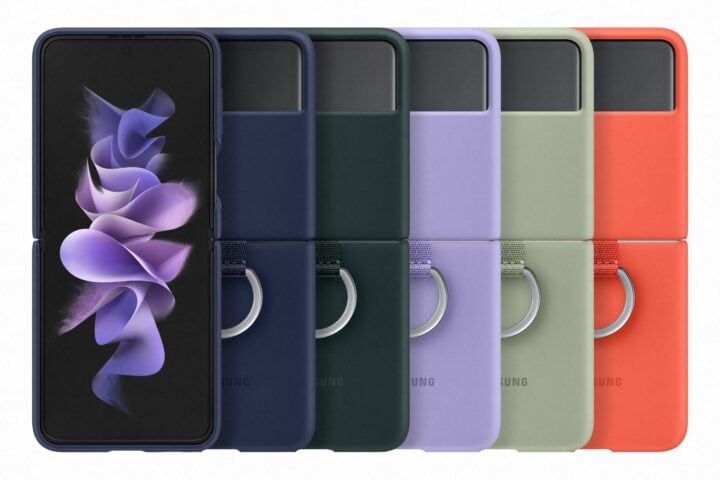
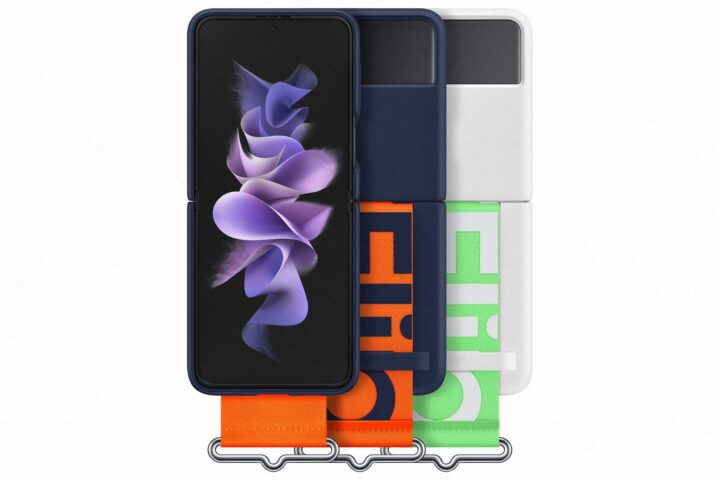
Samsung went all-in with protective cases this year and gave the Galaxy Z Flip 3 four different case types and multiple color choices.

The first is a conventional two-piece leather case available in three colors. It’s accompanied by another case that has the same shape but features a carbon fiber finish. Then there are two other sporty-looking case models with nylon straps and keyrings. Needless to say, this is the boldest Samsung’s ever gone with designing accessories for the Galaxy Z Flip series.

As for the phone itself, it’s available in a total of seven color options: cream, green, lavender, black, gray, white, and pink, the latter three of which have black metal frames and are available exclusively online. And for prospective buyers who might want a bit more exclusivity, there’s always the Galaxy Z Flip 3 Thom Browne Edition.

Interested in Samsung’s new Galaxy devices? Don’t forget to support SamMobile by visiting this link and purchasing them directly from Samsung!

The post The Galaxy Z Flip 3 is stunning, and these are its best features appeared first on SamMobile.


from SamMobile https://ift.tt/3salkFA
via IFTTT

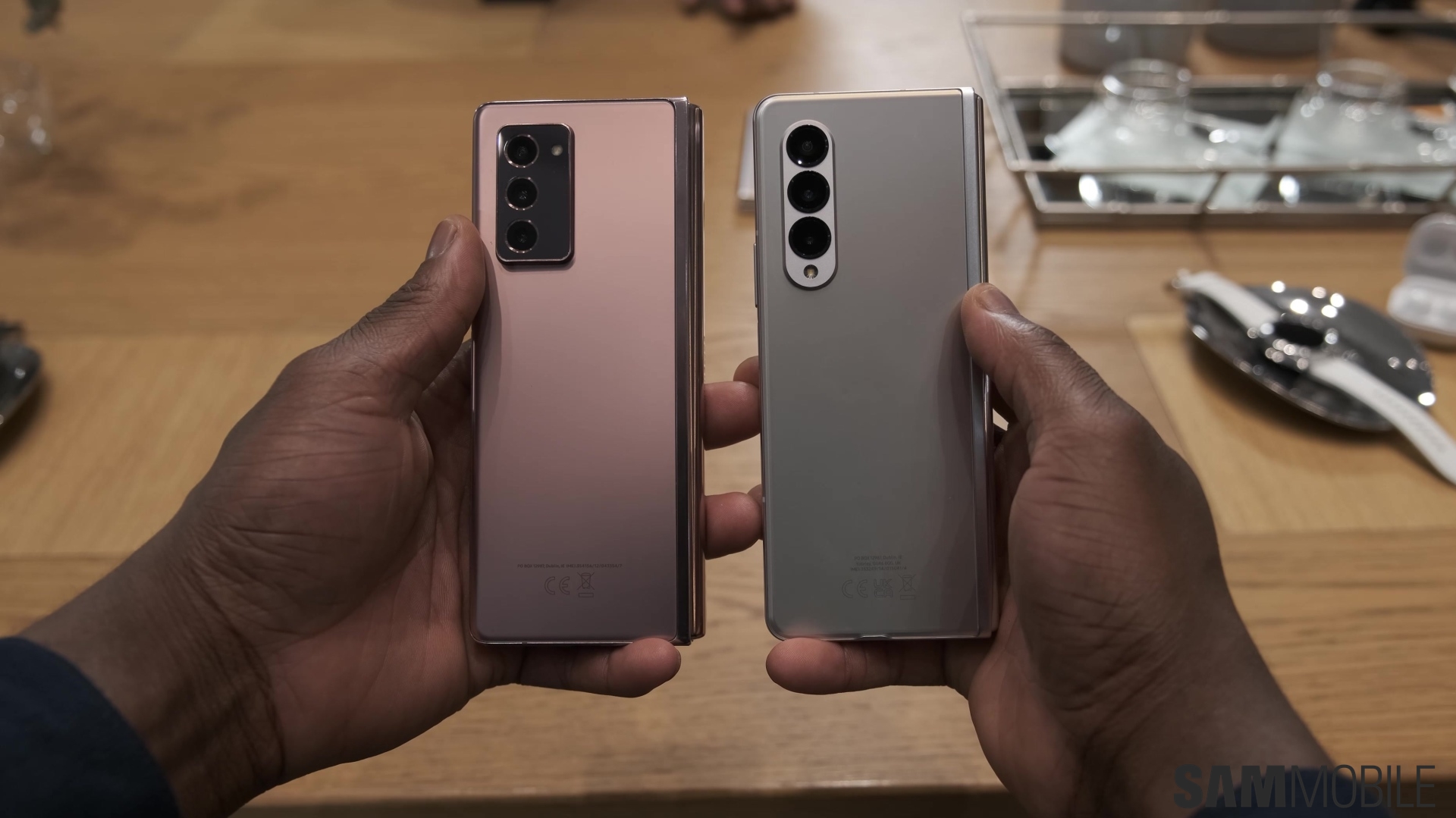
Galaxy Z Fold 3 vs Fold 2: Yes! Samsung’s pushed the series in the right direction

With the release of the Galaxy Z Fold 2 last year, Samsung proved that its high-tech foldable display is a viable solution and, potentially, a massively disruptive response to a rather stale smartphone market. Samsung spent the next year refining its proven formula, leading to the Galaxy Z Fold 3 reveal at Unpacked. It’s a new foldable phone with a similar book-like form factor as the Galaxy Z Fold 2 and tons of improvements, small and large.

The Galaxy Z Fold 3 is indeed slightly smaller, thinner, and lighter than its predecessor, but the refinements don’t stop here. Both displays have been improved, along with the internal hardware and the software experience. Samsung also gave the Z Fold 3 a UDC (Under-Display Camera), making it the world’s first foldable phone to boast this technology. Let’s talk details.

Galaxy Z Fold 3 vs Z Fold 2 displays: Massively improved tech

The Galaxy Z Fold 3 has the same display aspect ratios, dimensions, and resolutions as the Z Fold 2, but don’t let that bring you down, as there are many improvements to celebrate — one of them being the foldable display’s less obvious crease. It’s also 29% brighter than the previous generation.

For many Samsung fans, the biggest upgrade is the long-awaited addition of an S Pen. Samsung wasn’t gimmicky about its implementation either, at least as far as which screen supports the beloved input device, because it’s the inner foldable display that has become strong enough to offer S Pen support. We can’t overstate just how welcomed of an upgrade this is.

It’s worth noting that the 6.2-inch Dynamic AMOLED 2X cover screen doesn’t support the S Pen, though it’s arguably a good decision by Samsung, considering the display’s tall 25:9 aspect ratio. And yes, the tall aspect ratio is something that remains somewhat of a problem this year.

We’ll talk more about the S Pen experience later. But as far as the foldable display itself is concerned, a new protective film covers it, promising 80% higher durability than the solution used last year. And it’s no small feat that Samsung gave both the Galaxy Z Fold 3’s displays a high refresh rate of 120Hz, addressing one of our pet peeves.

We’ve saved another great bit of news for last. The new Galaxy Z Fold 3 has slightly thinner bezels around the foldable display, but much more importantly, it no longer has an Infinity-O cutout. Well, it technically does, but it’s almost invisible. UDC (Under-Display Camera) technology will allow Galaxy Z Fold 3 users to enjoy the qualities of the 7.6-inch Dynamic AMOLED 2X Infinity Flex Display without distractions. UDC is arguably a ground-breaking technology that Samsung fans have been waiting on for a few years, and it’s finally making its debut with the Galaxy Z Fold 3.

Galaxy Z Fold 3 vs Z Fold 2 durability: A leap forward

The Galaxy Z Fold 2 is not a fragile device per se, but as we all know, it lacks an IP rating, and the foldable display needs a bit more special attention and care. These concerns — and then some — have been addressed by the Galaxy Z Fold 3.

Samsung has applied a new protective film over the 7.6-inch panel, boasting 80% higher durability. In addition, the company used 10% stronger “Armor Aluminum” for the phone’s construction.

And, of course, the rumors were correct, and the Galaxy Z Fold 3 is the first foldable phone to have an IP rating; IPX8, to be precise, which means that the Galaxy Z Fold 3 hasn’t been tested against dust ingress but is water-resistant.

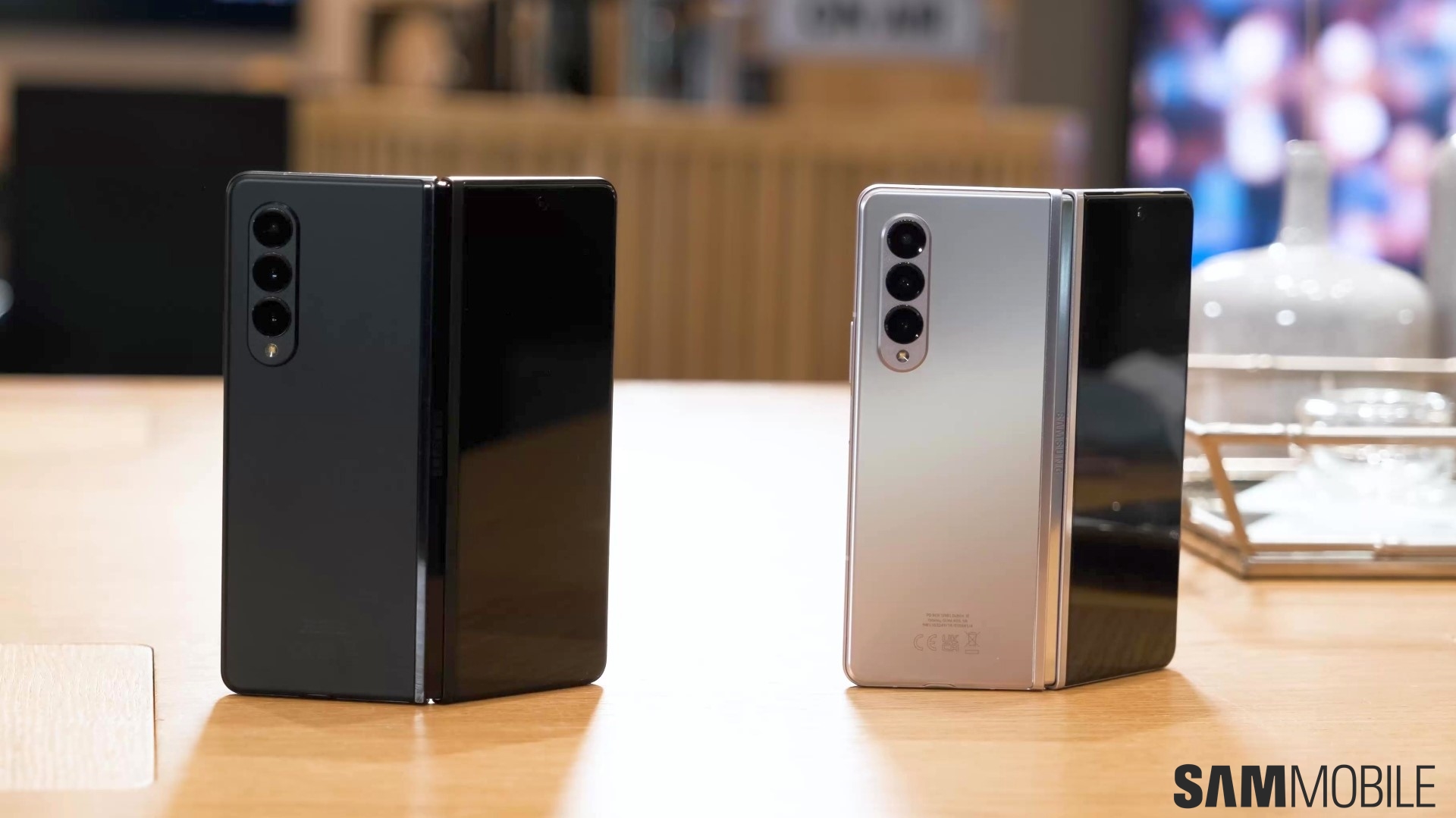
It also has a refreshed design with flatter edges and a less obvious camera bump, but it essentially follows the formula set forth by its predecessors. Speaking of, the main triple camera is now protected by a sheet of Super Clear Glass with Gorilla Glass DX protection on top.

Galaxy Z Fold 3 vs Z Fold 2 software: Great additions, with and w/o the S Pen

The software experience is one area that Samsung has focused the most on improving over the past year, and it looks like the company’s efforts might be paying off. The Galaxy Z Fold 3 ships with Android 11 and One UI 3.1.1, but that’s somewhat of an empty statement, as exciting as it may be on the surface. The more important fact is that the Galaxy Z Fold 3 is packed with new meaningful software improvements — with and without the S Pen — that make a lot of sense given the form factor.

The Galaxy Z Fold 3 user experience was refined across the board. A new Taskbar was created for the Galaxy Z Fold 3, offering a desktop-like experience complete with notification badges. It provides a much more convenient way of switching between apps than the “Recents” screen, and it plays into the whole idea that the Galaxy Z Fold 3 is a multitasking and productivity beast.

There’s also a new “Navigation Rail” in Samsung apps for easier reachability. Furthermore, the whole split-screen / Multi-Active Window system was improved with smoother animations.

There’s a new Drag & Split feature that does away with the jarring screen transitions when dragging and dropping a URL to open it in multi-window. Likewise, animations when rotating apps in Multi-Active Window looks a lot smoother thanks to the addition of “Natural Switching.”

And, of course, there’s the S Pen and all the software features it’s accompanied by. Samsung Notes was updated for the foldable display and now offers various templates for a new Two-Page function, with templates including calendars, journals, and travel logs.

The S Pen also opens up new possibilities in productivity apps from partners like Microsoft. Teams, for example, can take full advantage of the Galaxy Z Fold 3 S Pen, allowing users to draw and handwrite in real-time while in a Teams conference call.

Flex Mode was improved as well. S Pen users will be able to double-tap the lower half of the screen to instantly summon the Samsung Notes app for quick note-taking.

Galaxy Z Fold 3 vs Z Fold 2 cameras: Much of the same… now with an ‘invisibility’ trick!

The one area that hasn’t seen many changes, except for one, is mobile photography. The Galaxy Z Fold 3 carries the same triple camera on the back panel featuring three 12MP sensors, and has a 10MP cover camera for selfies.

The one major upgrade this year is the UDC (Under-Display Camera) hidden behind the foldable display. It has a resolution of just 4MP but features large 2.0-micron pixels, which means it should be able to take in a lot more light than it would otherwise. We’re not sure how good this 4MP camera is at this point, but the UDC design is impressive, and it’s something that people have been waiting on for a long time.

Galaxy Z Fold 3 vs Z Fold 2 internal specs: The expected yearly upgrades

A new year brings new marginal internal hardware upgrades, as you would expect. The new foldable is powered by the 5nm Snapdragon 888 chipset, up from the 7nm Snapdragon 865, but it has the same memory configuration as last year, including 12GB of RAM and 256GB/512GB of built-in UFS 3.1 storage.

The Galaxy Z Fold 3 has a 4,400mAh dual battery instead of a 4,500mAh combo, but battery life might have been improved by the higher efficiency of the 5nm chipset. Then again, any energy gains could have been offset by the addition of a 120Hz cover display. We’ll have to wait and see how the phone performs in the real world before we can determine if it beats the autonomy of the Galaxy Z Fold 2 on a single charge.

Galaxy Z Fold 3 vs Z Fold 2 price: It’s gone down, but there’s a catch

Many people have been waiting for foldable display technology to become cheaper before jumping on the foldable phone bandwagon. And the good news is that Samsung was able to bring the launch price of the Galaxy Z Fold 3 down a notch compared to last year.

While the Galaxy Z Fold 2 was released for $2,000, the Galaxy Z Fold 3 will hit the shelves in the USA for $1,799. This $200 price reduction is nothing to sneeze at, but keep in mind that Samsung has cut a couple of corners to reach this price. Therefore, the Galaxy Z Fold 3 doesn’t ship with a pair of AKG earbuds or a wall charger in the box, leaving new customers the choice of buying these accessories separately or making do with the included USB-C cable and built-in stereo speakers.

Galaxy Z Fold 3 vs Z Fold 2 conclusion: Samsung is going the right direction

Looking purely at internal specifications, such as memory options and the SoC, it’s evident that Samsung had something different in mind this year, other than giving the sequel a few improved components and call it a day.

On paper, the Galaxy Z Fold 3 doesn’t seem to offer much of an upgrade compared to the Galaxy Z Fold 2, but raw hardware specs aren’t the main thing separating a great smartphone from a good one. It’s everything else that matters more, such as the software experience, accessories, durability, build quality, and so on. Samsung made the foldable display brighter and more resilient, enough so that it can work with the beloved S Pen, and that’s no small feat. There are meaningful software improvements to look forward to, and better build quality with a decent IP rating.

The Galaxy Z Fold 3 is expanding our understanding of what a foldable device could be, and because of this, it’s so much more than the Galaxy Z Fold 2. Simply put, the Galaxy Z Fold 3 is greater than the sum of its parts, and it’s shaping up to be a worthy sequel to the Galaxy Z Fold 2.

Interested in Samsung’s new Galaxy devices? Don’t forget to support SamMobile by visiting this link and purchasing them directly from Samsung!

Galaxy Z Fold 3
VS.
Galaxy Fold
General Information
Model name Galaxy Z Fold 3 Galaxy Fold
Model number SM-F926B SM-F900F
Model type Foldable Foldable
Color Cream (Cream)
Green (Green)
Lavender (Lavender)
Black (Black)
Silver (Silver)
Black (Black)
Announced 2021, August 2019, April
Released 2021, August 2019, April
Physical Specifications
Dimensions Unfolded: 158.2 x 128.1 x 6.4 mm
Folded: 158.2 x 67.1 x 14.4~16 mm
Folded: 160.9 x 62.8 x 17.1 mm
Unfolded: 160.9 x 117.9 x 6.9 mm
Weights 271g 276g
Operating System
Operating system Android 11 Android 11
One UI version 3.1.1 3.0
Network
Networks 5G
2G
3G
4G
2G
3G
4G
Display
Kind Main Display Main Display
Name Infinity Display Infinity Flex Display
Technology Dynamic AMOLED 2X Dynamic AMOLED Display
Size 7.6 inch / mm 7.3 inch / 185.42 mm
Resolution QXGA+ / 2208x1768 pixels QXGA+ / 2152x1536 pixels
Pixel density 374 PPI 362 PPI
Screen to body ratio % ~85.7%
Memory
RAM/ROM sizes 12 GB RAM with 256 GB ROM
12 GB RAM with 512 GB ROM
Rear camera
Megapixels 12MP 16MP
Aperture F1.8 F2.2
Battery
Standard battery capacity 4400 mAh 4380 mAh

The post Galaxy Z Fold 3 vs Fold 2: Yes! Samsung’s pushed the series in the right direction appeared first on SamMobile.


from SamMobile https://ift.tt/3jGJRyc
via IFTTT

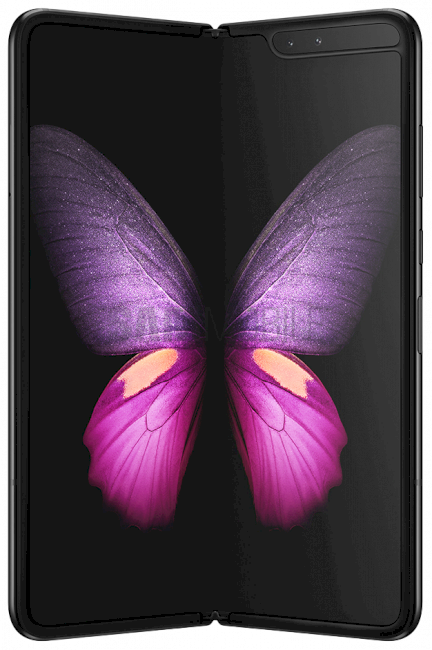
Galaxy Z Fold 3 vs Galaxy Fold: Your wishes from 2 years ago have come true

It’s been nearly two years since the original Galaxy Fold was released to bring a brand-new form factor to the stagnating mobile world, and it’s now time for Samsung to release the third model in the series. Predictably, it’s called the Galaxy Z Fold 3, and it boasts countless improvements across the board.

Samsung continued advancing various technologies over the past couple of years, including UTG (Ultra-Thin Glass) and UDC (Under-Display Camera). Indeed, the Galaxy Z Fold 3 is the company’s first mobile device to feature a UDC. It’s also the first foldable phone to support the S Pen and have an IP rating. Just how big of an upgrade is the Galaxy Z Fold 3 over the original Fold? Keep reading and check our device comparison widget below to find out.

Galaxy Z Fold 3 vs Fold build and design: Refinements galore

Two years after the original Galaxy Fold’s released, the basic design formula is mostly unchanged. The Galaxy Z Fold 3 has a book-like form factor with a rigid cover display, a foldable screen on the inside, and a side-mounted fingerprint scanner. But aside from the form factor itself, the Galaxy Z Fold 3 has little in common with the original model.

Both phones have a triple rear-facing camera but slightly different-looking camera housings. The new Galaxy Z Fold 3 has flatter edges all around, but one of the most striking upgrades over the original model is undoubtedly the large cover display.

Likewise, the foldable panel no longer has a display notch or a cutout, and it’s all thanks to the brand-new Under-Display Camera (UDC) hidden behind the Dynamic AMOLED 2X foldable panel. All these changes combined give the Galaxy Z Fold 3 a more modern look, fit for 2021.

One other important upgrade brought forth by the Galaxy Z Fold 3 is an IP rating. The phone has an IPX8 certificate, which means that although it hasn’t been tested for dust resistance, it does have water resistance.

Galaxy Z Fold 3 vs Fold displays: The new foldable panel makes the old look older

The Galaxy Z Fold 3 has a larger 6.23-inch cover display than the 4.5-inch AMOLED panel of 2019 and a slightly larger 7.6-inch foldable Dynamic AMOLED 2X panel. But more than that, they both support a 120Hz refresh rate, while the Galaxy Fold remains stuck in the 60Hz era.

The new cover display is protected by Gorilla Glass Victus, whereas the foldable panel is covered in a new protective film that should be 80% more durable than the previous generation — and probably a whole lot more durable than the Galaxy Fold’s protective film. This component was upgraded partly because of the addition of the S Pen, which has a sharp enough tip that can damage the original Fold’s inner screen. The Galaxy Z Fold 3 also has brighter cover and foldable displays, and a less prominent crease.

All in all, even though the original Galaxy Fold remains an impressive piece of technology thanks to its foldable screen and form factor, it’s beginning to feel outright outdated compared to the Galaxy Z Fold 3 and the many technical advancements it introduces.

Galaxy Z Fold 3 vs Fold software: The experience is miles ahead

The Galaxy Z Fold 3 is the first foldable device to support the S Pen, which means that the new phone is accompanied by a multitude of software additions and improvements. Samsung Notes is available and has a new Two-Page mode, and there’s a new Taskbar for a more PC-like multitasking experience. Flex Mode got beefed up with S Pen and Notes integration, and third-party apps like Microsoft Teams can now take full advantage of the S Pen.

Multi-Active Window was also greatly improved. It’s more intuitive and has smoother animations. And there’s a new Drag & Split feature that lets you open a second webpage in split-screen or Multi-Active Window when browsing the web, without experiencing a jarring screen transition.

Obviously, the Galaxy Z Fold 3 ships with newer firmware, namely Android 11 and One UI 3.1.1.

Galaxy Z Fold 3 vs Fold cameras: Under-Display Camera debuts

Even though the Galaxy Z Fold 3 has pushed certain technological limits to a place that was once considered nearly impossible, Samsung’s latest foldable flagship doesn’t really go out of its way to improve everything, and mobile photography has clearly taken a back seat.

Galaxy Z Fold 3 under display camera

The 2021 and 2019 Galaxy Fold models have nearly identical camera specifications. The Galaxy Z Fold 3 comes with a 12MP wide sensor boasting Dual Pixel PDAF and OIS, just like the original Galaxy Fold, except this sensor has larger pixels and an f/1.8 aperture.

The main camera is accompanied by a 12MP telephoto sensor with 2x optical zoom, just like two years ago, and the ultrawide shooter clocks in at a resolution of 12MP instead of 16MP. The Galaxy Z Fold 3 essentially has the same ultrawide shooter as the Galaxy Z Fold 2.

Both the original Fold and the 3rd model in the series use a 10MP cover selfie camera. However, the Galaxy Z Fold 3 boasts an Under-Display Camera hidden behind the foldable display, while the original Galaxy Fold has a protruding notch that’s wide enough to accommodate two selfie sensors.

This means the Galaxy Fold is technically superior in terms of selfies, but the Galaxy Z Fold 3’s hidden camera design is a much better fit for usage scenarios that don’t include capturing selfies, such as watching videos or playing mobile games. It’s a good compromise, given that the phone already has a 10MP cover selfie sensor.

Galaxy Z Fold 3 vs Fold specs: A few new components are par for the course

Samsung’s latest foldable flagship is equipped with a new powerful chipset to boot, but memory options are almost the same as two years ago. They include 12GB of RAM and 256GB or 512GB of internal storage. This time, however, the storage specification got upgraded from UFS3.0 to UFS 3.1.

The Galaxy Z Fold 3 uses the Snapdragon 888 SoC from Qualcomm, which is considerably more powerful than the Snapdragon 855 chipset found inside the original Galaxy Fold. It’s more energy-efficient, it has more cache, it supports higher memory bandwidth, and it has a more powerful Adreno 660 GPU as opposed to an Adreno 640.

Samsung’s new foldable phone-tablet hybrid will perform better across the board, and it will be more futureproof for the simple fact that it’s newer.

Galaxy Z Fold 3 vs Fold conclusion: Now’s the time!

A lot can happen in two years, especially in the mobile world where old technologies get upgraded or replaced by new ones regularly. And a lot did happen in regards to the Galaxy Z Fold series.
For many Samsung fans, the original Galaxy Fold wasn’t good enough because it had a small cover display, or it lacked an IP rating, or because it didn’t support the S Pen.

All of these issues are addressed two years down the line, so if you were going to buy a foldable phone but decided against it due to the original model’s shortcomings, now’s the time to reconsider.

Thanks to the improved hardware, the 120Hz displays, the Under-Display Camera, the IP rating, and the added S Pen support, to name a few, the Galaxy Z Fold 3 sounds like the ideal foldable flagship to buy, regardless if you own the original Galaxy Fold or not. If you do, you can be sure that the Galaxy Z Fold 3 is a worthy upgrade — if you’re an S Pen enthusiast. And if you don’t, well, the Galaxy Z Fold 3 is the best foldable phone money can buy anyway, unless you prefer the smaller form factor of the Galaxy Z Flip 3.

Looking two years back, the Galaxy Fold was considered an experimental device meant to test the viability and marketability of foldable displays. But two years later, the Galaxy Z Fold 3 is a full-fledged consumer-ready device with S Pen support, an IP rating, high refresh rate displays, and numerous other great features.

Interested in Samsung’s new Galaxy devices? Don’t forget to support SamMobile by visiting this link and purchasing them directly from Samsung!

Galaxy Z Fold 3
VS.
Galaxy Fold
General Information
Model name Galaxy Z Fold 3 Galaxy Fold
Model number SM-F926B SM-F900F
Model type Foldable Foldable
Color Cream (Cream)
Green (Green)
Lavender (Lavender)
Black (Black)
Silver (Silver)
Black (Black)
Announced 2021, August 2019, April
Released 2021, August 2019, April
Physical Specifications
Dimensions Unfolded: 158.2 x 128.1 x 6.4 mm
Folded: 158.2 x 67.1 x 14.4~16 mm
Folded: 160.9 x 62.8 x 17.1 mm
Unfolded: 160.9 x 117.9 x 6.9 mm
Weights 271g 276g
Operating System
Operating system Android 11 Android 11
One UI version 3.1.1 3.0
Network
Networks 5G
2G
3G
4G
2G
3G
4G
Display
Kind Main Display Main Display
Name Infinity Display Infinity Flex Display
Technology Dynamic AMOLED 2X Dynamic AMOLED Display
Size 7.6 inch / mm 7.3 inch / 185.42 mm
Resolution QXGA+ / 2208x1768 pixels QXGA+ / 2152x1536 pixels
Pixel density 374 PPI 362 PPI
Screen to body ratio % ~85.7%
Memory
RAM/ROM sizes 12 GB RAM with 256 GB ROM
12 GB RAM with 512 GB ROM
Rear camera
Megapixels 12MP 16MP
Aperture F1.8 F2.2
Battery
Standard battery capacity 4400 mAh 4380 mAh

The post Galaxy Z Fold 3 vs Galaxy Fold: Your wishes from 2 years ago have come true appeared first on SamMobile.


from SamMobile https://ift.tt/37DxD3Q
via IFTTT

Pixel 6 appears to be using Samsung’s 50MP ISOCELL sensor, Exynos 5G modem

Google is finally going to compete with Samsung’s flagship smartphones. This year’s high-end Pixel phones—Pixel 6 and Pixel 6 Pro—have impressive specifications, but it looks like most of the components used by the upcoming devices are made by Samsung. In a recent report, it has been revealed that the Pixel 6 series uses camera sensors and a 5G modem made by Samsung.

According to recent findings, the Pixel 6 and the Pixel 6 Pro use Samsung’s 50MP ISOCELL GN1 camera sensor that was launched last year. The devices also appear to be using a variant of the Exynos 5123 5G modem. It is already known that Google’s first smartphone processing chipset that is debuting with the Pixel 6 series, the Tensor, has been co-developed with Samsung’s System LSI division. It is also possible that the 120Hz OLED screens used in the upcoming Pixel phones are made by Samsung Display.

The ISOCELL GN1 is a 1/1.31-inch sensor with 50MP resolution, 1.2µm ISOCELL Plus pixels, dual-pixel phase-detection autofocus, and 8K video recording. The sensor also features improved HDR, thanks to Samsung’s Tetra HDR technology. It can capture 10-bit images and HDR videos and supports up to 400fps 1080p slow-motion videos.

The Exynos 5123 is a 5G modem that supports sub-6GHz and mmWave 5G networks (SA/NSA). It is built using a 7nm process that offers maximum download speeds of up to 7.35Gbps on mmWave 5G networks and 5.1Gbps on sub-6GHz 5G networks. It supports up to 8CA (8-carrier aggregation). It was announced alongside the Exynos 990 chipset last year and was used in the Galaxy S20 and Galaxy Note 20 series.

The post Pixel 6 appears to be using Samsung’s 50MP ISOCELL sensor, Exynos 5G modem appeared first on SamMobile.


from SamMobile https://ift.tt/3lW0MzD
via IFTTT

جميع الحقوق محفوظة لمدونة الغريب 2013