الأربعاء، 28 مارس 2018

PSA: You cannot create shortcuts to apps in Secure Folder in Android Oreo

Secure Folder is one of the most underrated features on Samsung smartphones. It’s an encrypted, private space on your Galaxy smartphones to separate work-related data and apps from your personal stuff. It can also be used to install permission-hungry apps or store private files in a separate container to add an extra layer of privacy and security to your data.

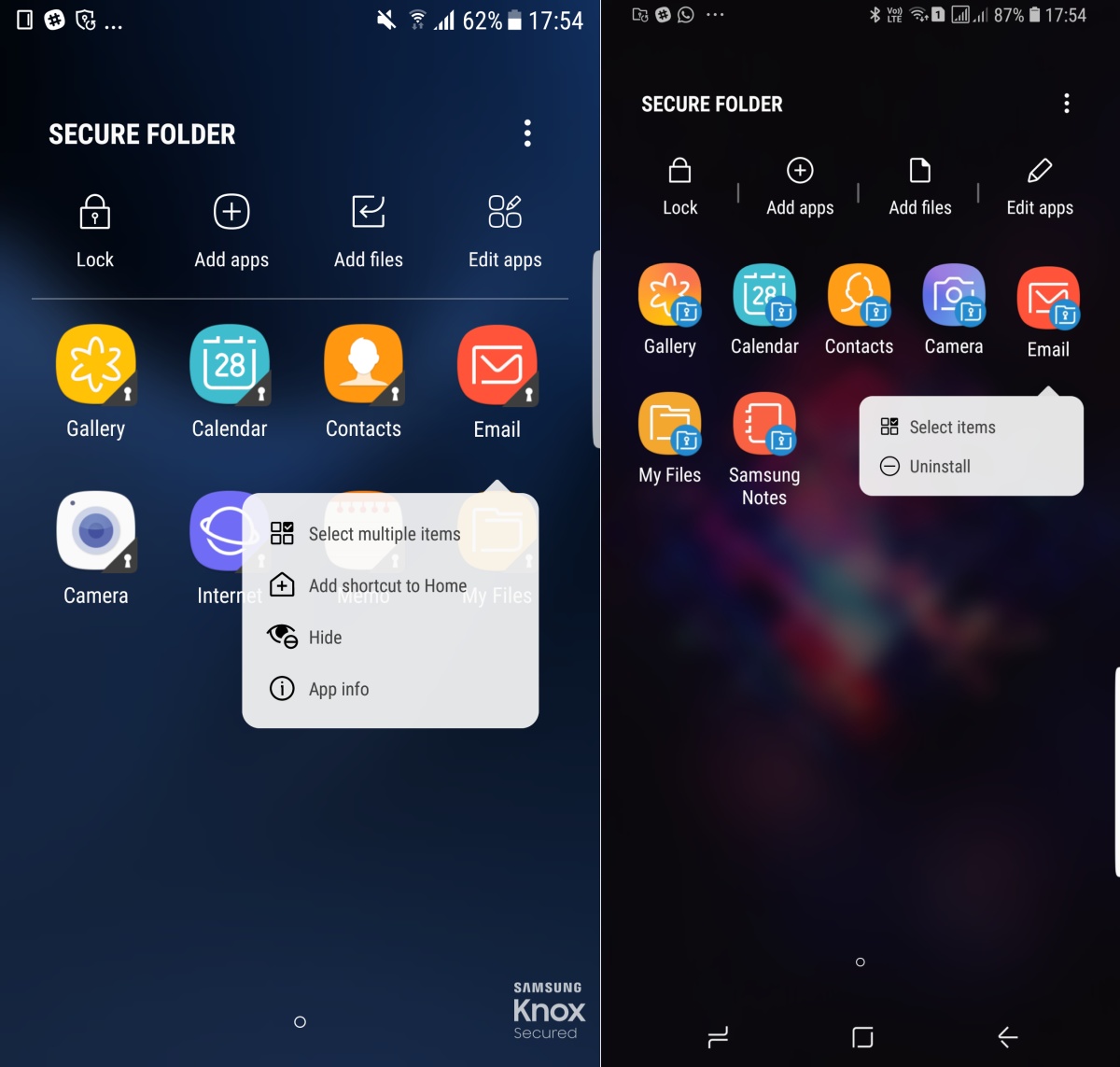
In Nougat and earlier versions, users can long press an app in the Secure Folder and create a shortcut to that app on their home screen. With the shortcut option, users were able to access apps in the Secure Folder directly from their home screen instead of launching the Secure Folder first.

An extra step required to launch Secure Folder apps

After receiving the Android Oreo update, many users have noticed the disappearance of their Secure Folder shortcuts. What many of them assumed to be a bug seems to be a deliberate decision by Samsung. The company has replied to users on the European help forums and Secure Folder reviews on Google play confirming it’s a change introduced with the Android Oreo update and necessitated by Google’s new policy on shortcuts (the policy apparently prevents multiple shortcuts being created for the same app, but we’re not too clear on that).

When many users started complaining, the moderator who confirmed the change initially offered some hope by saying, “However, in the light of the feedback you guys have given, our software team have made a suggestion to Samsung HQ to see if this can be changed. We’re unable to give a timescale for how that’ll go, but we’ll definitely keep you posted on any news we hear on it.” Let’s see if Samsung can bring back the nifty little feature.

Secure Folder in Android Nougat (Left) and Android Oreo (Right)

The post PSA: You cannot create shortcuts to apps in Secure Folder in Android Oreo appeared first on SamMobile.


from SamMobile https://ift.tt/2GdP4Nj
via IFTTT

[Poll] How do you like the Galaxy S9’s stereo speakers?

When Samsung decided to acquire Harman International, the parent company of popular audio companies like Harman Kardon and AKG, back in late 2016, we were excited for the kind of changes the newly onboarded talent would bring to the Korean giant’s smartphones. Samsung first brought us the AKG-tuned earphones with the Galaxy S8, before its acquisition of Harman was completed, and this year, with the Galaxy S9, Samsung has pulled out all the stops by finally bringing stereo speakers to its mainstream flagship lineup.

Two is better than one

The speakers are tuned by AKG as well, and the Galaxy S9 and S9+ even come with Dolby Atmos support. While the true benefit of Dolby Atmos comes over a pair of earphones, it does provide a noticeable improvement to the audio outputted by the stereo speakers. Samsung’s taken its time to do something other manufacturers – including its biggest competitor, Apple – have been doing for a few years, but the company’s implementation of stereo speakers on the Galaxy S9 is more than good enough for us to stop complaining about the long wait.

Yes, we love the Galaxy S9’s stereo speakers, but we want to know what you think of them. Are they everything you had hoped they would be, or do you think Samsung should have done more? Whatever your opinion, let us know by voting in the poll below and sharing your thoughts with us in the comments.

How do you like the Galaxy S9's stereo speakers?

The post [Poll] How do you like the Galaxy S9’s stereo speakers? appeared first on SamMobile.


from SamMobile https://ift.tt/2J0LG6b
via IFTTT

Galaxy J7 Aero and Galaxy J3 Eclipse 2 headed to Verizon

According to the well-known leaker Evleaks, Samsung phones with model numbers SM-J737V and SM-J337V are going to launch soon on Verizon as the Galaxy J7 Aero and Galaxy J3 Eclipse 2 respectively. He didn’t offer any information about specifications, availability, or pricing.

Carrier variants of the Galaxy J3 and Galaxy J7

The info about the Galaxy J3 Eclipse 2 is in line with what we reported earlier about a new Galaxy J3 model headed to the major US networks. This new J3 has been spotted on many benchmark and certification websites, signaling its imminent launch. The device is expected to launch with an Exynos chipset, Android 8.0, a 5-inch 720p display, 2 GB RAM, and 16 GB internal storage.

Although the recent trademark applications by Samsung did point towards the possible launch of new Galaxy J3 and Galaxy J7 variants on US carriers, it was mostly the Galaxy J3 that has been spotted online again and again. We did come across a new Galaxy J7 at the FCC recently, but the model number is substantially different from the one headed to Verizon. The Galaxy J7 Aero (SM-J737V) has not surfaced on any of the benchmark websites so far, so its specifications are currently unknown.

The launch of the J7 Aero and J3 Eclipse 2 on other US networks shouldn’t be too far once they launch on Verizon, although the names might be different for each carrier. We probably won’t have to wait much longer for the official launch as the devices have been already spotted at various certification websites.

The post Galaxy J7 Aero and Galaxy J3 Eclipse 2 headed to Verizon appeared first on SamMobile.


from SamMobile https://ift.tt/2GAsoWH
via IFTTT

Hey Samsung, where’s your desire to innovate?

Allow me to start by saying that I have always been a loyal Samsung fan. The whole reason why I started SamMobile is that I liked what the company did and how it strived for innovation in both hardware and software. It used to be evident that Samsung wanted to raise the bar for the competition and thus quickly brought new technologies to market. It’s not really doing that anymore and with Chinese manufacturers ramping up the competition, I’m starting to worry.

Consider this: Samsung can be credited with kickstarting the curved display renaissance with the Galaxy Note Edge which was launched in 2014. Granted, it was a limited edition concept device with a single curved edge, but it announced to the world that Samsung had the technological prowess to develop displays that seemed to effortlessly flow off of the side.

The company didn’t take long to introduce an improved version of its curved display. It launched the Galaxy S6 and Galaxy S6 edge only a few months later in early 2015 and the latter had a dual-edge curved display that was unlike anything found on the market back then. Samsung had initially thought that customers might prefer the Galaxy S6 over the Galaxy S6 edge because the latter was priced higher but even it was caught by surprise when the market exhibited an immense demand for the model with the curved display. It was what drove people to purchase Samsung’s new flagship as the company as no other major manufacturer was offering such a device.

The following year, Samsung further refined the display for the Galaxy S7 edge but by then curved panels were commonplace and some players had moved on to blaze another trail. Xiaomi introduced the Mi Mix in 2016 which had a taller 17:9 aspect ratio display and very slim bezels. The device had an 83.6 percent screen-to-body ratio which wasn’t the norm at that point in time. Obscure smartphone manufacturers like Sharp had also jumped on the bandwagon but Samsung made us wait until 2017 when it introduced the 18.5:9 aspect ratio bezel-less Infinity Display with the Galaxy S8 and the Galaxy S8+, the 6.2-inch model boasted a screen-to-body ratio of 84 percent. There’s absolutely no doubt in the fact that the Galaxy S8 is one of the most beautiful devices that the company has ever made but Samsung was widely seen to be following an industry trend by then instead of setting one.

Then came the iPhone X last year. It was Apple’s first smartphone to feature an OLED display and as expected, the panel was supplied by Samsung. It’s a state-of-the-art OLED panel made by Samsung Display with 458 pixels per inch which Apple coupled with Precision Display Calibration that it developed to get the most out of the panel. It even delivered record high full-screen brightness for OLED smartphones of 634 nits compared to 560 nits on the Galaxy Note 8 with automatic brightness and that too only in high ambient light.

Apple was expected to pull out all the stops for its 10th anniversary iPhone and it certainly did that. The company added a notch to the beautiful display where the 3D sensing technology was housed for its Face ID facial recognition system. Samsung may have introduced iris scanning with the Galaxy S8 but Apple’s biometric security solution was far superior in that it used a dot projector to emit more than 30,000 invisible dots on the user’s face to build a unique 3D facial map. The infrared camera then analyzed the dot pattern and captured an infrared photo of the face which was transferred to a secure enclave on the A11 Bionic chipset to register a new face or confirm a match. It even added a flood illuminator that emits invisible infrared light so that Face ID could even work in the dark.

The advanced components enabled Apple to offer novelties such as Animoji which are animated emojis that replicate the user’s facial movements. Samsung introduced a similar feature with the Galaxy S9 called Animoji and while the company swears it didn’t copy the feature from Apple, anyone who has used it so far will attest that it leaves a lot to be desired.

Apple bested Samsung in terms of hardware and even software innovation when it released the iPhone X last year. DxOMark branded it as the best smartphone for still photography with a score of 101 which was higher than the Galaxy Note 8 but a slightly lower result for video meant that the Galaxy Note 8 still had a higher overall score. Samsung responded with the Galaxy S9 which has a better display and captured the top spot in DxOMark’s camera rankings. It received the best-ever score of 104 for still photography putting it comfortably ahead of the iPhone X.

The fact remains, though, that Samsung was merely responding to the moves that its rivals were making in the market. It seems that somewhere along the way Samsung decided that it was okay to be a follower than a leader. This has resulted in Chinese OEMs eyeing the void that it has left behind. Just yesterday, Huawei launched a new smartphone that shows how it has thought outside the box to bring a triple camera setup to smartphones. It hasn’t just slapped a third sensor onto a dual-camera system, it’s actually much more sophisticated than that and it works. Merely two weeks after it was released, the Galaxy S9 is no longer the benchmark for smartphone cameras on DxOMark, that title now rests with the Huawei P20 Pro. It outscored all of its rivals including the Galaxy S9/S9+ with its overall score of 109 points.

The point I’m making is simple. In the past, Samsung’s desire to innovate was evident. You could see that the company wanted to raise the bar for the competition in the camera, hardware and even the screen-to-body ratio department. Its efforts were more than just a response to achieve slightly more than what its rivals had. While many expected that we’d see that side of the company again when it would become the first major OEM to bring in-display fingerprint sensors to market, as it turns out, Samsung has also missed the boat on that. Not only did little-known (at least in the West) OEM Vivo become the first to ship a smartphone with an in-display fingerprint sensor, Huawei’s collaboration with Porsche Design has yielded the Porsche Design Mate RS which features a fingerprint sensor in the display.

We’re already approaching peak smartphone design because there’s only so much you can change on a device that’s almost all display on the front. It’s high time that Samsung emerges as the OEM that will lead the conversation on where smartphone design goes from here. Samsung loyalists are banking on its much-rumored foldable smartphone ambitions for that but it’s still unclear when the company will introduce the Galaxy X. Chinese OEMs are already trying their luck with this form factor as well and they’ll certainly not wait around for Samsung to make its move. It doesn’t help that the company says it’s no longer obsessed with being the first in the world to bring new technologies to market.

I know that this seems like a bleak picture but I’m not losing faith just yet, keeping fingers crossed for Samsung to step up again and show that it’s much more than just a follower, that it can dictate the market because of its innovative technologies. It will hopefully raise the bar higher for the competition and make it difficult for them to compete. A follower isn’t an innovator and I really don’t want Samsung be the former.

The post Hey Samsung, where’s your desire to innovate? appeared first on SamMobile.


from SamMobile https://ift.tt/2E0PII5
via IFTTT

الثلاثاء، 27 مارس 2018

Samsung not worried of Dutch Consumers’ Association lawsuit on updates

A summary lawsuit was filed by the Dutch Consumer’s Association against Samsung back in 2016 over device support. It had prayed to the court that Samsung be compelled to provide regular software updates for devices and make its update schedule more transparent.

Samsung had emerged victorious then because the judge had ruled that the legal process adopted for the case wasn’t suitable. An Amsterdam District Court ruled that the Consumers’ Association had failed to show that there was urgent interest in the case and that the claims against Samsung were not suitable for summary proceedings. The court didn’t consider the substantive arguments made by the association as it dismissed the case on a technicality.

Samsung promises to support devices for two years

The Dutch Consumers’ Association refiled the case in late 2016 and it was taken up by the court yesterday for the first hearing. It maintains its demand that Samsung should provide timely updates for a device four years after it’s launched or at least two years from the date it’s purchased by a customer aside from being more transparent about its update schedule.

The association is going after Samsung for the second time over updates even though it had failed to demonstrate in the earlier interlocutory proceedings that there were concrete security breaches in Android that had put Samsung users at risk because the company didn’t send out updates in a timely fashion. All of the association’s claims had previously been rejected by the court.

Samsung doesn’t seem to be worried about this latest legal challenge and appears convinced that it has a strong case against the Consumers’ Association. The company has issued a statement to us reiterating its guarantee to customers that it will support smartphones for at least two years after their market release. It also points out that this doesn’t mean it will stop supporting devices after those two years are up but points to recent updates it has released for older devices like the Galaxy S5 and the Galaxy S6.

The full statement is posted below:

Samsung looks forward to the verdict of the proceedings on merits with confidence, because Samsung smartphones are safe during normal use, even after the guaranteed software support period. We take the privacy and safety of our users very seriously and will continue to do so in this dynamic world full of rapidly developing technologies.

Just like the Consumers’ Association, we believe the safety of our mobile phones is very important. As a global market leader in the field of mobile devices, we strive to lead the way in this area too. We therefore guarantee consumers that we support our smartphones with updates for at least two years from the product introduction.

We have worked hard on this and are one of the few in the market to make this promise. The support of at least two years does not mean that we stop supporting our devices after those two years. We will continue to do so for as long as possible. For example, in 2017, we have updated the Samsung Galaxy S6 from 2015, S5 from 2014 and S4 from 2013.

The post Samsung not worried of Dutch Consumers’ Association lawsuit on updates appeared first on SamMobile.


from SamMobile https://ift.tt/2GxZ432
via IFTTT

AT&T Galaxy Note 8 Oreo update rolling out now

The AT&T Galaxy Note 8 Oreo update is rolling out today about a week after Samsung first released the latest Android platform update for its flagship phablet. Multiple reports have surfaced online confirming that the carrier is now rolling out Android 8.0 Oreo for the Galaxy Note 8 on its network. AT&T, which was the last carrier to release Oreo for the Galaxy S8, has now become the first to release this update for the Galaxy Note 8.

AT&T Galaxy Note 8 Oreo update

Samsung had confirmed on its official support forums last week that the Android 8.0 Oreo update would be out for all variants of the Galaxy Note 8 in the United States within 2-3 weeks. It specified that the update would be out for both carrier-locked and unlocked variants in the promised timeframe.

It has also made a similar promise for the unlocked Galaxy S8 and the Galaxy S8+ in the United States. The handsets have received Oreo on all four major carriers but the unlocked version is yet to receive the update. Samsung pointed out that the delay is due to additional testing that’s required to ensure proper functionality for all networks that unlocked variants are compatible with.

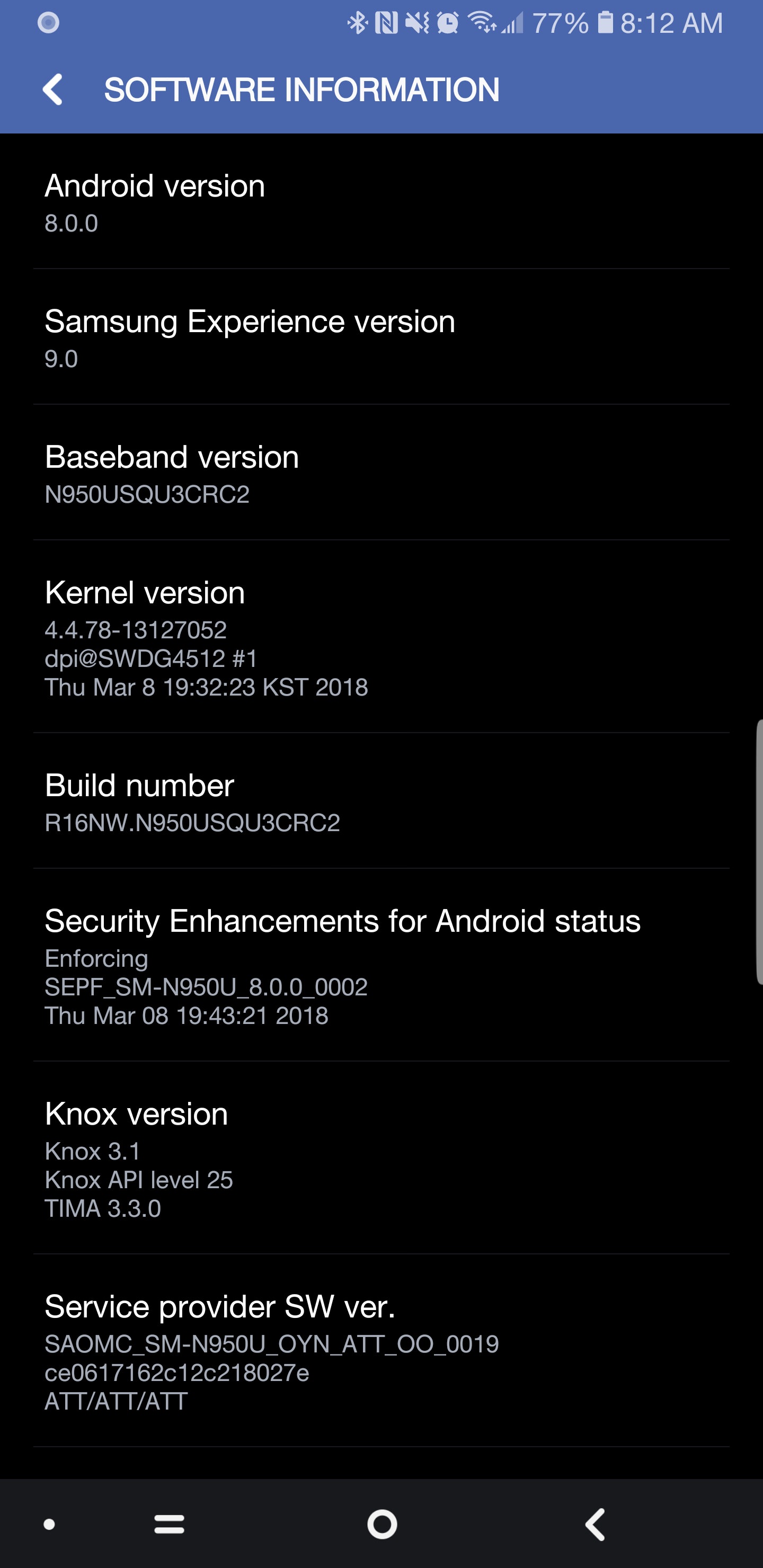
AT&T is now rolling out firmware version N950USQU3CRC2 for the Galaxy Note 8 over the air. As expected, it weighs in at 1.4GB since it’s a major Android platform update. The update is being rolled out gradually so it might take a while for it to go live for all users.

The AT&T Galaxy Note 8 Oreo update brings a handful of new features including but not limited to Autofill, notification dots, picture-in-picture mode and more. Don’t forget to check out our detailed What’s New With Android 8.0 Oreo series to find out more in detail about the features and improvements included in this iteration of Android.

Users in the United States can now try to manually pull the AT&T Galaxy Note 8 Oreo update by heading over to the Software update menu in the Settings app. We can expect other carriers to release Oreo for this handset in the near future as well.

The post AT&T Galaxy Note 8 Oreo update rolling out now appeared first on SamMobile.


from SamMobile https://ift.tt/2IUo6rE
via IFTTT

Latest Gear S2 firmware update brings new features

Samsung launched the Gear S2 smartwatch back in 2015. The company worked on its shortcomings and followed the Gear S2 with Gear S3 and Gear S3 Sport smartwatches. The Gear S3 Sport launched with a host of new features which Samsung brought to the older Gear S3 models via a software update, commonly known as the Tizen 3.0 Value Pack update. Samsung is now sending out a big update for the Gear S2 which adds some of the new features to the old smartwatch.

The update brings some Tizen 3.0 features

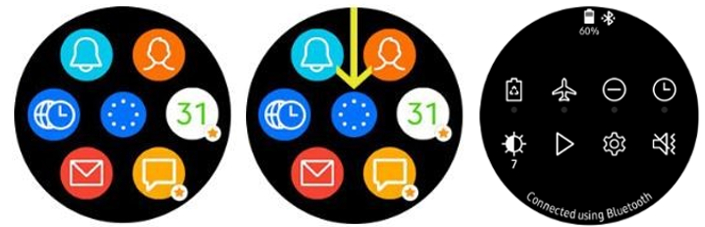
The new update includes many user interface changes such as the icons and widgets optimized for the circular display, more coherent and unified appearance, etc. Major functionality changes to the user interface include most recent apps in the new ‘App Shortcuts’ widget and access to Gear S2’s Quick Panel by swiping down from any screen.

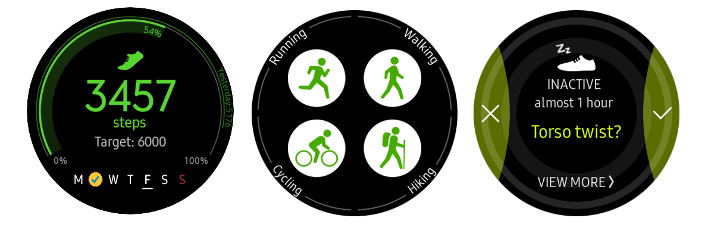
Samsung has also updated the Samsung Health experience on the Gear S2 by making it easier to manage and track your activity, an option to add preferred exercises as a preset on the new Multi-Workout widget, additional inactivity alerts to assist users, etc. The update also brings more options to explore when the device is connected to the S Health app on a smartphone. Users can see their daily exercise activity, calorie intake, real-time heart rate, exercise videos on synced TV, etc.

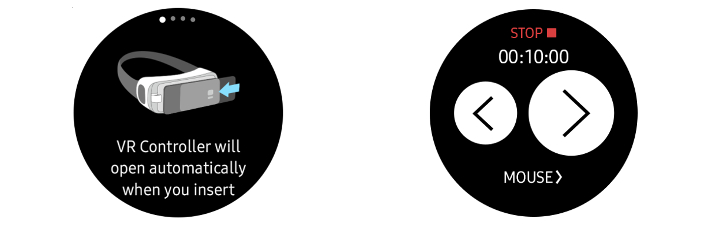
As seen with the Tizen 3.0 update on the Gear S3 models, the new Gear S2 update allows users to connect and control additional hardware and software such as the Gear VR and PowerPoint presentations.

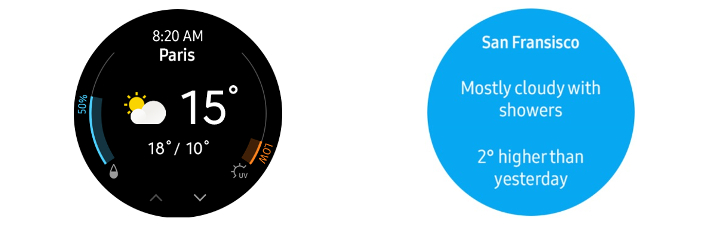
Finally, the new update also brings detailed weather forecasts in the morning to help the Gear S2 users to plan their day better. The weather forecasts will include information such as day’s highest and lowest temperatures, wind chill, day-to-day temperature differences, sunrise and sunset hours, the probability of rainfall, UV index, etc.

The update is currently available for download via the Samsung Gear app. If you have already received the update, do let us know your experience so far in the comments section below.

The post Latest Gear S2 firmware update brings new features appeared first on SamMobile.


from SamMobile https://ift.tt/2pKPr73
via IFTTT

جميع الحقوق محفوظة لمدونة الغريب 2013