الجمعة، 20 أبريل 2018

[Poll] How often do you use the Edge screen on your Samsung flagship?

When Samsung first launched the Galaxy S6 edge with its dual-curve display, people were skeptical of the kind of utility those edges would provide, given the edges were much smaller than the single edge on the Galaxy Note Edge. Indeed, the Edge screen on the Galaxy S6 edge wasn’t packed with functionality, but it’s been three years since the S6 edge was launched, and Samsung has added new features to the Edge screen with each major software update.

Edge screen has grown more useful with software updates

Today, you can call up the Edge screen to take custom screenshots and make animated GIFs, start two apps in Multi Window directly by using App Pair shortcuts, initiate custom tasks (such as going directly to the selfie camera or the compose message screen, among others), and check your saved reminders in Bixby, in addition to more basic functions such as accessing your favorite contacts and apps. The Edge screen works from anywhere in the interface, and in its latest iteration on Android 8.0 Oreo, it’s packed to the brim with customization options.

We’ve asked our readers just how often they use the Edge screen features in the past, and it had turned out quite a few folks take advantage of the quick access it offers to various actions and information. Well, it’s been a few years since then, and it’s possible many of you have either started depending on the Edge screen more than you did in the past or have stopped using it completely. Others may still be as big fans of the Edge screen as they were before it become so functional, while some are probably still wondering what all the fanfare is about.

That’s why we’re putting out a similar poll again, so let us know by selecting the appropriate option and then expand on your thoughts in the comments section!

How often do you use the Edge screen on your Samsung flagship?

The post [Poll] How often do you use the Edge screen on your Samsung flagship? appeared first on SamMobile.


from SamMobile https://ift.tt/2HgtGHP
via IFTTT

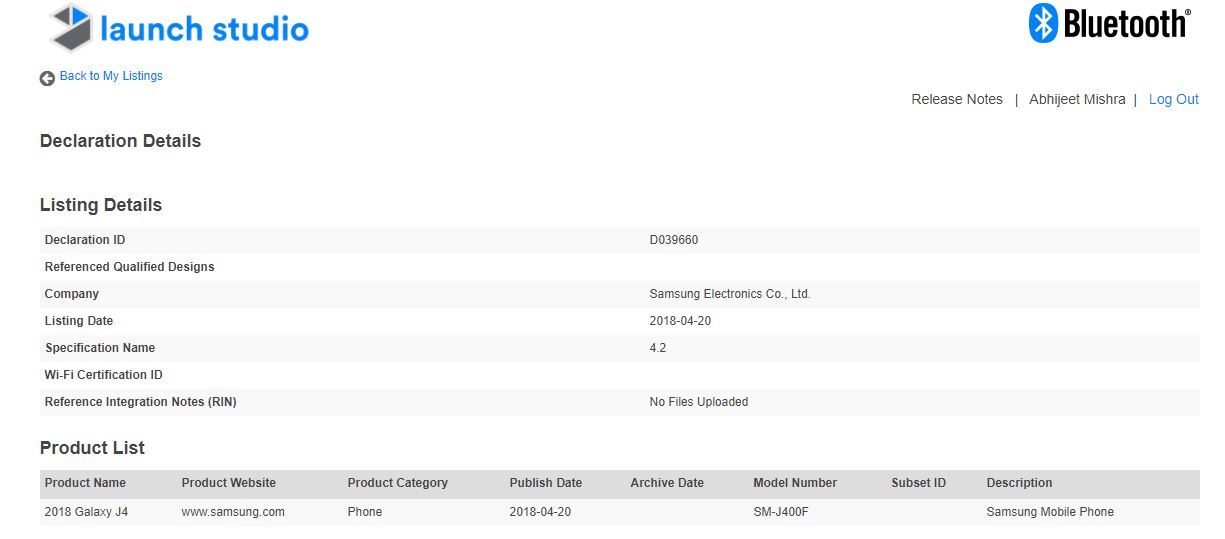
Galaxy J4 gets Bluetooth certification as the ‘2018 Galaxy J4’

The Galaxy J4 is expected to be unveiled alongside the Galaxy J6 sometime later this year as one of the many new devices Samsung is preparing to unleash in the market. Both phones were given Wi-Fi certification earlier this month, signalling their progress on the path to an official launch. The Bluetooth SIG certified the Galaxy J6 as well in early April, and the Galaxy J4 has now crossed the same hurdle. The Galaxy J4’s Bluetooth certification has its name listed as 2018 Galaxy J4, which suggests Samsung is going to be putting the current year in the names of these new devices from the very beginning, as opposed to doing so with their second iterations as it has done in the past.

Galaxy J4 gets Bluetooth certification

It doesn’t mean Samsung will actually sell them as the Galaxy J4 (2018) or the Galaxy J6 (2018), but the year will probably be mentioned on the product boxes, which is also the case with the recently launched Galaxy J7 Duo (read our hands-on experience here). Then, when the successors to these smartphones arrive, it will probably be back to how it is right now, so we’ll have the Galaxy J4 (2019), the Galaxy A6 (2019), and so on.

Unfortunately, while we can speculate all we want about how Samsung will be naming its next wave of smartphones that expand the ever-growing Galaxy lineup, we can’t say what specs these devices will carry. All we know about the Galaxy J4 is that it will have the quad-core Exynos 7570 SoC, 2GB of RAM, Bluetooth 4.2, and Android 8.0 Oreo. The screen size is expected to be 5.5 inches, but the screen resolution or specs like the camera and battery are not known at this point in time.

But that might change soon, as the Galaxy J4 and Galaxy J6 have now been cleared by the Wi-Fi Alliance, Bluetooth SIG, and the FCC, so an official launch could be just around the corner. Or, at the very least, these phones could soon pop up on benchmark databases that give us more info than we have on them right now.

The post Galaxy J4 gets Bluetooth certification as the ‘2018 Galaxy J4’ appeared first on SamMobile.


from SamMobile https://ift.tt/2HhHFcc
via IFTTT

Verizon’s latest Galaxy S7 update isn’t Oreo, even though the carrier says it is

The North American carrier variants of the Galaxy S7 and Galaxy S7 edge were recently certified by the Wi-Fi Alliance with Android 8.0 Oreo on-board, suggesting that the anticipated update is right around the corner. However, it looks like Verizon may have jumped the gun and posted details of the Oreo update for the Galaxy S7 and S7 edge a bit too soon. Verizon’s support pages for the Galaxy S7 and S7 edge have been updated with information on a new update that includes the April security patch and, according to the carrier, Android 8.0 Oreo as well.

A false alarm

Only that’s not the case, as S7 and S7 edge owners who have updated to the latest software available from Verizon – build number G930VVRS4BRC3 and G935VVRS4BRC3 – say it’s still Android 7.0 Nougat. This, to be fair, is a worrying development. If Verizon is releasing a minor update with the April 2018 patch here in late April, S7 and S7 edge owners may be in for a few more weeks of waiting. Granted, US carriers aren’t the fastest at bringing new versions of Android to devices so the global Galaxy S7 and S7 edge Oreo update might not take as long, but it’s best to remain skeptical until the update actually starts rolling out.

Verizon’s support pages do offer something useful, thankfully: They mention the major new features Oreo will bring to the Galaxy S7 and S7 edge. The listed features include core Oreo functionality like autofill, notification dots, background limits for unused apps, and picture-in-picture multitasking, along with Samsung Experience 9.0 features such as App Pair, Dual Messenger, high contrast theme for the Samsung keyboard, and a cleaner interface for the Phone app. You can also take a glimpse of Oreo running on the Galaxy S7 in this video that shows an early build of the OS that was accidentally released two months ago.

You can grab the security patch update for your phone by tapping Download updates manually in the Settings » Software update menu.

The post Verizon’s latest Galaxy S7 update isn’t Oreo, even though the carrier says it is appeared first on SamMobile.


from SamMobile https://ift.tt/2HSt1tf
via IFTTT

الخميس، 19 أبريل 2018

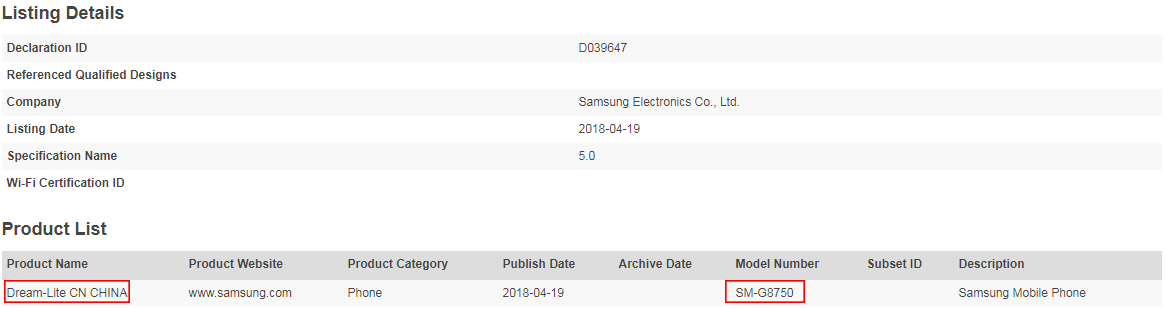
Samsung SM-G8750 may launch as Galaxy S8 Lite/mini in China

There’s been some confusion over what the Samsung devices with model numbers SM-G8850 and SM-G8750 actually are. The two handsets had shown up as possible Galaxy S9 mini variants, but recently, Chinese certification authority TENAA published photos and specs of the SM-G8850 and suggested that it’s a variant of the Galaxy S9 for the Chinese market with all the fancy features from the Galaxy S9+ (like 6GB of RAM, dual rear camera) and an iPhone-esque design. The SM-G8850 was also seen on the AnTuTu benchmark with mid-range specs before it hit TENAA, however, which is what has led to the confusion over why Samsung might be preparing two smartphones that seem like a mini Galaxy S9.

A Galaxy S8 mini for China

Well, thanks to the Bluetooth.org website, it has now been revealed that the SM-G8750 might be a mini/Lite variant of last year’s Galaxy S8 and not the Galaxy S9 as we deducted earlier. The phone has been certified by the organization with Dream-Lite CN CHINA as the product name. Some of you might remember that the Galaxy S8 was codenamed Project Dream when it was undergoing development, and you can see this codename mentioned inside the Galaxy S8 box (at the back of the cutout on which the phone is placed) if you own the device. For the Galaxy S8+, the codename changes to Dream2, so the Dream-Lite sure sounds like Samsung is preparing a lesser version of the Galaxy S8, at least for the Chinese market.

And a Galaxy S8 Lite or Galaxy S8 mini for China would make as much sense as a better specced Galaxy S9, as Samsung needs all the help it can get to claim back some of its lost market share in the country. A Galaxy S8 mini would allow it to sell a mid-range device with the name of a flagship attached to it, and we suppose that would help attract a few consumers, although it’s tough to say what Samsung’s strategy is going to be given how Chinese consumers are spoiled for choice thanks to local OEMs.

The post Samsung SM-G8750 may launch as Galaxy S8 Lite/mini in China appeared first on SamMobile.


from SamMobile https://ift.tt/2qJbRWs
via IFTTT

Galaxy J7 Duo hands-on: Dual camera, fast processor, removable battery, and more

The Galaxy J7 Duo is a confused smartphone. Well, maybe that’s a deliberate move on Samsung’s part to make sure the J7 Duo is able to stand apart from the tough competition in the budget segment in India, but this phone is an odd mix of the new and old. The Galaxy J7 Duo comes with a dual rear camera with the Live Focus feature, Samsung’s capable new Exynos 7884 processor (an underclocked version of the Exynos 7885 that powers the Galaxy A8 and A8+), and – wait for it – a removable battery!

It’s been some time since we’ve seen a budget Galaxy phone with a removable battery in the same price range as the J7 Duo (which costs Rs. 16,990), and again, it looks like a deliberate move that might help the J7 Duo stand out in the sea of metallic budget phones that have permeated the Indian market. Add to that the fact that it runs Android 8.0 Oreo out of the box, and the J7 Duo has some impressive credentials. Sure, Xiaomi’s smartphones, which are the primary competition for Samsung in India, still offer more than you can expect for the price tags they carry, but Samsung’s latest J7 variant isn’t without its fair share of attractive features.
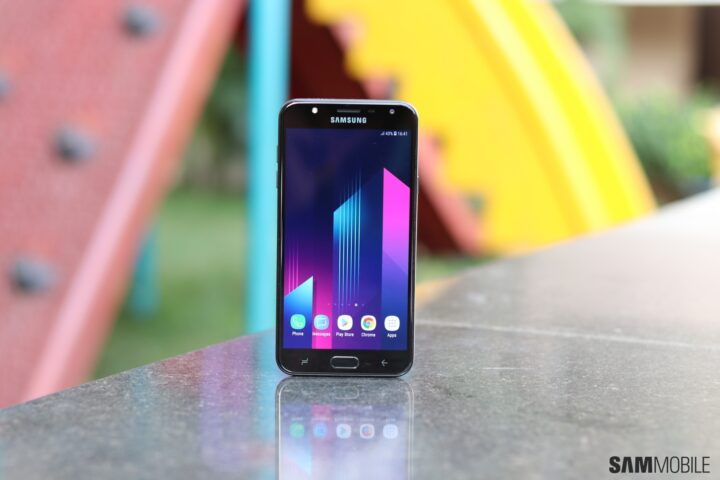
Even an AMOLED display is making a comeback, as Samsung has been oddly keen on equipping all of its Galaxy J spin-offs in India with LCD displays in the last year or so. Other specs include 4GB of RAM, a 13-megapixel and 5-megapixel rear camera pair, an 8-megapixel front camera with a selfie flash, a 3,000 mAh battery, and 32GB of internal storage that can be expanded with a microSD card.

The Exynos 7884, meanwhile, has the same setup as the Exynos 7885. Two Cortex-A72 cores are accompanied by six Cortex-A53 cores, but with a lower clock speed. High-performance processor cores have arrived on Samsung’s budget lineup for the first time, and it’s perhaps the biggest upgrade offered by the J7 Duo. Just like the Exynos 7885 finally allowed a Galaxy A lineup smartphone to offer the kind of experience one expects from these “premium mid-range” phones, the 7884 should negate what has been the most significant issue with Samsung’s budget devices: Stutter, lag, and poor long-term performance.

Whether this upgrade will come to the mainstream Galaxy J lineup with the Galaxy J8 (or whatever the new device for 2018 will end up being called) remains to be seen, but for now, let’s talk about what we feel about the Galaxy J7 Duo after the initial few hours of usage.

Galaxy J7 Duo hands-on impressions
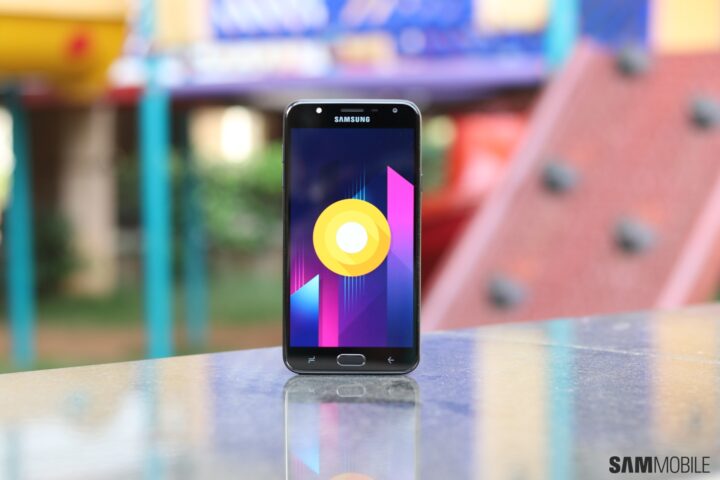
My first order of business after setting up the phone was to try out a couple of high-end games to see what kind of difference the Exynos 7884 makes. Thanks to the 720p resolution, Modern Combat 5 runs without hiccups at the optimal graphics settings (there is no high quality option, which might be an artificial limitation set by the game for what is an unknown SoC at this time), which made me heave a sigh of relief. I tried another high-end title, Batman: The Enemy Within, which is a point-and-click adventure game that is also available for consoles and PCs. Here, the frame rate isn’t always as smooth as I’d like, but it runs miles better than how it does on Samsung’s weaker budget and mid-range phones.

Clearly, the Exynos 7884, despite its low clock speed (1.6GHz, while the A8 runs at 2.2GHz for the A73 cores), is proving helpful here. The general user interface is smooth and quick as well, but that’s the case on lesser Galaxy phones as well when you’ve barely started using a device, so I’ll leave a verdict on the general software experience for another time. I also don’t see as many Android 8.0 Oreo features that the Samsung Experience 9.0 UX brings to the flagship phones, but basic Oreo features such as more helpful and customizable notifications and app shortcuts are present. As firmware for the J7 Duo had revealed, the J7 Duo comes with the January 2018 security patch in India, and there was no update available at the time this hands-on was written.
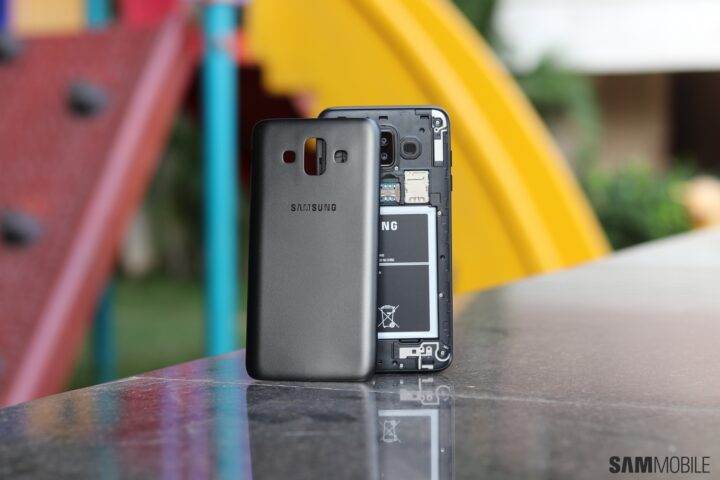
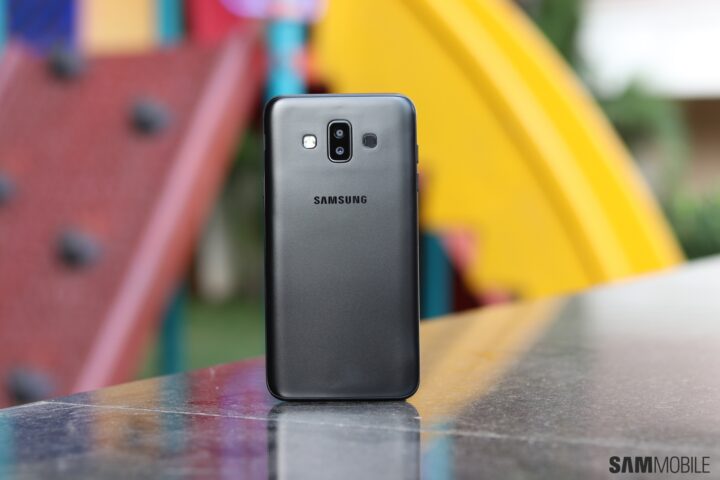
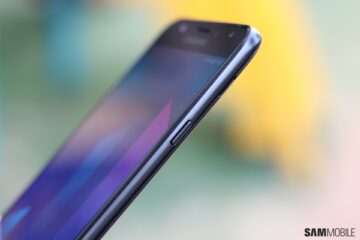
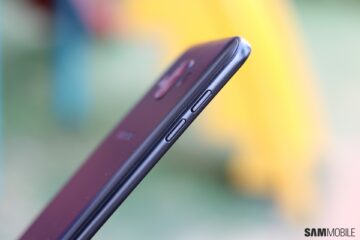
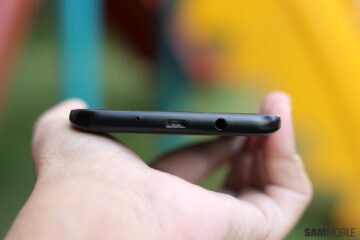
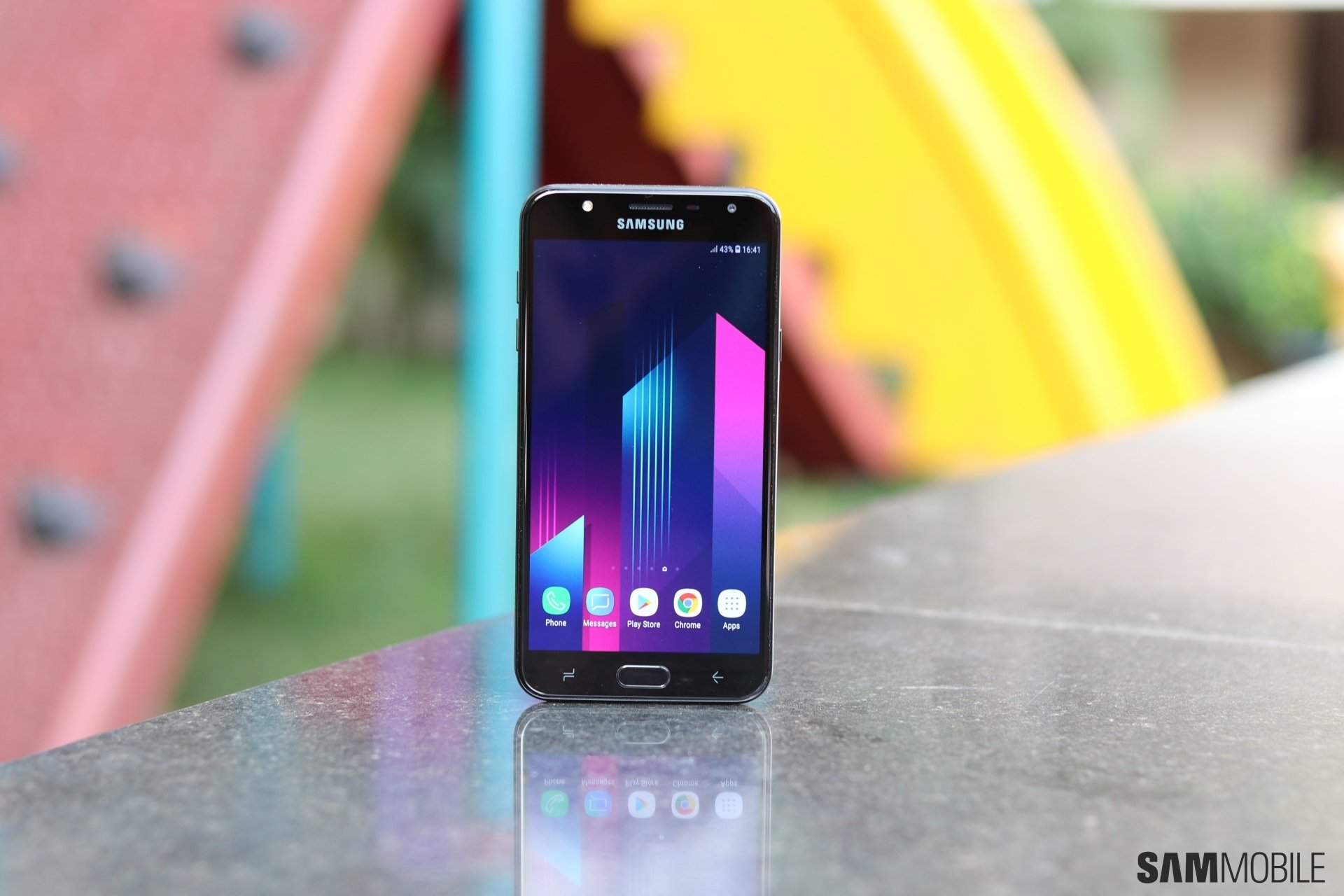
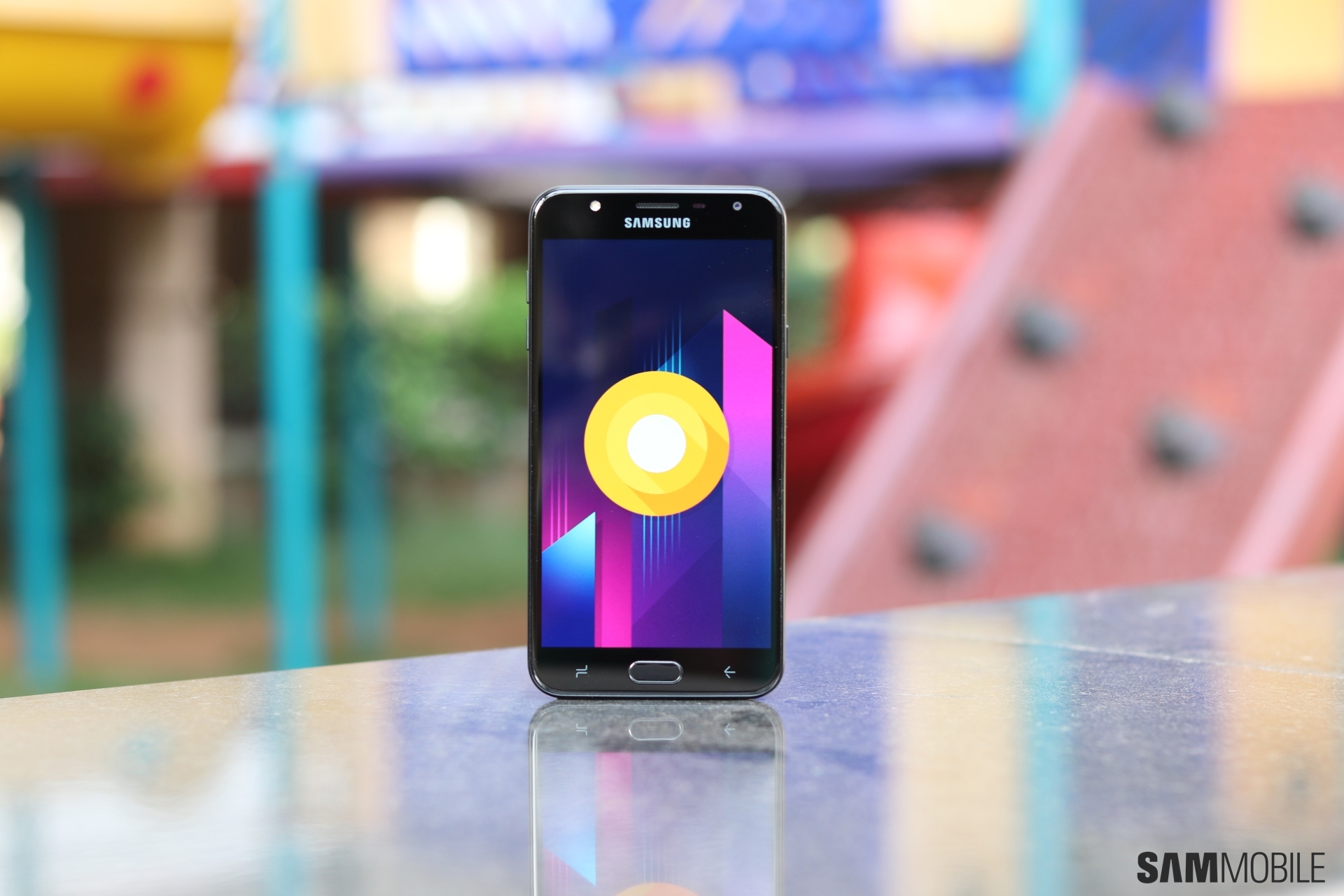
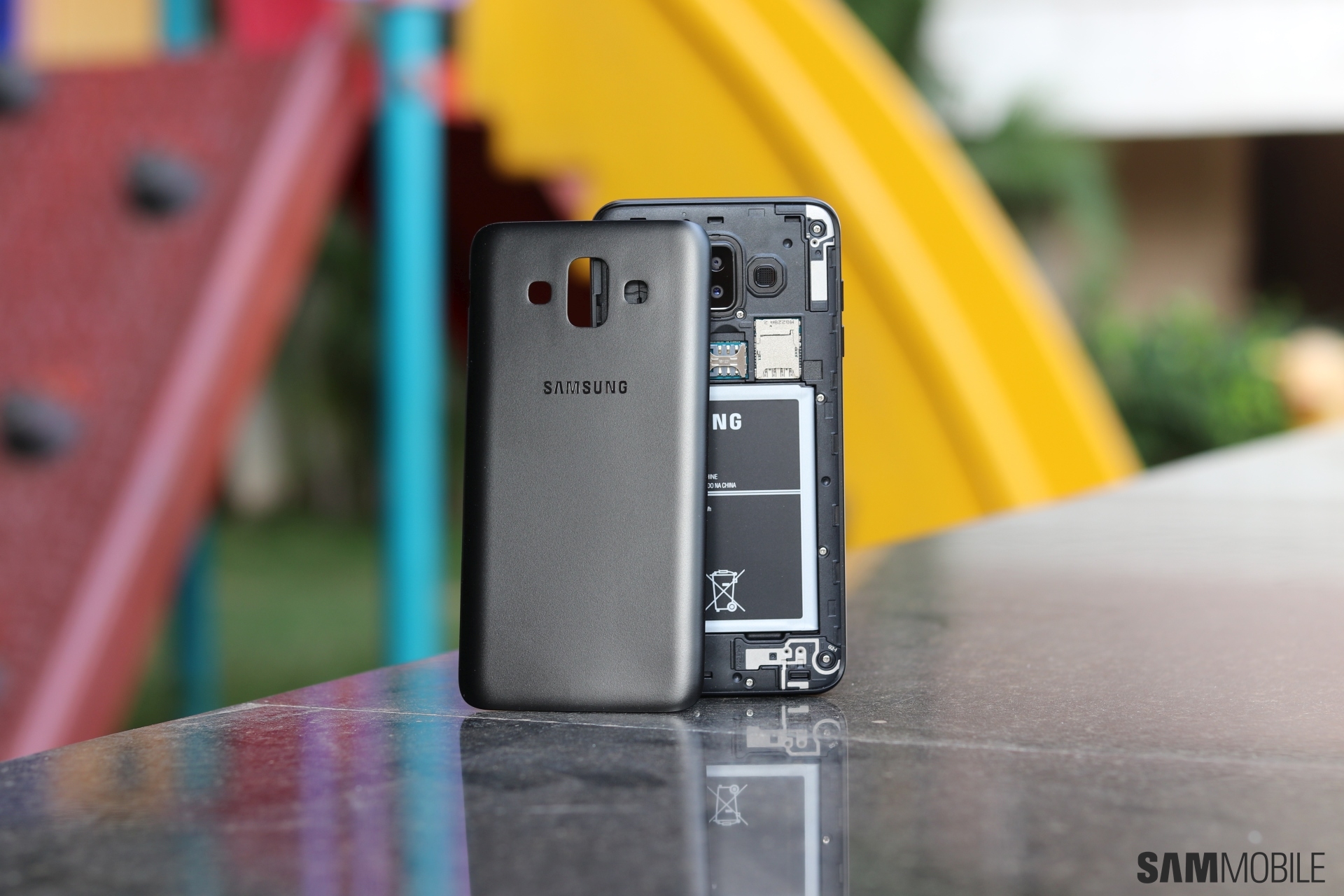
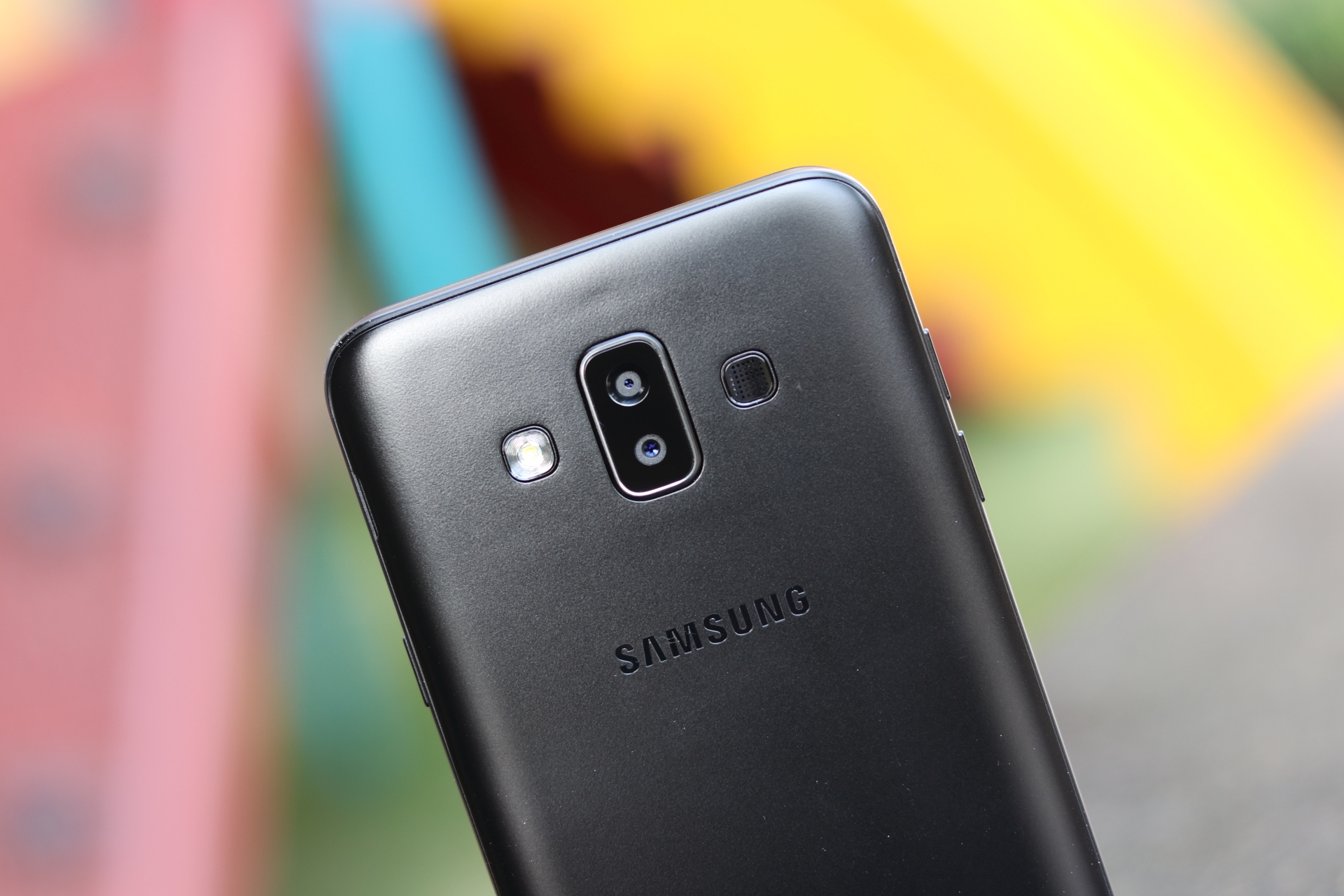
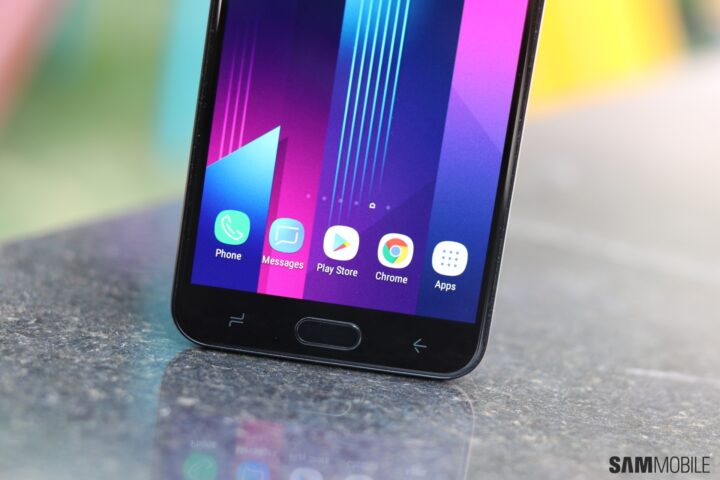
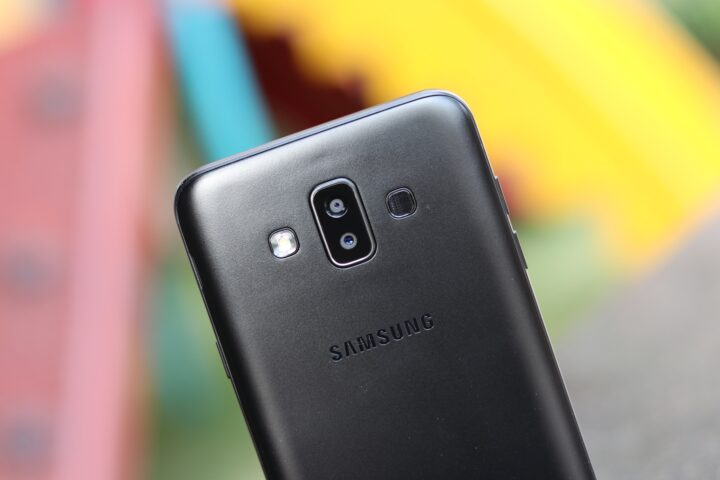
Let’s talk about the design and that removable back cover and battery. As you can tell from the photos, the J7 Duo doesn’t look any different from other Samsung phones without the 18:5:9 Infinity display. On the black variant, it manages to look attractive, with the dual rear camera adding more charm to what is otherwise a basic rear end. The removable cover is made of plastic and doesn’t feel too flimsy. But I found it rather hard to put the cover back on after removing it and had to resort to almost beating the cover into submission, though it’s hard to say if this is just a problem with our unit or a general issue. The battery, thankfully, comes off easily and goes back in without tantrums, though it’s unfortunate that the battery must always be removed to access the SIM cards.

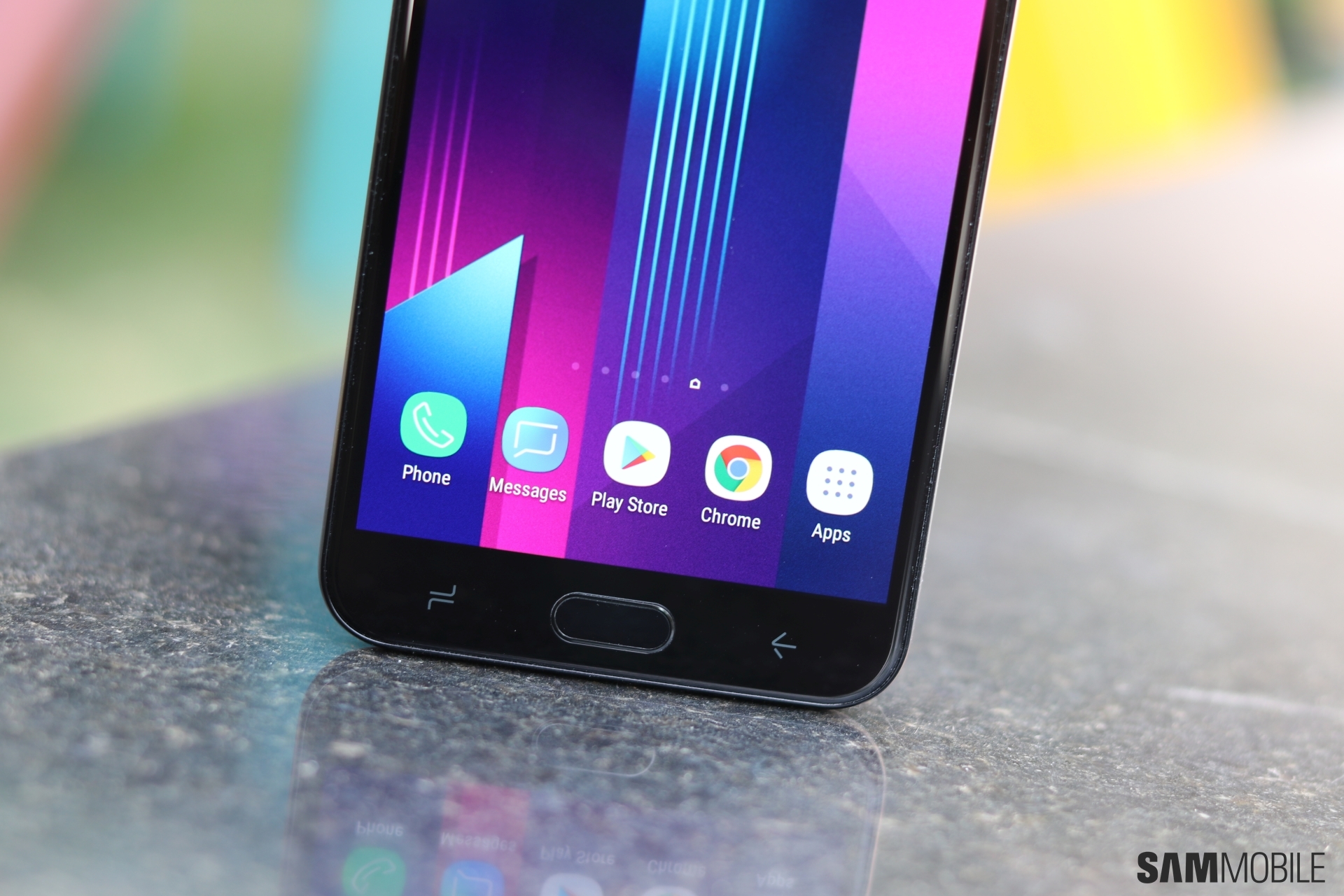
Now, about that AMOLED display: The 5.5-inch panel looks good, and the 720p resolution is fine for regular usage. The pixelation is easy to notice inside games and even inside the camera, but most folks are likely to be unfazed by the not-so-high screen resolution. Sadly, Samsung has once again skimped on a brightness sensor, and the same goes for backlit capacitive keys, so you will be left fumbling at times to make the screen legible and miss hitting the navigation keys in the dark.
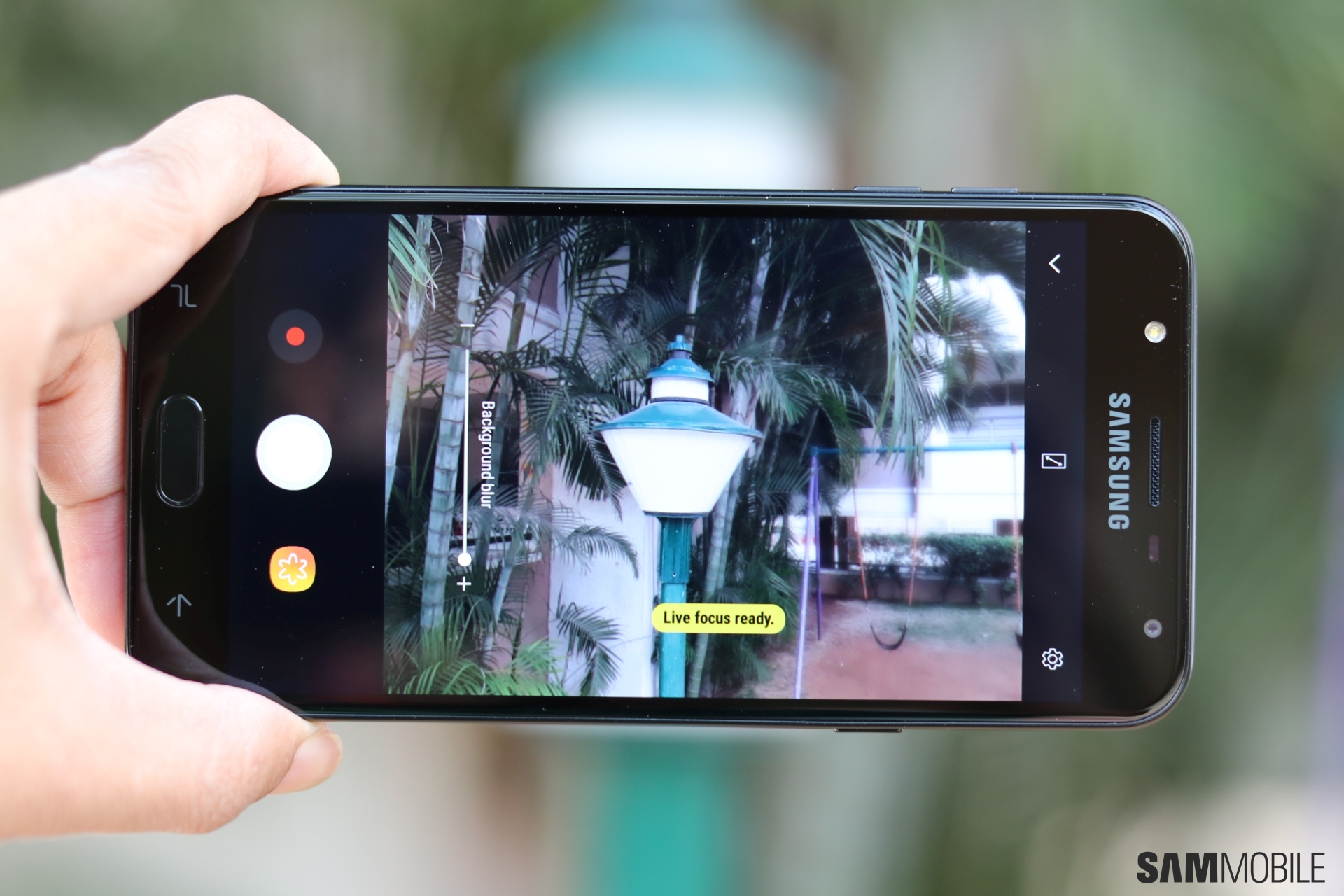
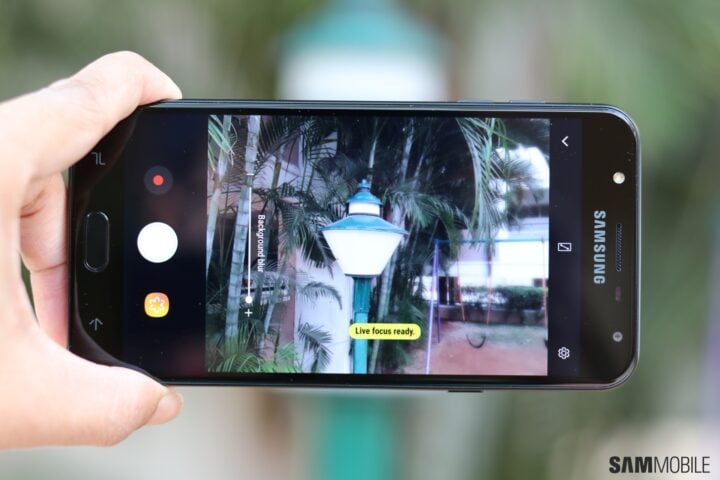
I also tried out the Live Focus bokeh feature on the camera. Since the second rear camera is a standard 5-megapixel sensor, you have to move in close to a subject to take Live Focus pictures. That’s in contrast to the dual camera on the Samsung flagships, where the secondary camera is a telephoto lens and hence zooms in on a subject. It’s both a disadvantage and an advantage on the J7 Duo, I think. Since Live Focus doesn’t zoom in, you need to move close to a subject for the feature to work properly. But it also means you don’t have to always move back from a subject as is the case with the flagship cameras. I only managed to take two Live Focus photos so I won’t say how good the camera can be, so you’ll have to wait for our full review for a conclusion on the J7 Duo’s imaging capabilities. The two photos are attached below for your viewing pleasure.


Well, our full review will also tell you how the Galaxy J7 Duo fares as an overall smartphone, so make sure you check back on SamMobile later this month for our complete verdict. For now, check out the photos of the Galaxy J7 Duo and let us know what you think about the phone.
The post Galaxy J7 Duo hands-on: Dual camera, fast processor, removable battery, and more appeared first on SamMobile.


from SamMobile https://ift.tt/2vAPUin
via IFTTT

Galaxy S8 and Galaxy S8+ update improves camera stability, security

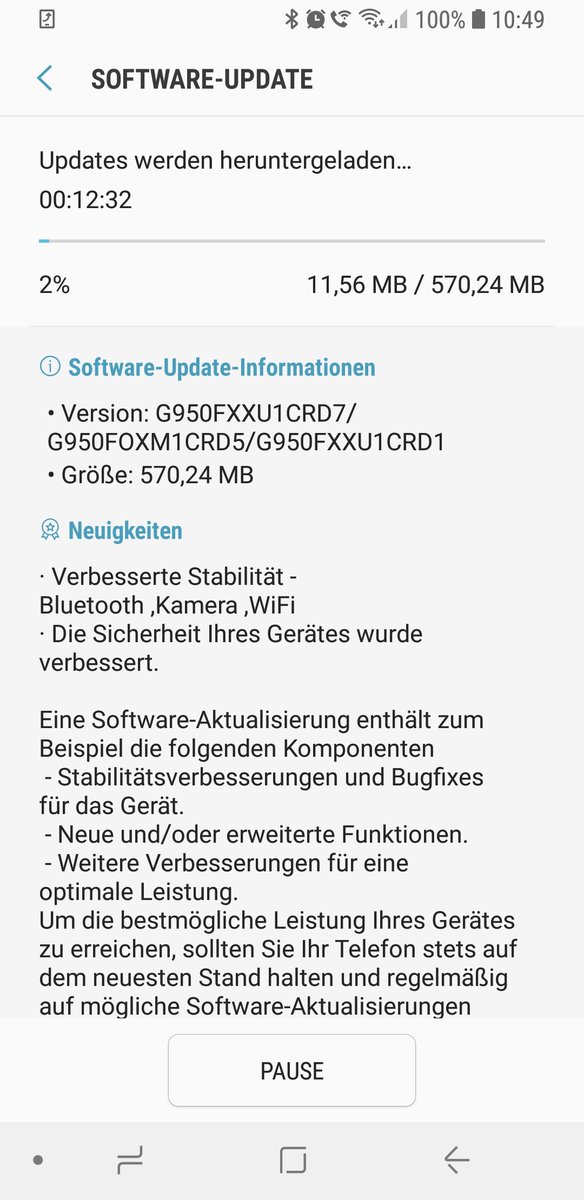
It’s raining updates for Samsung’s flagship phones now that the company has dealt with the Galaxy S8 and Galaxy Note 8 Oreo updates (and Oreo has even arrived for a mid-range device). Following updates for the Galaxy S9 and the Galaxy Note 8 that brought the April security patch earlier this week, Samsung is rolling out an update to the Galaxy S8 and Galaxy S8+. Like the first minor update that followed the Oreo update for the S8, the latest one doesn’t just bring security fixes — it also improves stability of the camera, Bluetooth, and Wi-Fi.

Galaxy S8 and Galaxy S8+ update

The Galaxy S8 and S8+ update is rolling out in Germany at the moment, and it’s around 570 MB in size. As we had noted with the Galaxy S9 update, the lack of Project Treble support means updates for Samsung devices not launched with Android 8.0 Oreo out of the box will continue to be pretty big in size, even if they only include the latest security patch and nothing else. Speaking of the security patch, the April 2018 patch plugs seven critical Android vulnerabilities and eight that can be taken advantage of in Samsung’s software. The build number accompanying the update is G950FXXU1CRD7 and G955FXXU1CRD7 for the Galaxy S8 and S8+ respectively.

To download the update, open the Settings app on your phone, go into the Software update menu, then tap Download updates manually. Or, you can wait until the phone notifies you about the update on its own, but that can take a few days. Also keep in mind that the update may not be available in your country just yet, as it is rolled out in a phased manner.

Thanks, Michael!

The post Galaxy S8 and Galaxy S8+ update improves camera stability, security appeared first on SamMobile.


from SamMobile https://ift.tt/2J6GwVk
via IFTTT

الأربعاء، 18 أبريل 2018

Unofficial Galaxy A6 and Galaxy A6+ renders reveal dual rear camera for the A6+

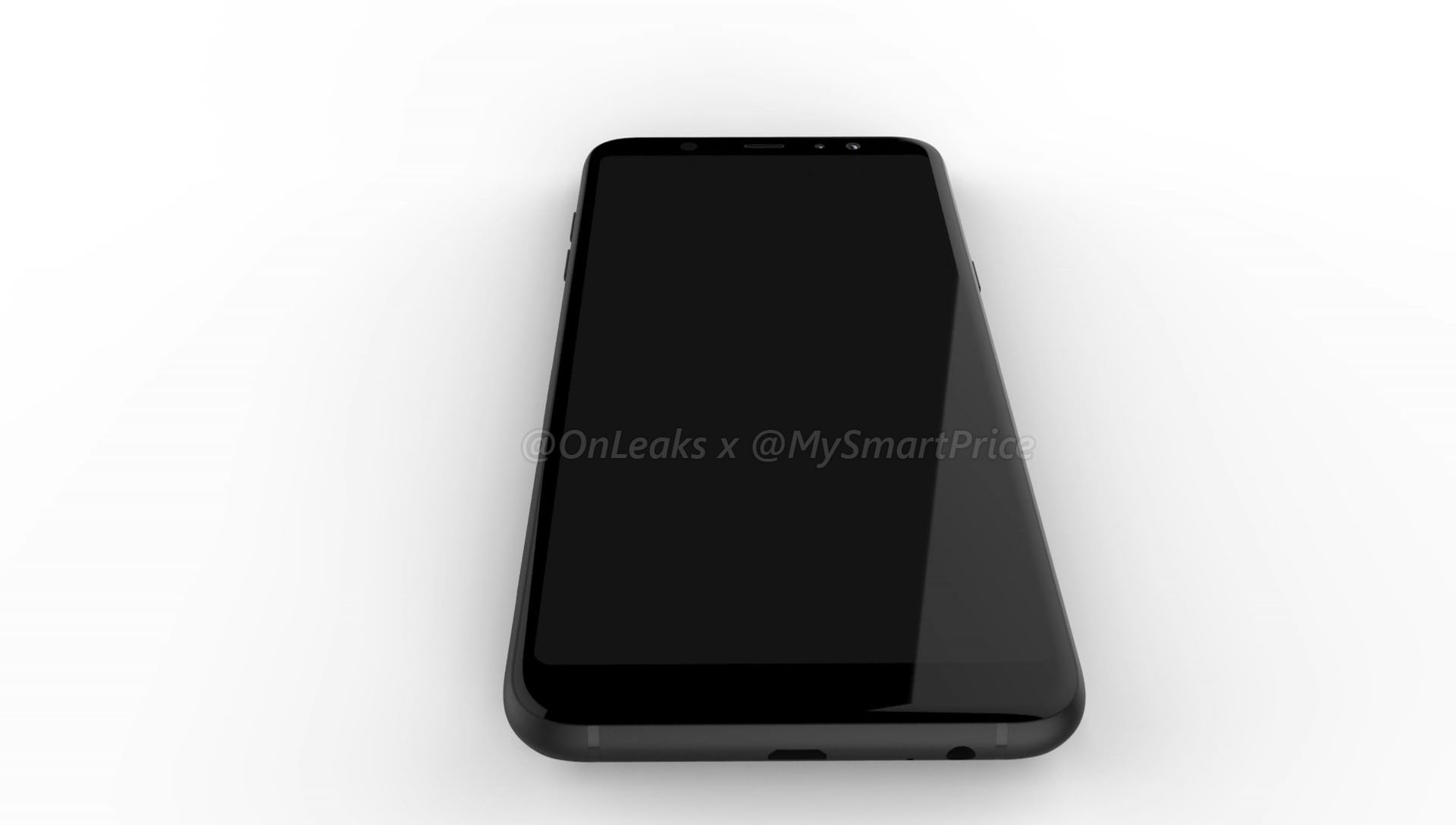
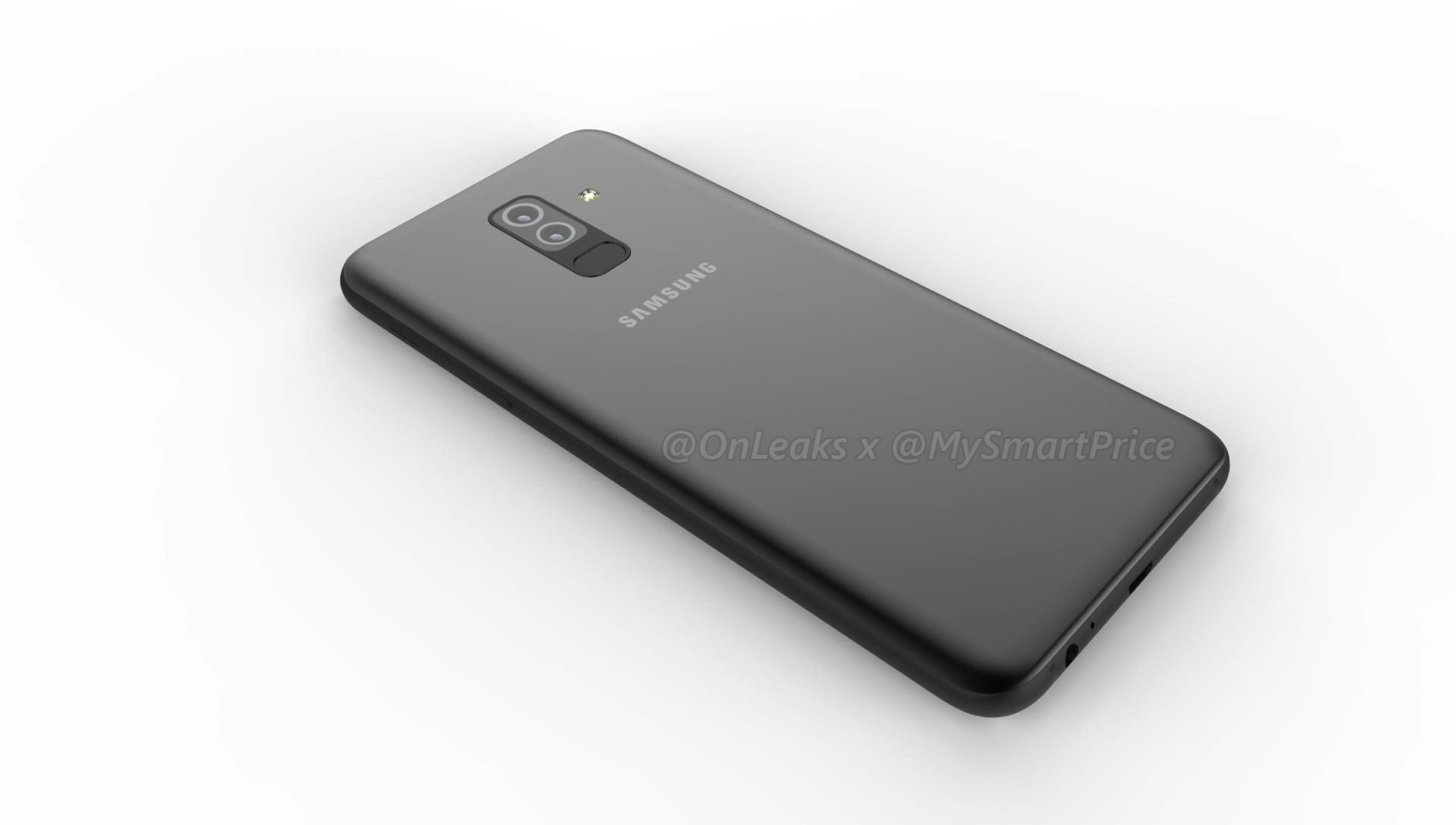
The Galaxy A6 and Galaxy A6+ are set to expand the Galaxy A series by slotting in below the Galaxy A8 (2018) and Galaxy A8+ (2018) as successors to the Galaxy A5 (2017) and the Galaxy A7 (2017). We have exclusively confirmed that these handsets will be released in Europe, Russia and the Middle East, and at least the Galaxy A6 is expected to be unveiled soon following the appearance of its support page on Samsung’s official website. Today, unofficial renders of the Galaxy A6 and A6+ have been published online, showing us how these handsets might look like in their final form.

Galaxy A6 and A6+ renders surface online

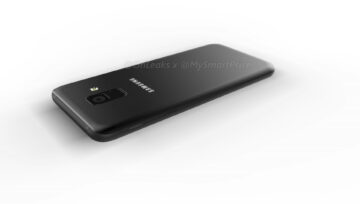
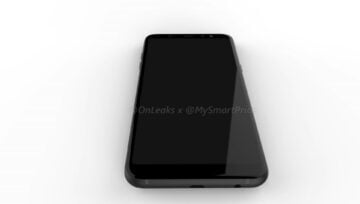
The folks over at MySmartPrice have teamed up with popular leakster OnLeaks to release images showing the Galaxy A6 and A6+ from every side. The latter is sporting a dual rear camera, with the cameras set up vertically above a fingerprint sensor, and the A6 has a single rear camera (also with a fingerprint sensor underneath). The design on the back is similar to the Galaxy A8 and A8+, and the A6 and A6+ are said to be 7.8 mm and 8.3 mm thick respectively (the A6 would be thinner than the A8 if these dimensions are correct, while the A6+ would be as thick as the A8+). From the images, it’s hard to make out whether the phones have glass or metal at the back, although the former is more likely given the history of Samsung’s mid-range A series phones.

Oddly, both handsets are portrayed with a microUSB port instead of a Type-C port, and that may be part of the reason why OnLeaks believes the Galaxy A6 and A6+ and the Galaxy J8 and J8+ are the same devices but with different names for different markets. It’s unclear why Samsung would put the older USB port on handsets that are expected to feature the company’s 18:5:9 Infinity displays, especially since the 2017 iterations of the A5 and A7 had a USB Type-C port.

Benchmarks have revealed that the Galaxy A6 and A6+ will be powered by the Exynos 7870 and Snapdragon 625 chipsets respectively, with 3GB of RAM on the former and 4GB of RAM on the latter. Android 8.0 Oreo will also be on-board, and we will hopefully be getting more details on these handsets leading up to their official launch.

We’ve embedded videos showing a 360-degree view of both handsets below. For more images of the phones, check out the source link.

The post Unofficial Galaxy A6 and Galaxy A6+ renders reveal dual rear camera for the A6+ appeared first on SamMobile.


from SamMobile https://ift.tt/2qI7tai
via IFTTT

جميع الحقوق محفوظة لمدونة الغريب 2013