الخميس، 2 أبريل 2020

Samsung expected to post solid Q1 earnings despite Coronavirus situation

Samsung is going to announce its earnings guidance for Q1 2020 next week. Analysts expect the company to post solid earnings despite the ongoing Coronavirus pandemic. Even though the Galaxy S20 series didn’t take off as well as the South Korean firm had expected, chip sales are believed to make up for the losses in the smartphone division.

The company is expected to clock in KRW 55.3 trillion ($44.9 billion) in revenue during Q1 2020, which is 5.5 percent up from the same quarter in the previous year. However, operating profit is estimated to drop 0.09 percent to KRW 6.22 trillion ($5 billion). These numbers have been verified by 21 brokerages in South Korea.

Analysts say that Samsung’s semiconductor business will keep the company stay afloat due to the increase in sales of memory and storage chips for servers. The prices of these chips have been steadily improving as well. It is believed that Samsung’s electronics, smartphone, and TV sales have taken a big hit due to the COVID-19 situation.

Hana Financial Investment estimates that Samsung’s smartphone sales during Q1 2020 would be around 62.2 million units, down from 71.5 million units from the previous year. Samsung Display, which makes LCD, QLED, and OLED display panels, has taken a huge hit due to slump in smartphone and TV sales. TV sales dropped due to the postponement of major sporting events such as the Tokyo Olympics and the UEFA championship.

Analysts believe that the smartphone sales slump will remain until Q3 2020 and the numbers will start rising in the fourth quarter of the year. In Q2 2020, sales of semiconductor chips are expected to decline. The company had to close its chipset, smartphones, and TV factories across the world.

The post Samsung expected to post solid Q1 earnings despite Coronavirus situation appeared first on SamMobile.


from SamMobile https://ift.tt/39Ho82a
via IFTTT

Samsung SDI to become more self-reliant in making electric vehicle batteries

Samsung SDI, which makes batteries for various products ranging from smartphones to electric vehicles, plans to become more self-reliant. The company wants to stop using battery components from other brands and make as many parts in-house as possible.

According to a new report from South Korean technology publication The Elec, Samsung SDI is planning to cut costs and become self-reliant by manufacturing cathode internally. A cathode is an essential part of any battery, and the company currently buys it from local cathode makers L&F and Unicore.

Samsung’s battery manufacturing arm reportedly wants to make at least 50% of its cathode supplies in-house by 2023. Currently, the company only makes 20% of cathodes it requires to make batteries. For the successful completion of this move, the company has named the chief of its ESS (Energy Storage Systems) business team to head STM, its cathode-making arm.

Manufacturing cathodes internally will give Samsung SDI a price advantage. As a part of this massive effort, the company has decided to partner with Eco Pro BM for supplying materials to STM. I Eco Pro, the parent firm of Eco Pro BM, had jointly developed cathode for Samsung SDI and Cheil Industries in 2005 and has since attained cathode orders for Cheil Industries.

Samsung SDI’s primary source of revenue is electric vehicle batteries, and the company plans to invest up to KRW 1.2 trillion in its factory in Hungary by 2030. After the completion of this investment, the company plans to make 18 million batteries per month.

The post Samsung SDI to become more self-reliant in making electric vehicle batteries appeared first on SamMobile.


from SamMobile https://ift.tt/3aCMxYc
via IFTTT

Samsung Electronics plans to not depend on Samsung Display for foldable glass

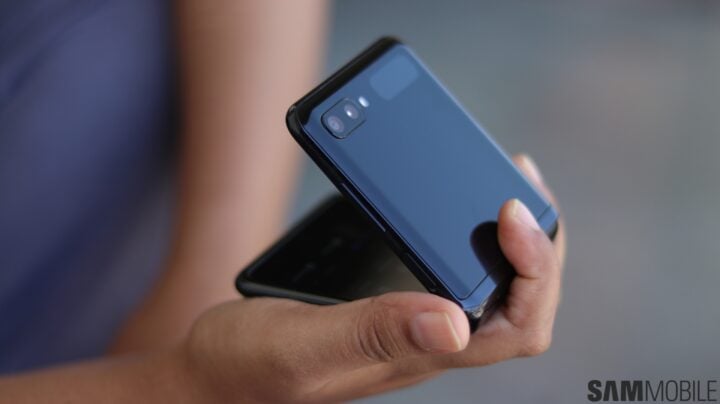
With the Galaxy Z Flip, Samsung introduced the Ultra Thin Glass panel to protect the foldable phone’s screen from scratches. The new protective material offers a glass-like feel, something that was missing from the Galaxy Fold’s plastic protective layer.

The Ultra Thin Glass and the foldable OLED panel used in the Galaxy Z Flip are developed by Samsung Display, the South Korean firm’s display manufacturing arm. Samsung Display is the major shareholder in Dowoo Insys, which manufactures foldable glass using German firm SCHOTT’s base material. The Ultra Thin Glass is then merged with the foldable OLED panel, which is then supplied to Samsung Electronics as a single module.

Samsung Electronics wants to develop thicker and cheaper foldable glass

It is now being reported that Samsung Electronics, the business division which makes smartphones, is planning to manufacture foldable glass on its own. There are two reasons why the company wants in-house development of foldable glass: better performance and lower price. Samsung Electronics reportedly wants a more durable foldable glass, which is at least twice as thick as the current version of Ultra Thin Glass. The company reportedly thinks that its current supplier can’t make such a foldable glass.

Moreover, each Ultra Thin Glass panel used in the Galaxy Z Flip costs $40, while the tempered glass used in other phones cost just $2. Samsung Electronics wants to improve the yield of foldable glass and reduce the manufacturing cost. The company has reportedly started working with various foldable glass manufacturing companies for the development of foldable glass. If Samsung Electronics succeeds in making a relatively thicker and cheaper foldable glass, it would be a game-changer.

Samsung Display plans to supply Ultra Thin Glass panels to other smartphone manufacturers who are planning to launch foldable phones. The Galaxy Fold 2, which is expected to be released later this year, will reportedly use Ultra Thin Glass as well.

Only time will tell if Samsung Electronics succeeds in making better foldable glass than Samsung Display. Still, we will surely see a tough competition between the two companies in the future.

The post Samsung Electronics plans to not depend on Samsung Display for foldable glass appeared first on SamMobile.


from SamMobile https://ift.tt/343OnPi
via IFTTT

Samsung chip division ‘humiliated’ over Snapdragon Galaxy S20 for Korea

The Exynos vs Snapdragon debate has heated up again. Several reports have highlighted the differences between the two chipsets with Qualcomm’s Snapdragon 865 edging out Samsung’s Exynos 990 processor. It’s evident that in the Snapdragon 865 vs Exynos 990 fight, Qualcomm has emerged on the top.

Samsung continues to sell both Snapdragon and Exynos variants of its flagships. It ships the Exynos variants in most markets while markets like the United States and China get the Snapdragon variant. This year it decided to make a significant change for its home country of South Korea. The Galaxy S20 lineup comes with the Snapdragon 865, not the Exynos 990 in South Korea.

Samsung’s chip division tried to get the decision reversed

Qualcomm chips are evidently more efficient than their Exynos counterparts. More efficiency translates to improved battery life and that’s something that directly impacts customers’ experience with Samsung’s handsets. The end result is that some customers feel that they got a slightly inferior product even though they paid the same amount of money as customers in regions where the Snapdragon variants are sold.

Samsung’s shareholders grilled company executives at the recent general meeting about the Exynos chip’s struggles and if there was a plan to improve it. President of Samsung’s mobile division DJ Koh said that Samsung Electronics doesn’t just stick with the Exynos chip because it generates a significant chunk of revenue for the company’s System LSI division, it’s the branch that makes the Exynos chip, but that this decision is made based on “competitive logic.” However, local media reports at that time suggested that the explanation hadn’t adequately addressed shareholders’ concerns.

A report out of South Korea mentions that the decision to ship the Snapdragon Galaxy S20 in South Korea took many at Samsung by surprise, not just at its offices in South Korea but also at the US headquarters. This decision was reportedly made because the Exynos 990 didn’t quite meet performance expectations even after multiple evaluations. Since the 5G push was critical for Samsung’s marketing strategy for the Galaxy S20, the company have decided to favor the more efficient Snapdragon 865 for South Korea, which was the first country to fire up commercial 5G networks and has seen rapid deployment of the next-gen mobile network since last year.

The report also mentions rumors that floated in the company that the System LSI Division had felt “humiliated” because of the decision to ditch the Exynos in favor of the Snapdragon for South Korea. Officials reportedly tried to convince the mobile division to reverse the decision but that obviously did not happen. There’s little evidence to back up these rumors but they do make some sense. It would have been a matter of pride for workers at System LSI and they might not be too happy about seeing a chipset that was designed, engineered and manufactured in South Korea for the flagship series of a company that is a titan of the South Korean industry to not be picked for variants meant for South Korea. That’s gotta hurt.

Samsung may not be giving up on its Exynos chips despite these performance concerns because they still provide the company with leverage against Qualcomm. If the company didn’t have an alternative, it would be completely at Qualcomm’s mercy for chips and may not have much wiggle room in price negotiations. It’s hard to imagine that Qualcomm wouldn’t want to sell chips to Samsung given the kind of numbers that its flagship smartphones sell but in such high-stakes negotiations, it’s always a good idea to have some leverage.

Keeping the Exynos program alive is also part of Samsung’s plan to diversify its revenue streams. The company has been selling chips to several other manufacturers as well. Companies like Vivo are gradually shifting some of their models to Exynos processors. Samsung’s profits took a huge hit last year because of the slowdown in the memory market so the Exynos program can provide a buffer against price shocks for the semiconductor business.

The performance gap between the Exynos and Qualcomm chips is largely down to the former using custom CPU cores. Samsung may have decided to fix this once and for all by ditching custom CPU cores altogether in favor of licensing ARM designs going forward. Some reports have even claimed that Samsung could collaborate with ARM for semi-custom cores. It’s all a bit up in the air right now but it’s evident that the Exynos program is far from done. We know that Samsung fans have had it with the Exynos processors just not being as good as their Snapdragon counterparts. Hopefully, the company has a plan to turn this around.

The post Samsung chip division ‘humiliated’ over Snapdragon Galaxy S20 for Korea appeared first on SamMobile.


from SamMobile https://ift.tt/2UAJmL0
via IFTTT

[Poll] Which Samsung app do you use the most on your Galaxy?

Samsung Galaxy smartphones come preloaded with a number of apps that are made by the company itself, and it also publishes some apps on the Google Play Store. Many complain that some of the preloaded apps are unneeded because all Android devices — including Galaxy devices — also come preloaded with Google apps, which offer much of the same functionality.

However, while that may be true, Samsung has some truly excellent apps and services that you can’t do without, such as Samsung Pay, Samsung Notes, and Samsung Health. Others, like Samsung Music and Samsung Internet, provide functionality that you won’t find on the Google alternatives. There’s also Good Lock, an app that’s filled to the brim with customization options, even though it’s not officially available in many countries and doesn’t come preloaded out of the box, either.

Still, it can’t be denied that every proprietary Samsung app has something to offer for everyone. Of course, some of those apps are more useful than others, and you might also have a favorite or use one more than the others. And in our latest poll, we want to know exactly which of the Samsung apps you use the most on your Galaxy phone. So go ahead and vote below; The poll only lets you select one answer, so if you have more to say, be sure to tell us in the comments section!

Which Samsung app do you use the most on your Galaxy phone?

The post [Poll] Which Samsung app do you use the most on your Galaxy? appeared first on SamMobile.


from SamMobile https://ift.tt/3dULjcX
via IFTTT

US Newberry plant shut down, two employees test positive for coronavirus

Samsung has halted operations at its home appliance manufacturing facility in Newberry County, USA, after two employees tested positive for coronavirus (COVID-19), according to the local media.

The report from The Newberry Observer citing a Samsung spokesperson reveals that the facility has been temporarily closed today and is to be thoroughly cleaned and sanitized before operations resume on April 6.

Samsung’s Newberry plant employs around 1,000 people

Samsung’s Newberry facility in South Carolina is responsible for the manufacturing of home appliances, including the company’s Energy Star-certified washing machines. It employs roughly 1,000 people.

Three years ago, the company invested $380 million in the state of South Carolina for the 151,000 square feet factory to become operational, and production began a year later in 2018 with the help of over 800 full-time and contract workers. That number is said to have increased by roughly 200 over the past two years.

A new coronavirus case was also confirmed at Samsung Austin Semiconductor earlier this week. But unlike in Newberry County, the facilities in Austin have remained operational, and production was not affected.

Meanwhile, Samsung is making worldwide efforts to combat the spread of coronavirus. It has donated $29 million worth of funds and goods over the past three months and has temporarily shut down all of its retail stores across the United States in support of social distancing.

The post US Newberry plant shut down, two employees test positive for coronavirus appeared first on SamMobile.


from SamMobile https://ift.tt/3dOlfA2
via IFTTT

Samsung Gallery update improves Single Take integration

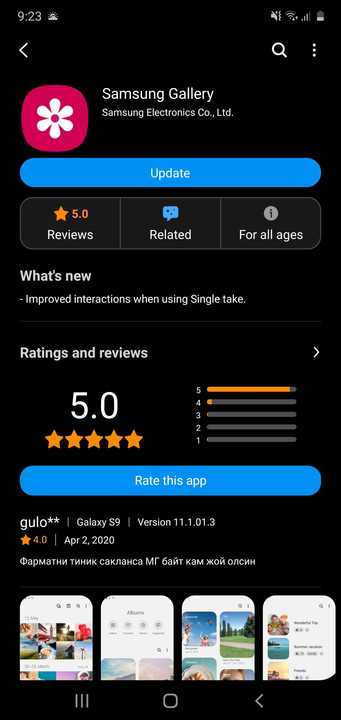
A new update to the Samsung Gallery app is currently being pushed via the Galaxy Store. Its changelong is rather succinct, only mentioning improvements to manner the app interacts with Single Take.

As such, software version 11.1.01.3 will primarily benefit the Galaxy S20 series, Samsung’s first product range with support for Single Take. The move is still a reminder that Single Take functionality is also currently on its way to the Galaxy S10 and Galaxy Note 10 series in addition to the Galaxy Fold, as the One UI 2.1 update for these devices is now rolling out.

Samsung improved Single Take integration

The aforementioned improvements appear to primarily come down to somewhat smoother transitions between Samsung Gallery and Camera while using the Single Take feature. It’s possible some minor, unrelated bug fixes are part of the package as well, though Samsung’s changelog makes no mention of them.

Touted as one of the main selling points of the Galaxy S20 line, Single Take allows you to rely on Samsung’s AI magic to get the best possible shot in any scenario. Using it means holding the virtual shutter button while your flagship captures a wide variety of frames in a 3-10 second window, then presents you with a collection of photos, GIFs, and even videos it deems optimal for the given circumstances.

The newest Samsung Gallery build arrives just in time for the One UI 2.1 update for the Snapdragon 855 variants of the Galaxy S10 and Galaxy Note 10 models which is set to begin rolling out tomorrow. Single Take is part of that comprehensive software package that has already been rolling out to Samsung’s 2019 flagships since last week.


The post Samsung Gallery update improves Single Take integration appeared first on SamMobile.


from SamMobile https://ift.tt/2JvKKbm
via IFTTT

جميع الحقوق محفوظة لمدونة الغريب 2013